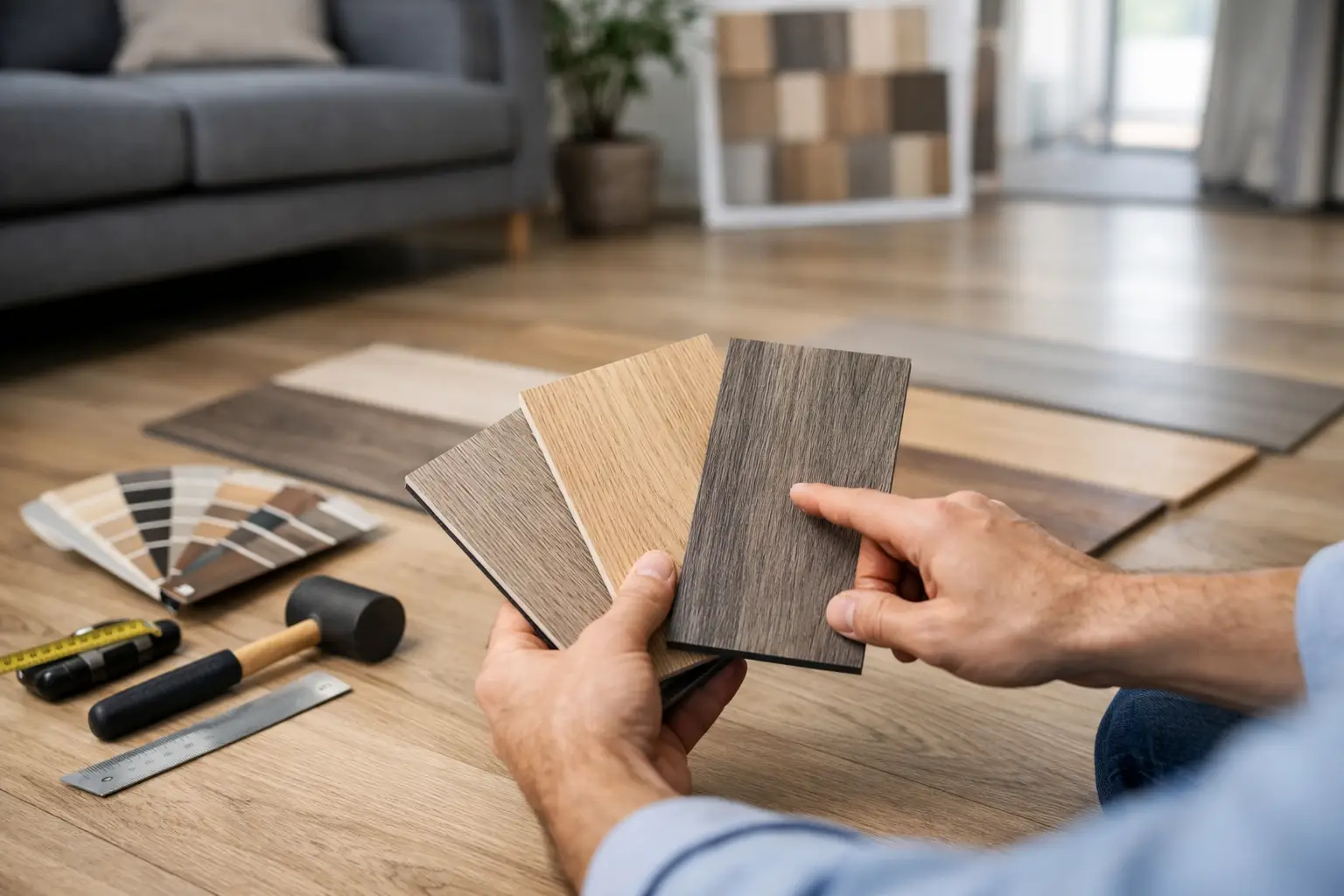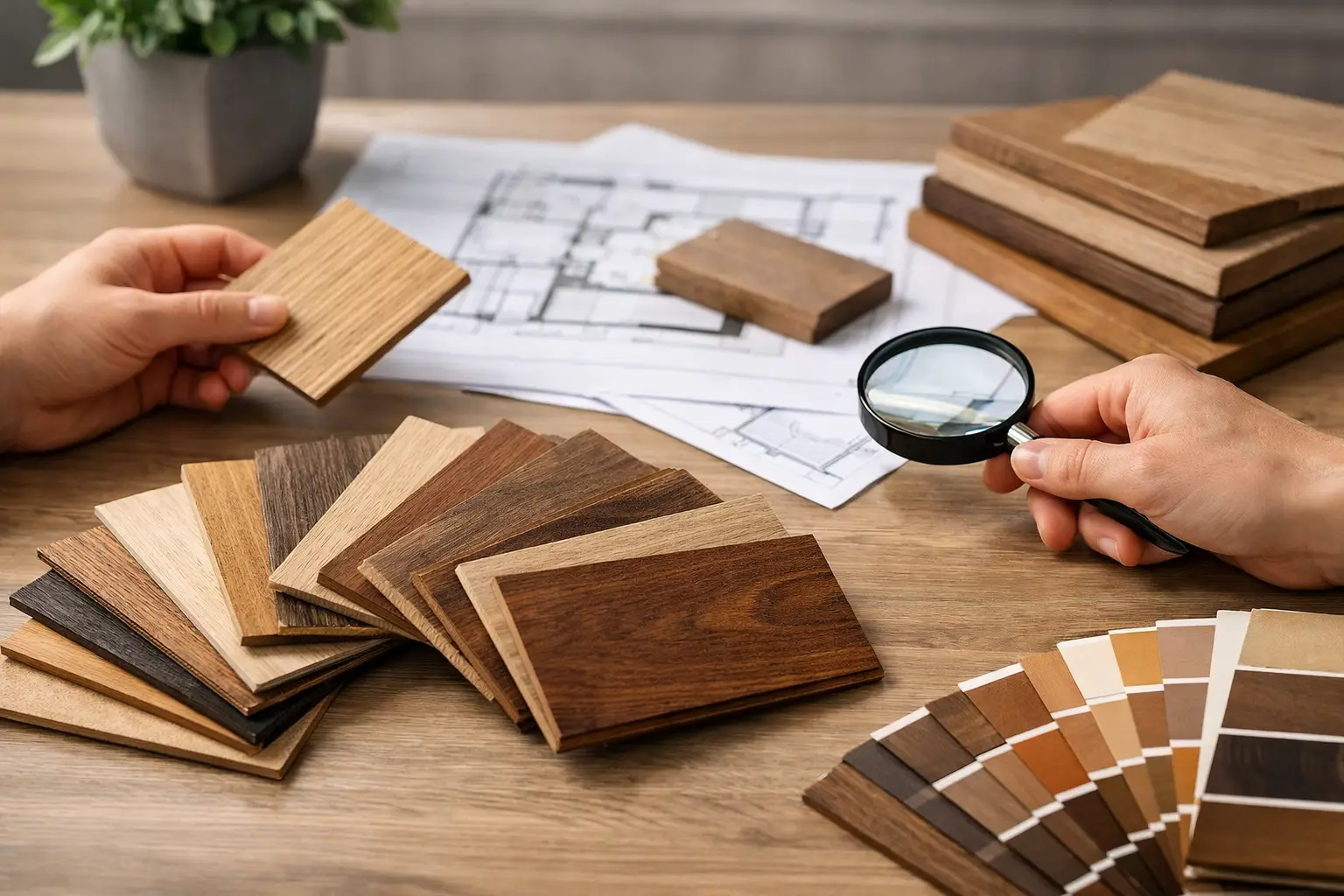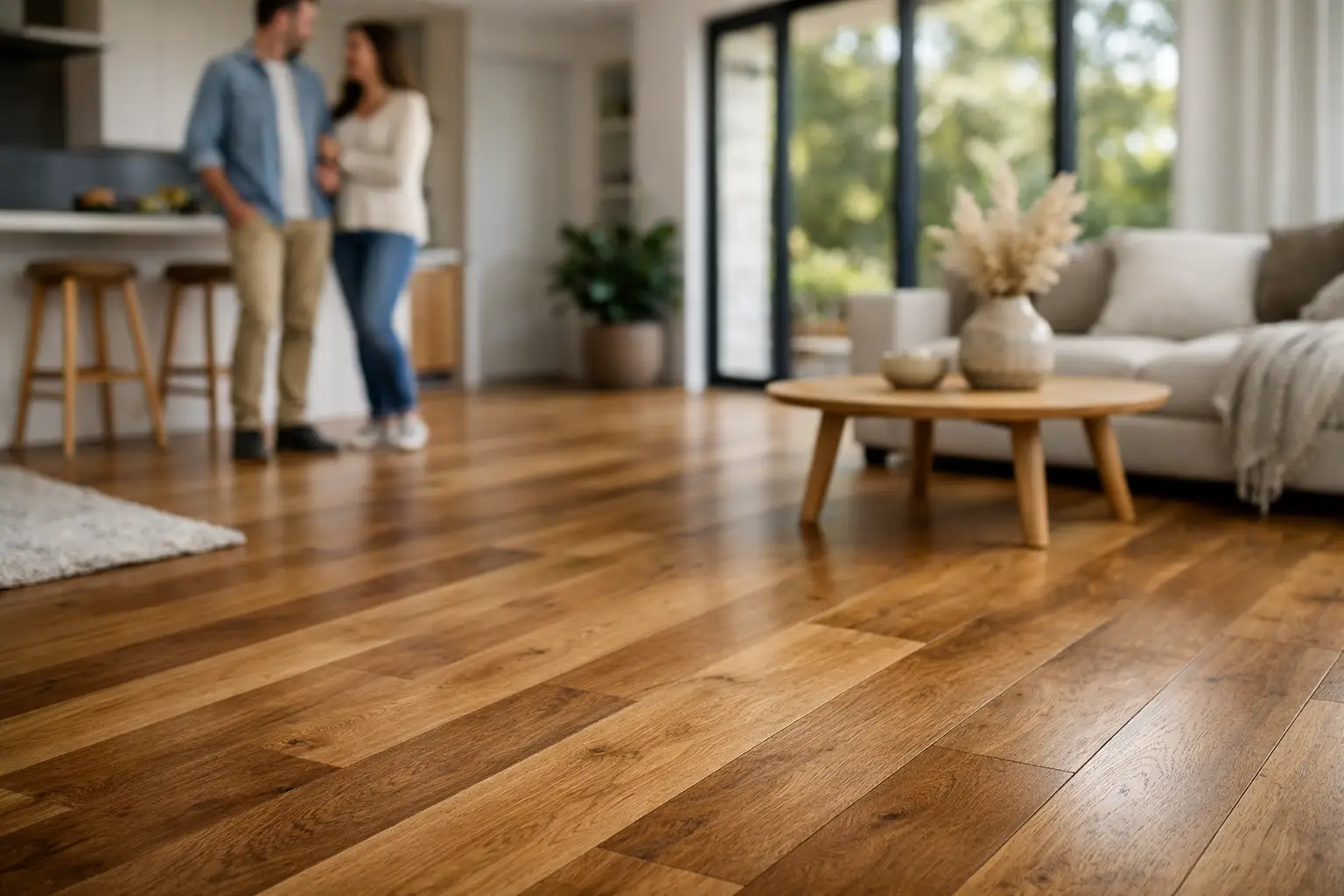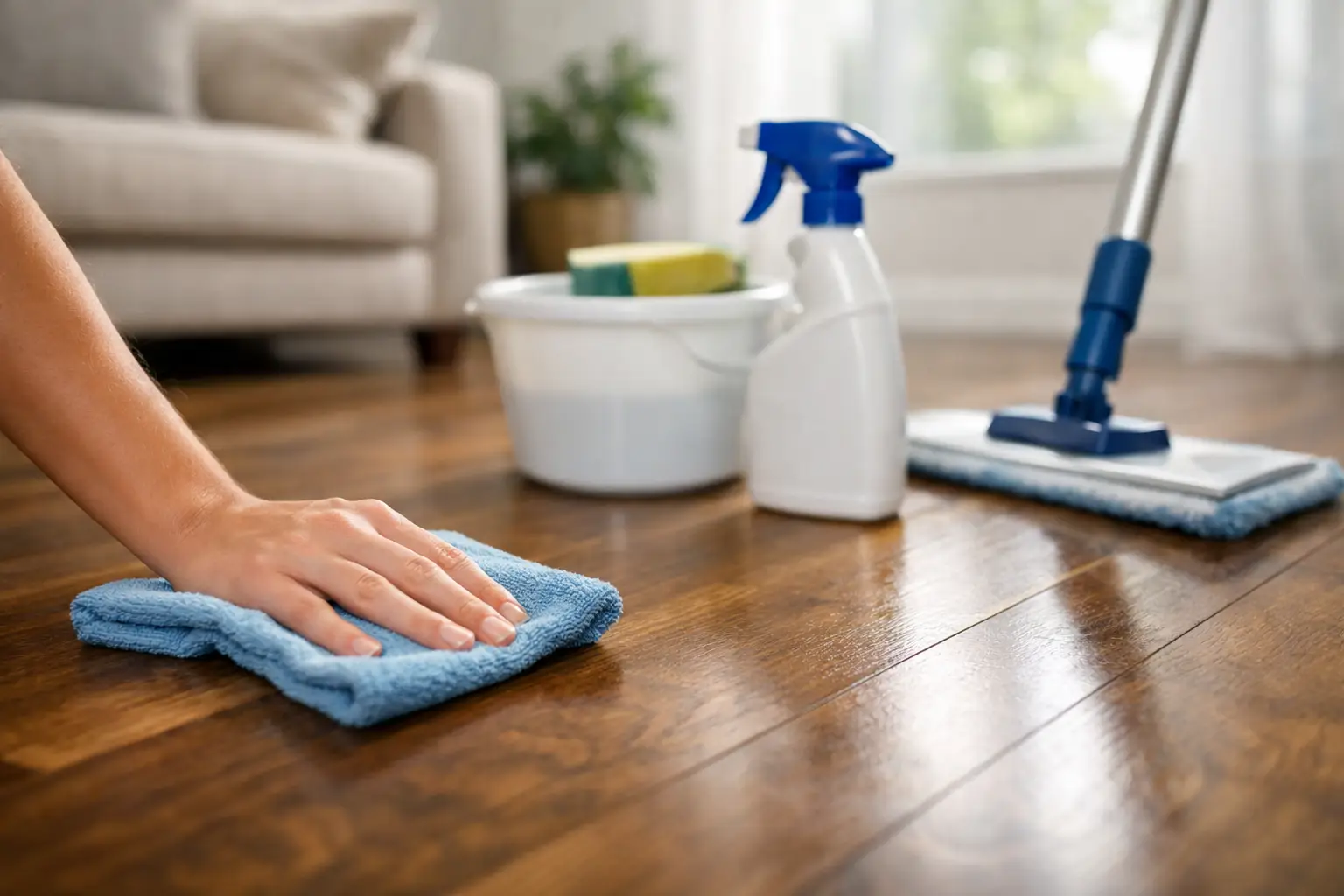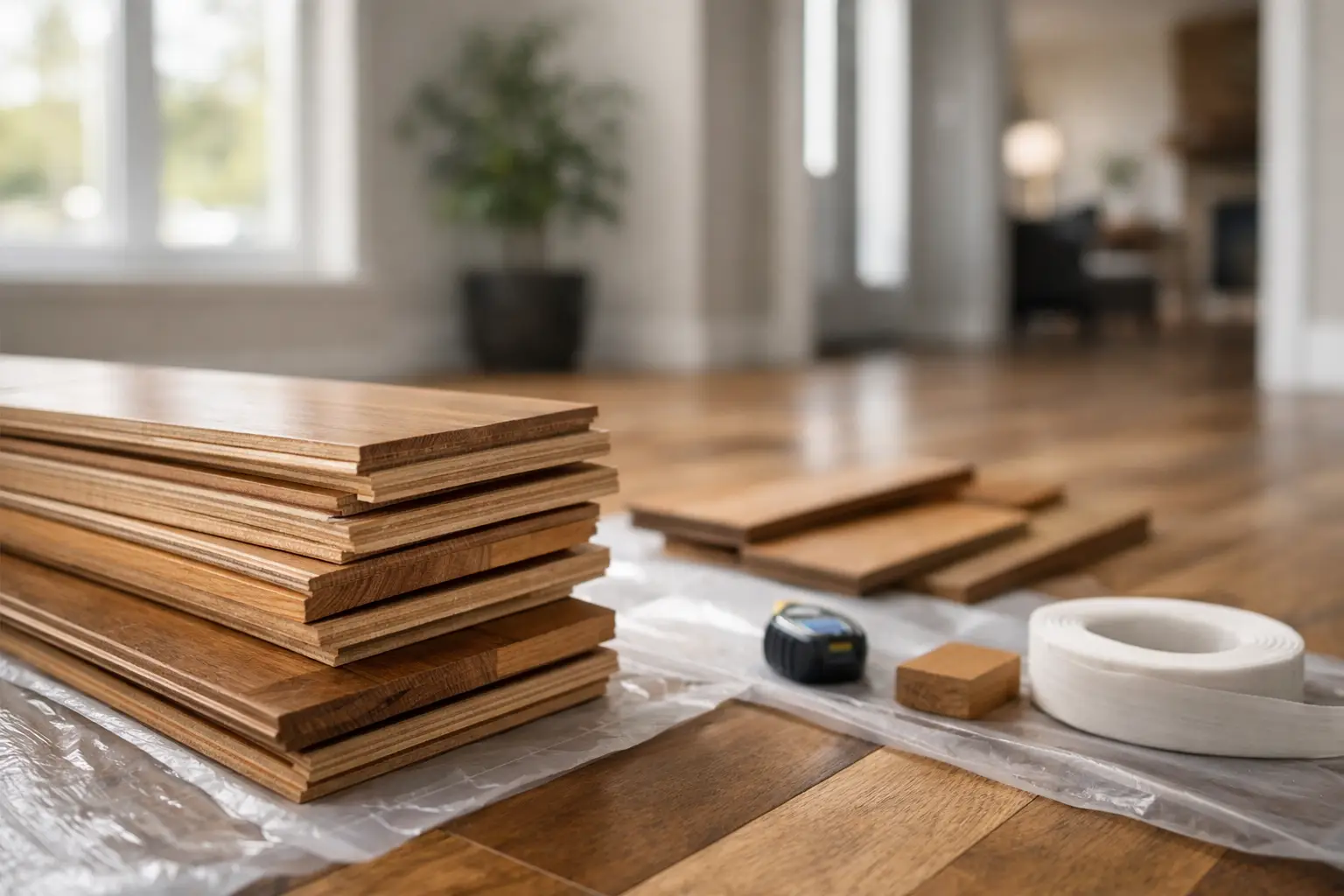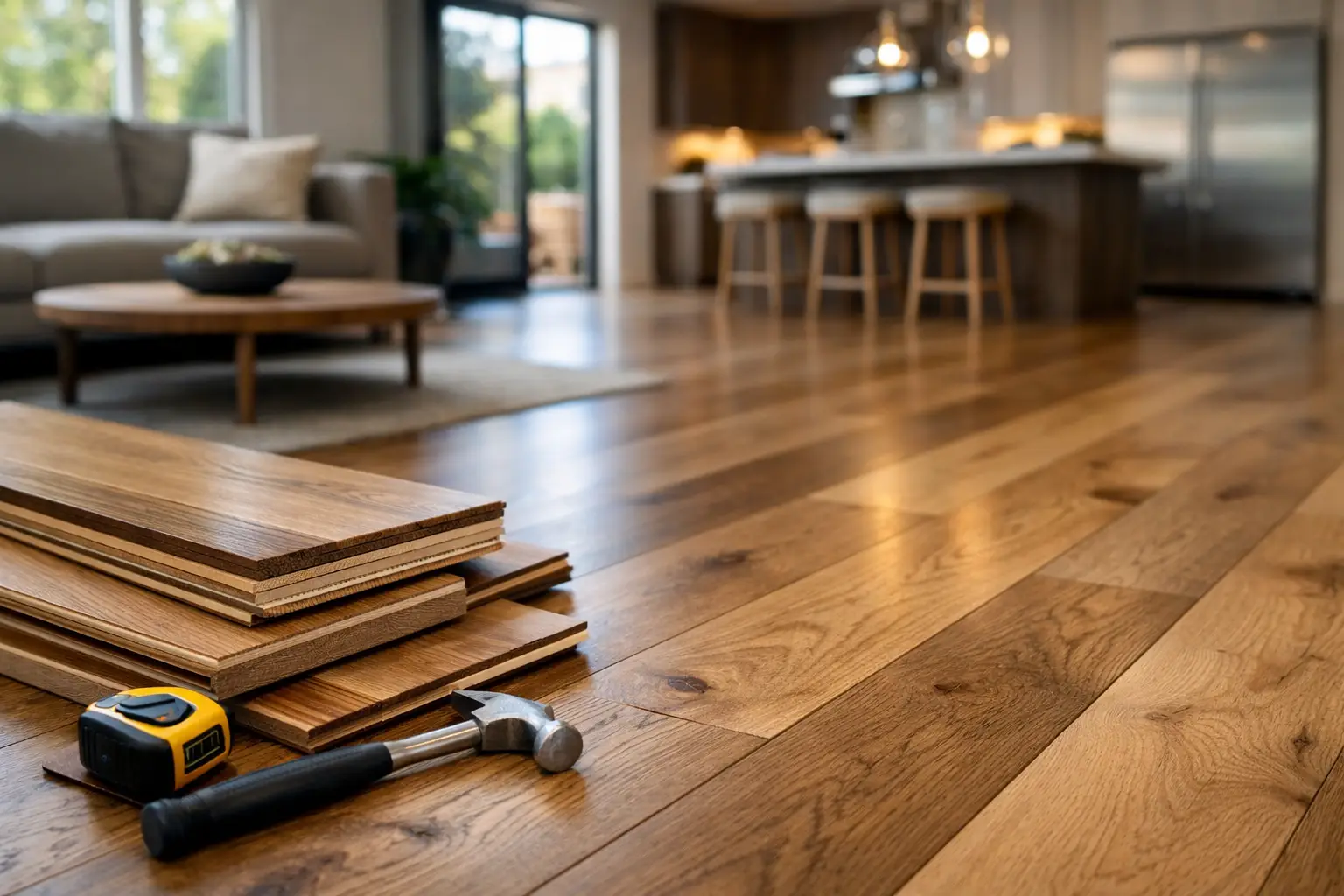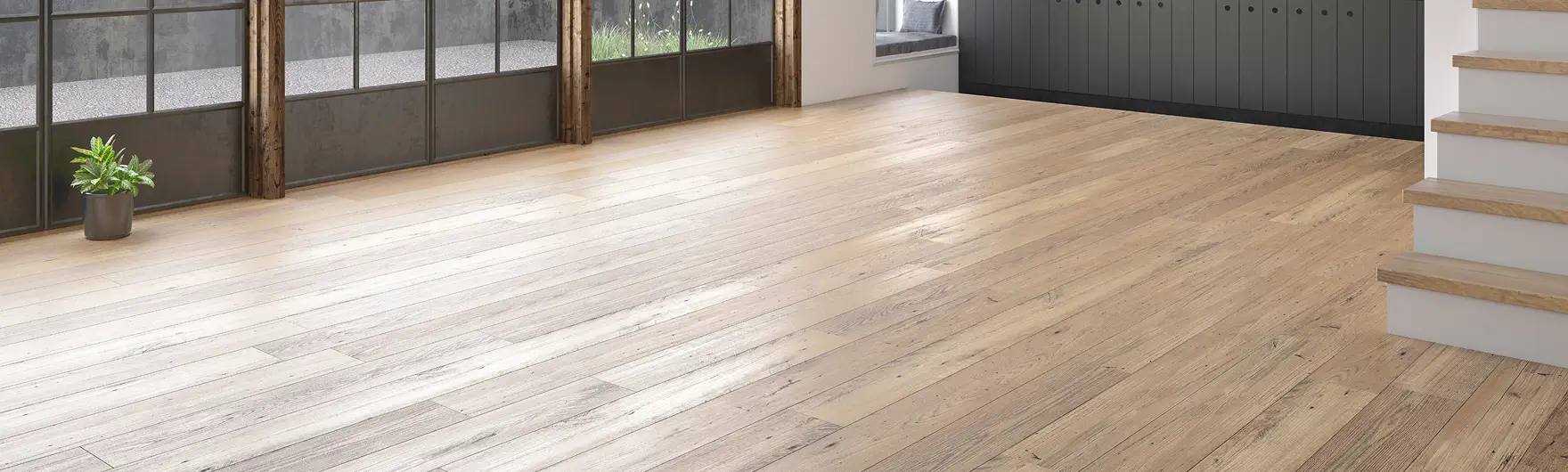
Choosing between engineered timber and hybrid flooring is one of the most common decisions Melbourne homeowners face during a renovation. Both options offer genuine beauty and durability, but they perform very differently across Melbourne’s variable climate, lifestyle demands, and property types. Melbourne Quality Timber Flooring has installed both across hundreds of Melbourne homes. Here is an honest comparison to help you decide.
Table of Contents
Key Takeaways
- Engineered timber offers a genuine hardwood veneer and can be sanded and refinished.
- Hybrid flooring is 100% waterproof and suits kitchens, bathrooms, and homes with pets.
- Melbourne’s climate suits engineered timber well due to its dimensional stability.
- Hybrid flooring typically costs less and requires minimal subfloor preparation.
What Makes These Two Flooring Types Different?
Both products have their roots in modern flooring engineering, but they are built in fundamentally different ways.
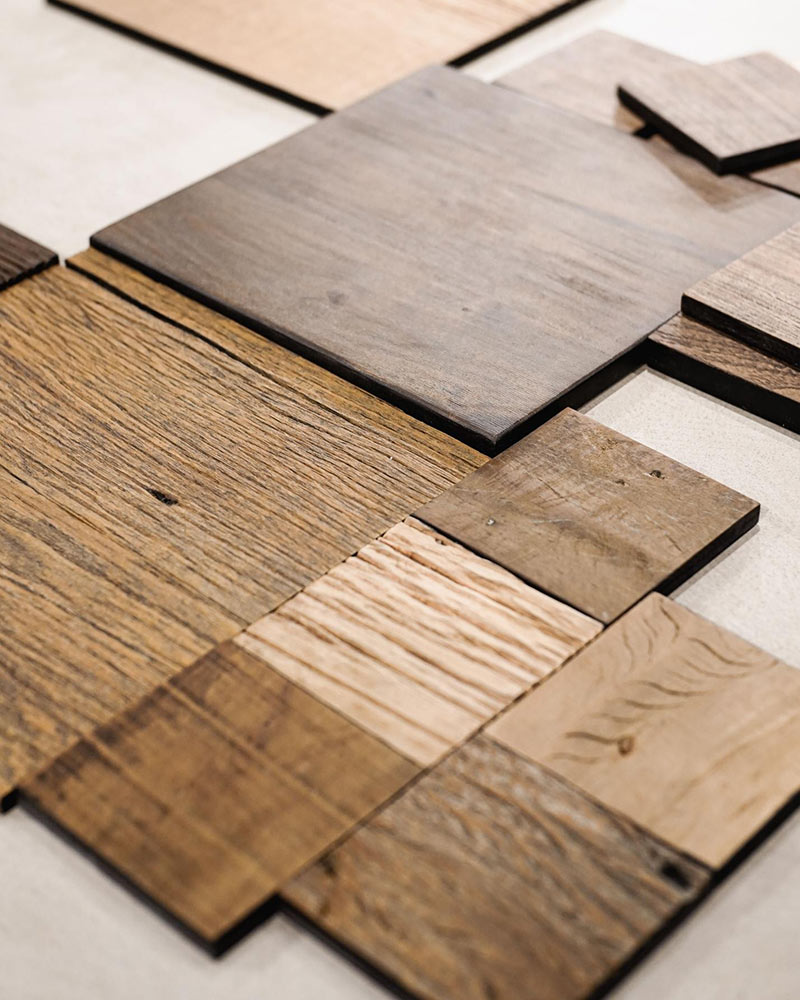
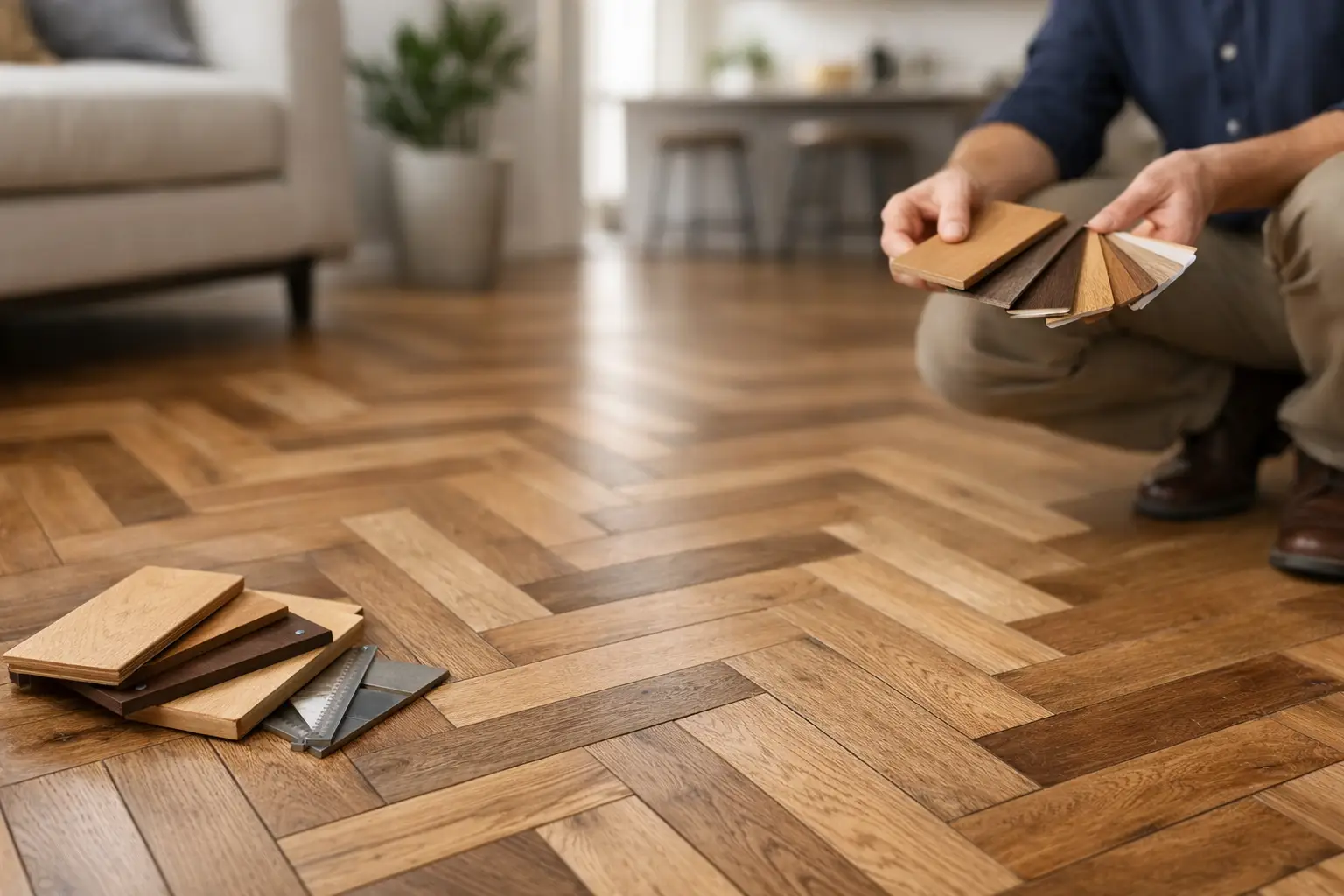
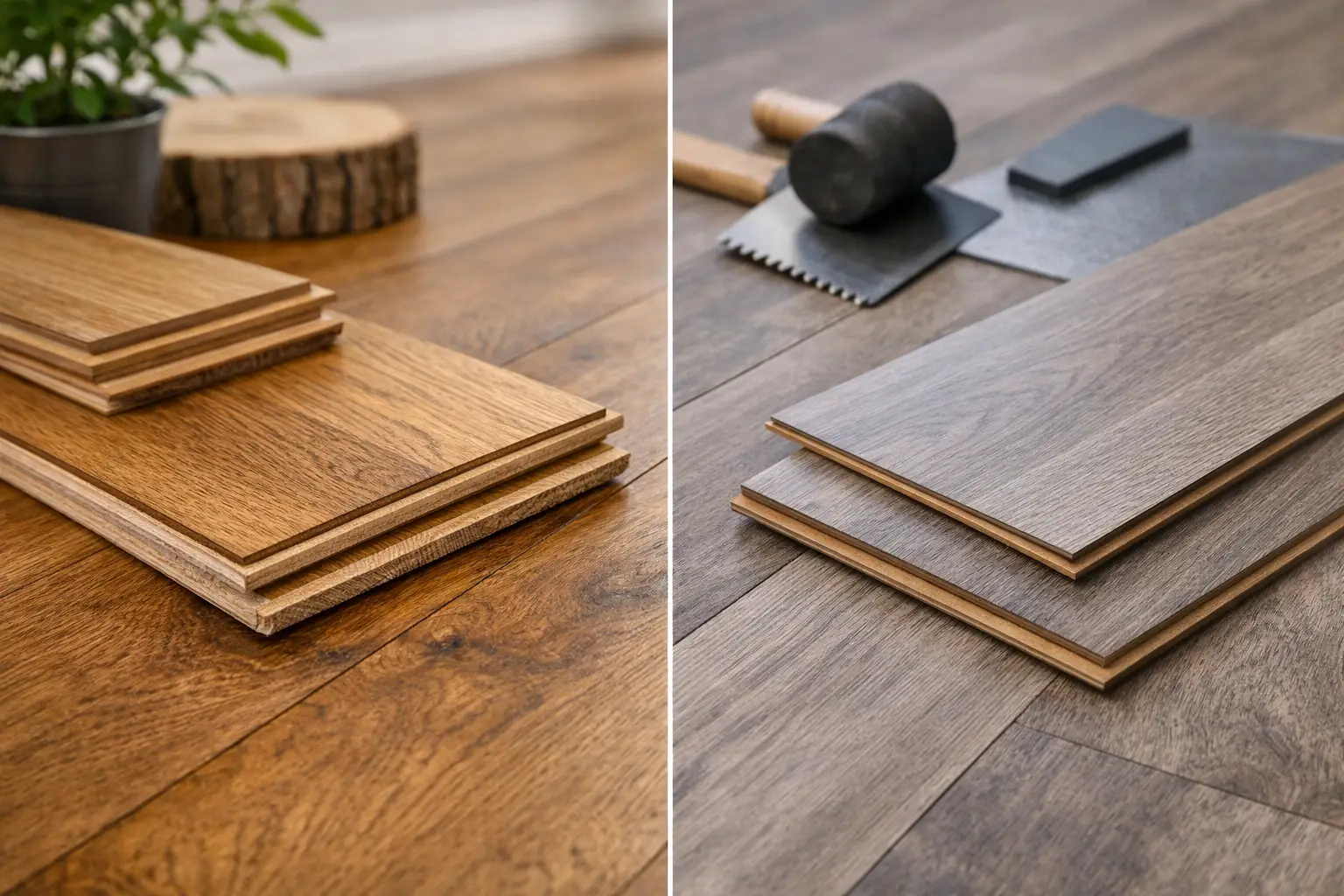
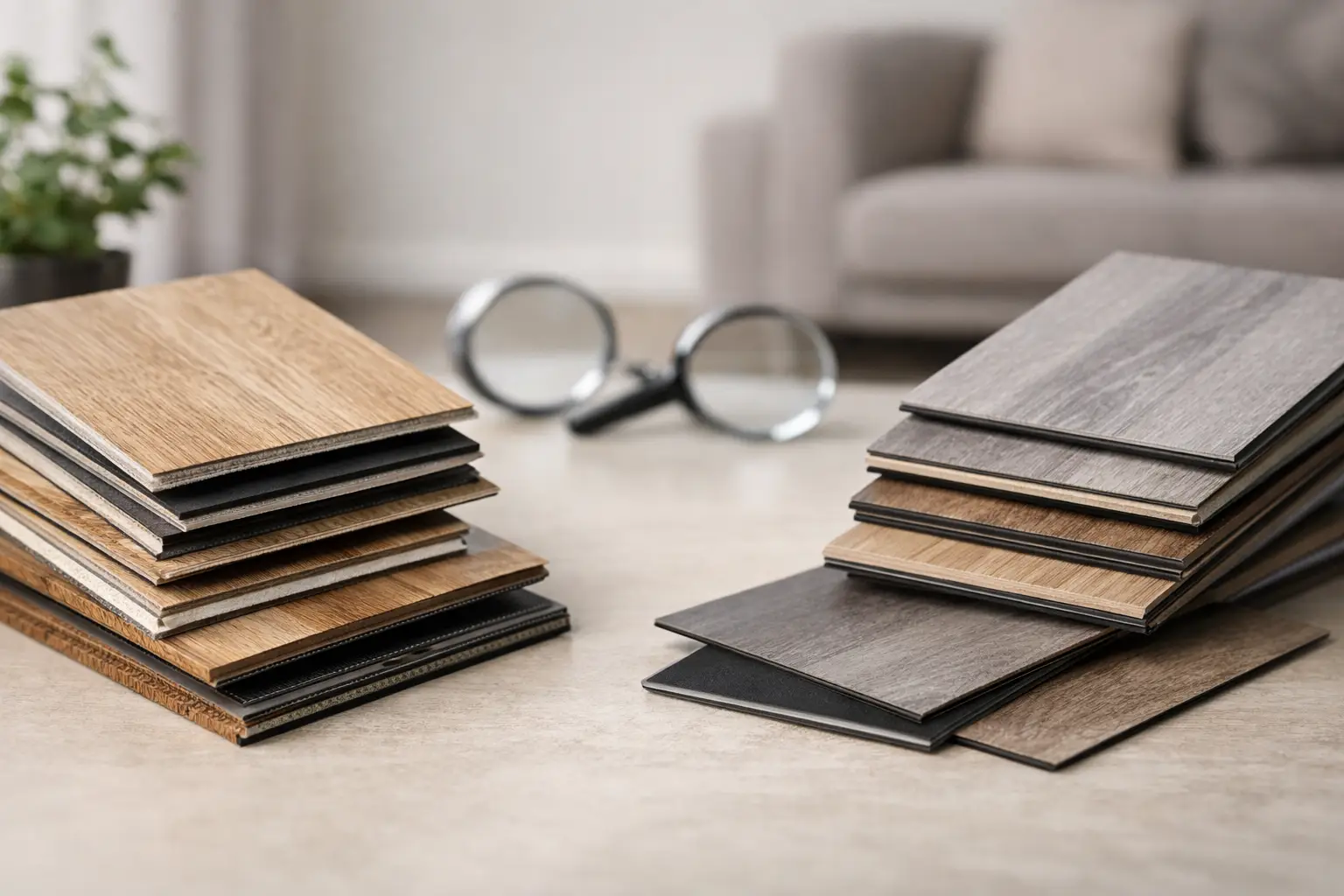
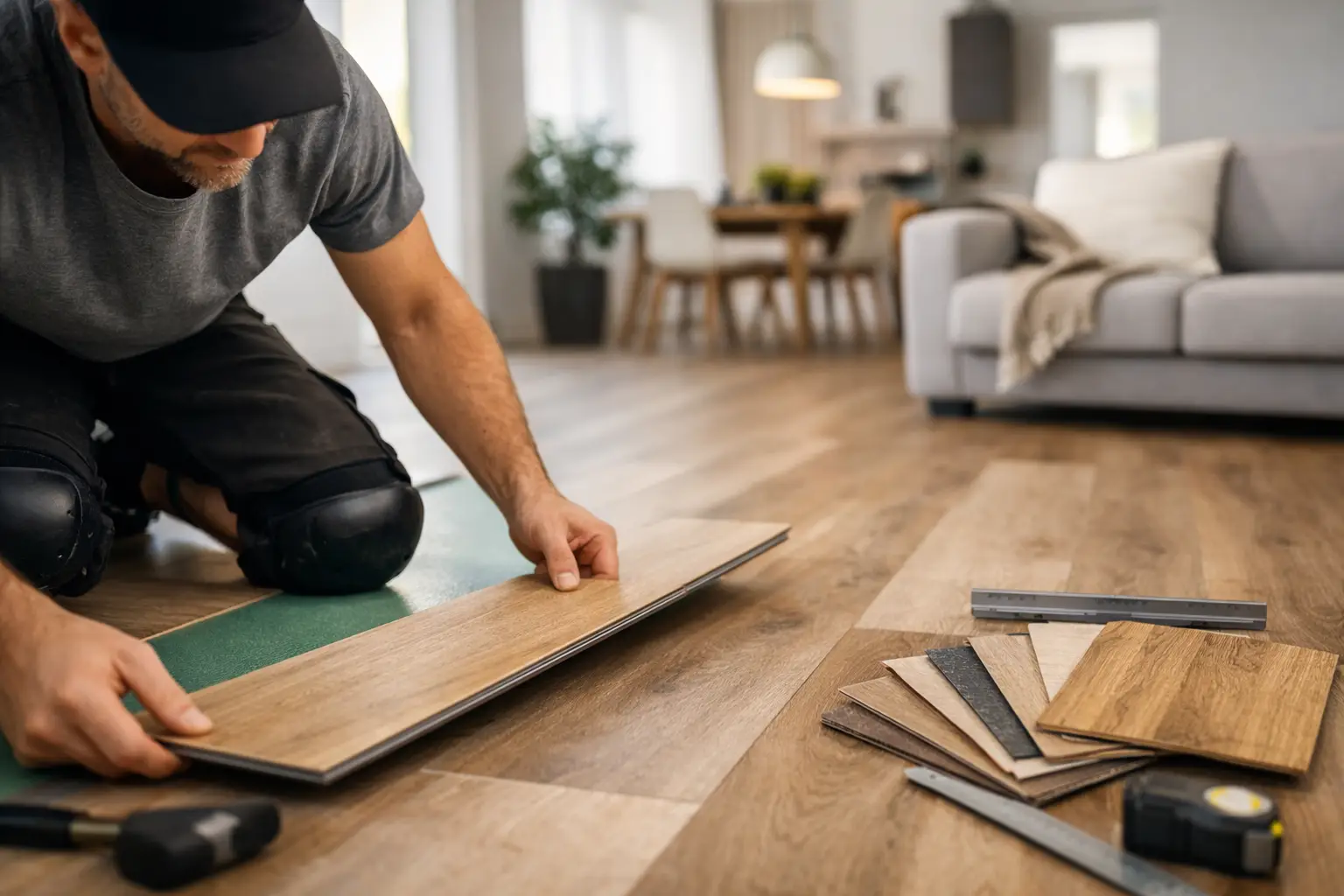
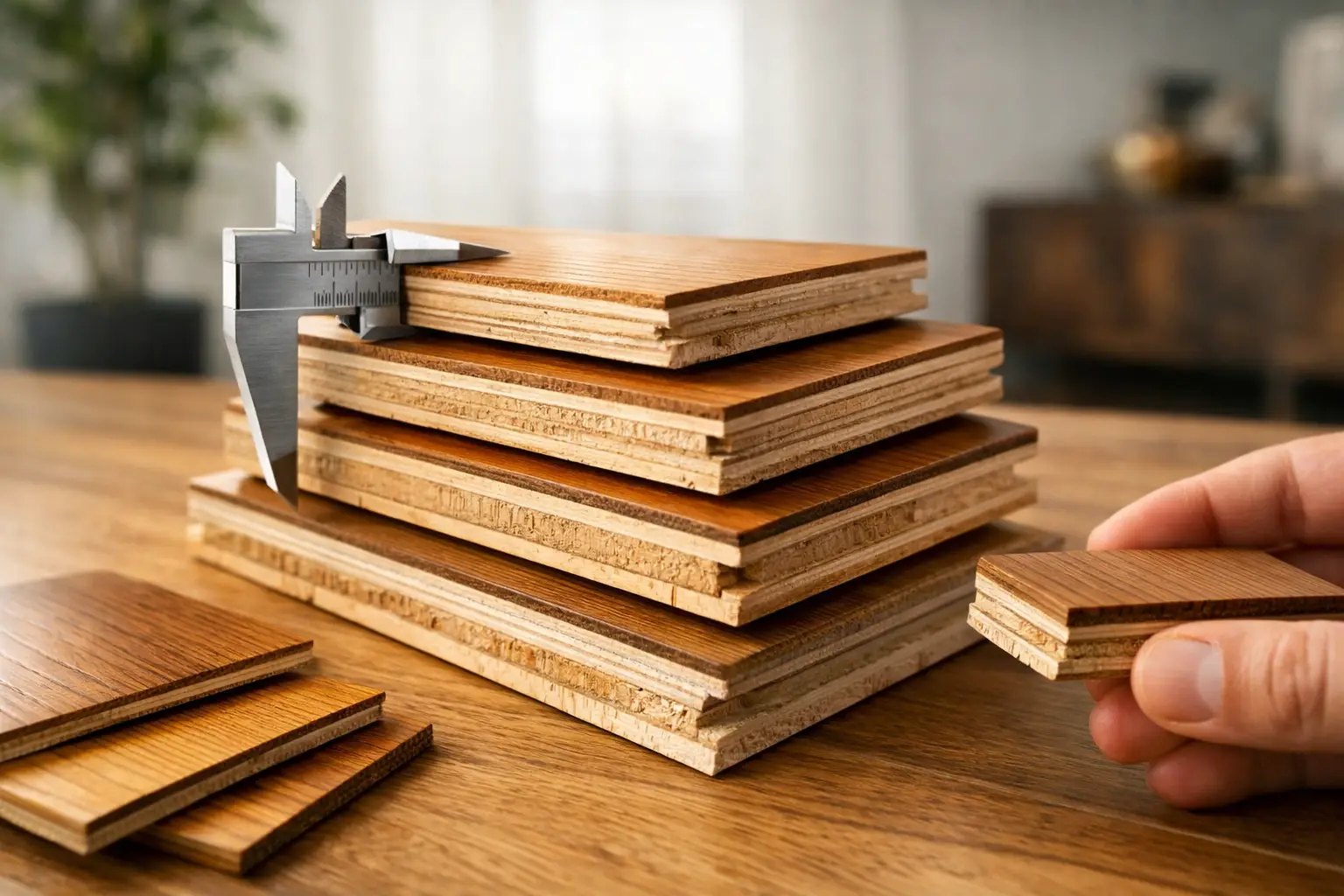
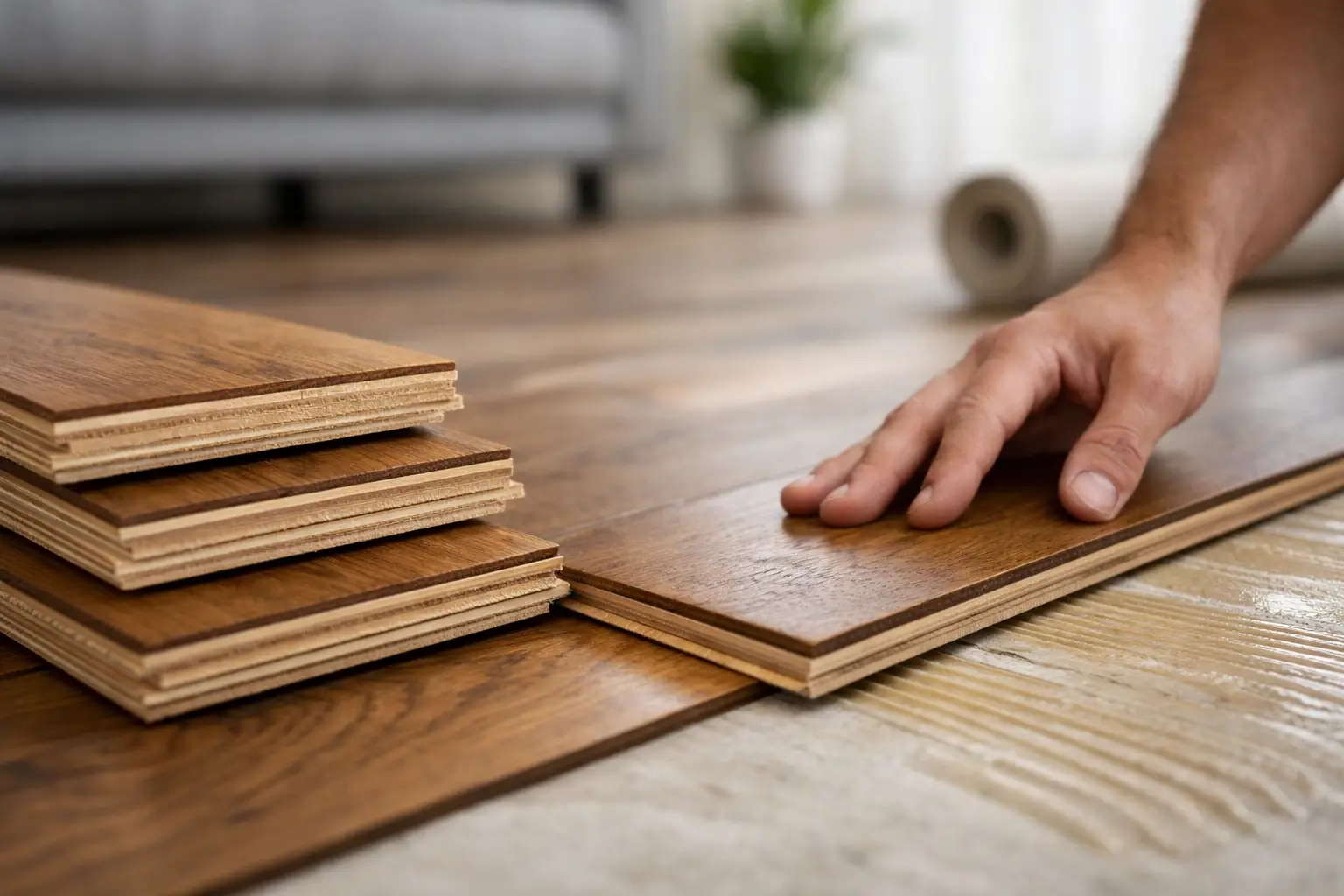
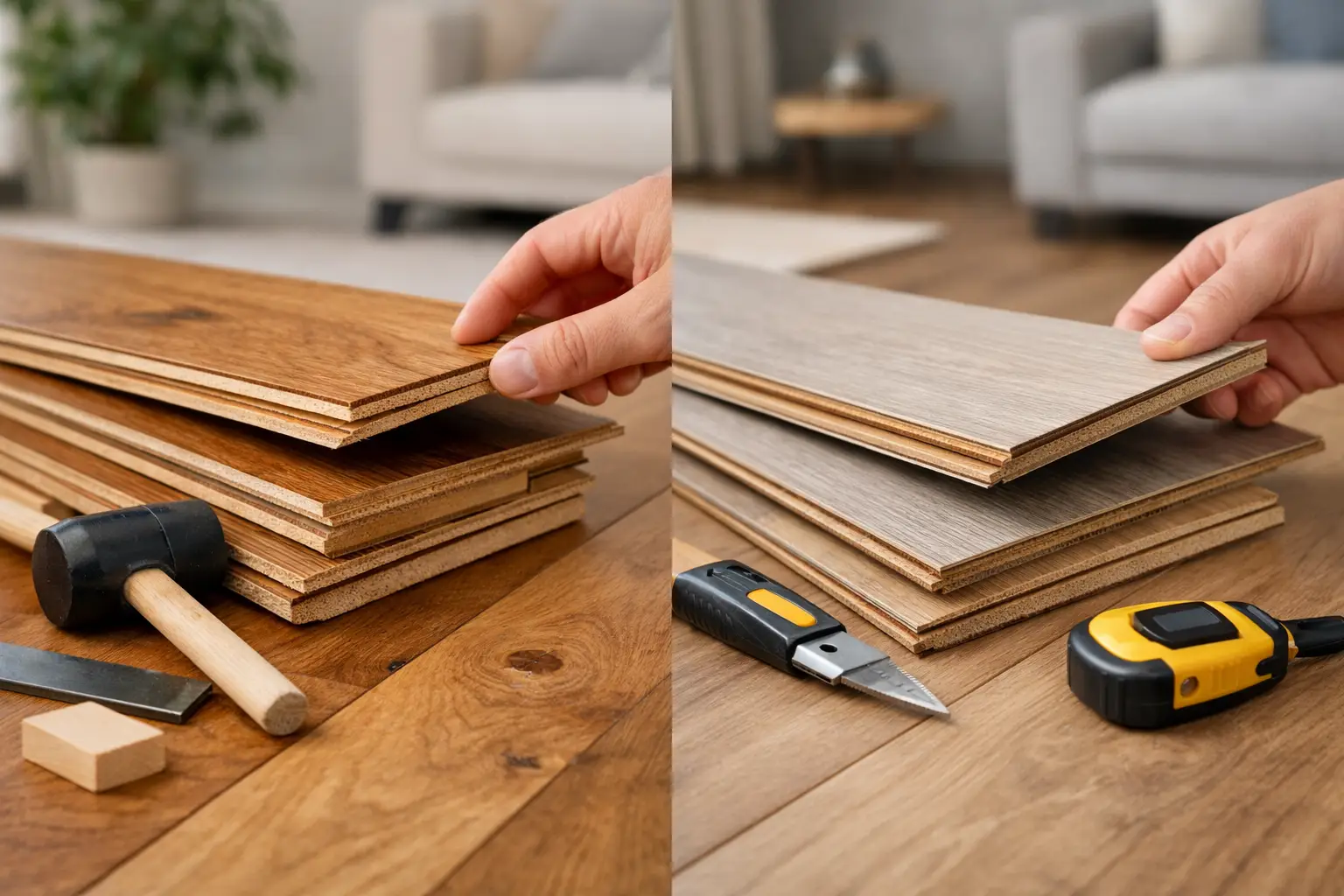
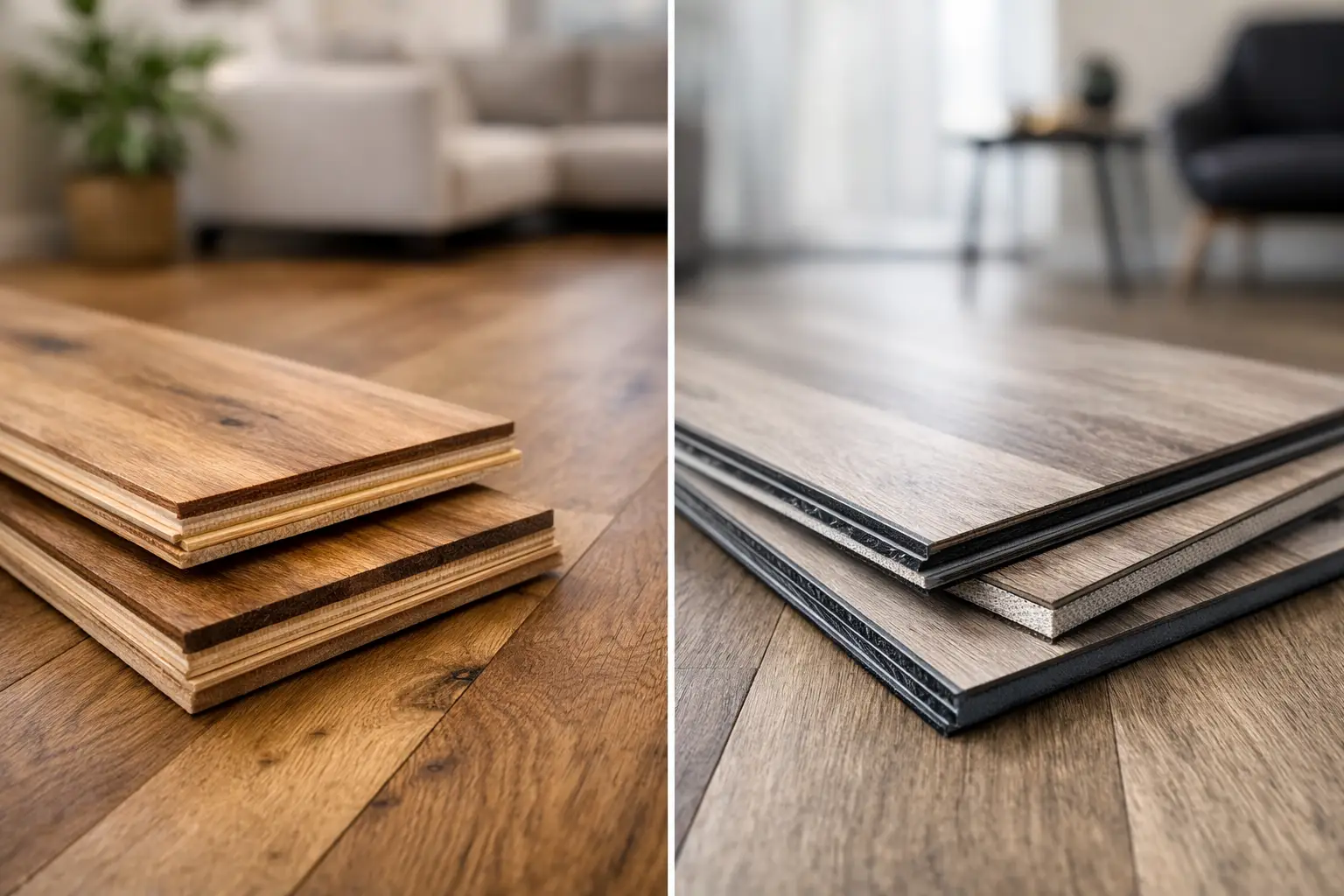
Engineered timber flooring uses a genuine hardwood veneer bonded over a stable plywood core. The top layer is real timber, whether European Oak, Spotted Gum, Blackbutt, or another species. It looks and feels like solid timber from above, but the layered construction makes it significantly more resistant to movement caused by temperature and humidity changes.
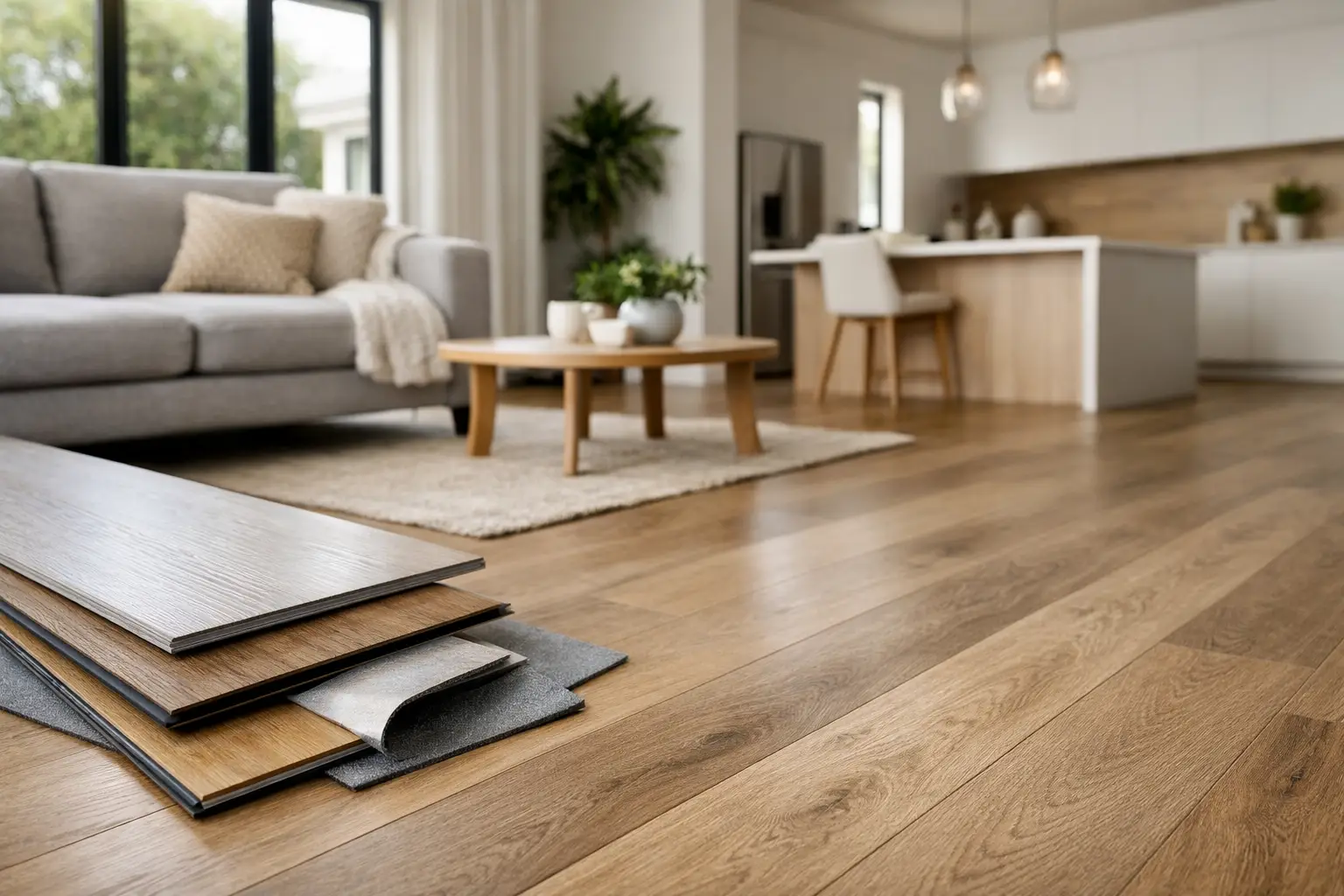
Hybrid flooring, by contrast, is fully synthetic. It combines a rigid stone-plastic composite (SPC) core with a photographic image layer that replicates the look of timber or stone, then seals it under a hard-wearing vinyl top coat. Hybrid flooring has grown significantly in popularity as Melbourne homeowners seek practical, low-maintenance alternatives to natural timber products.
How Melbourne’s Climate Affects Your Choice
Melbourne is famous for its unpredictable weather, and flooring feels every degree of it. Timber products respond to moisture and temperature by expanding and contracting. This movement, if not managed correctly, can cause gapping, cupping, or warping over time.
Engineered timber is engineered precisely to handle this. Its plywood core cross-layers resist movement far better than solid timber. The result is a product that performs well through Melbourne’s humid summers and cool winters when installed correctly with appropriate expansion gaps and moisture management.
Hybrid flooring goes further. Its rigid composite core is dimensionally stable regardless of moisture levels, making it genuinely waterproof and suitable for bathrooms, laundries, and areas with underfloor heating. CSIRO research on building ventilation and moisture management in Australian homes highlights that managing moisture within the building envelope is critical to long-term performance of any flooring material, and both products respond differently to that challenge.
Durability: Which One Actually Lasts Longer?
This depends on what you mean by durability.
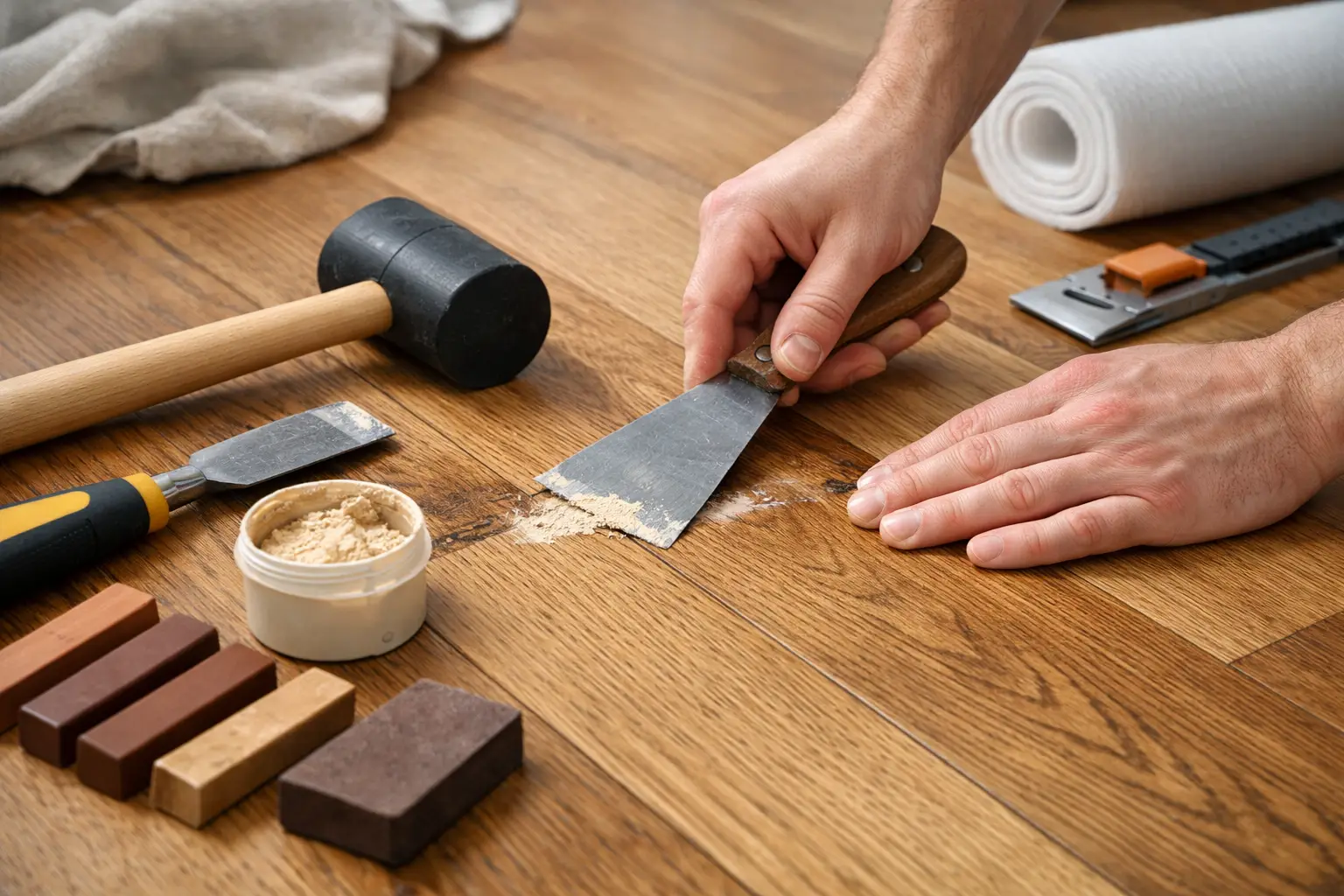
Engineered timber is a natural product. Its timber veneer can develop surface scratches over time, particularly in high-traffic areas or homes with pets. However, a quality engineered floor can be lightly sanded and recoated once or twice during its life, giving it a fresh surface without full replacement. Properly maintained, a good engineered floor can last 25 to 40 years.
Hybrid flooring cannot be sanded or refinished. Once the wear layer is through, the floor needs replacing. However, the wear layer on a premium hybrid product is typically 0.5mm or thicker and is highly resistant to everyday scratches, stains, and impacts. For a busy household with children and pets, hybrid often wins on practical durability in the short to medium term.
Waterproofing: A Critical Difference
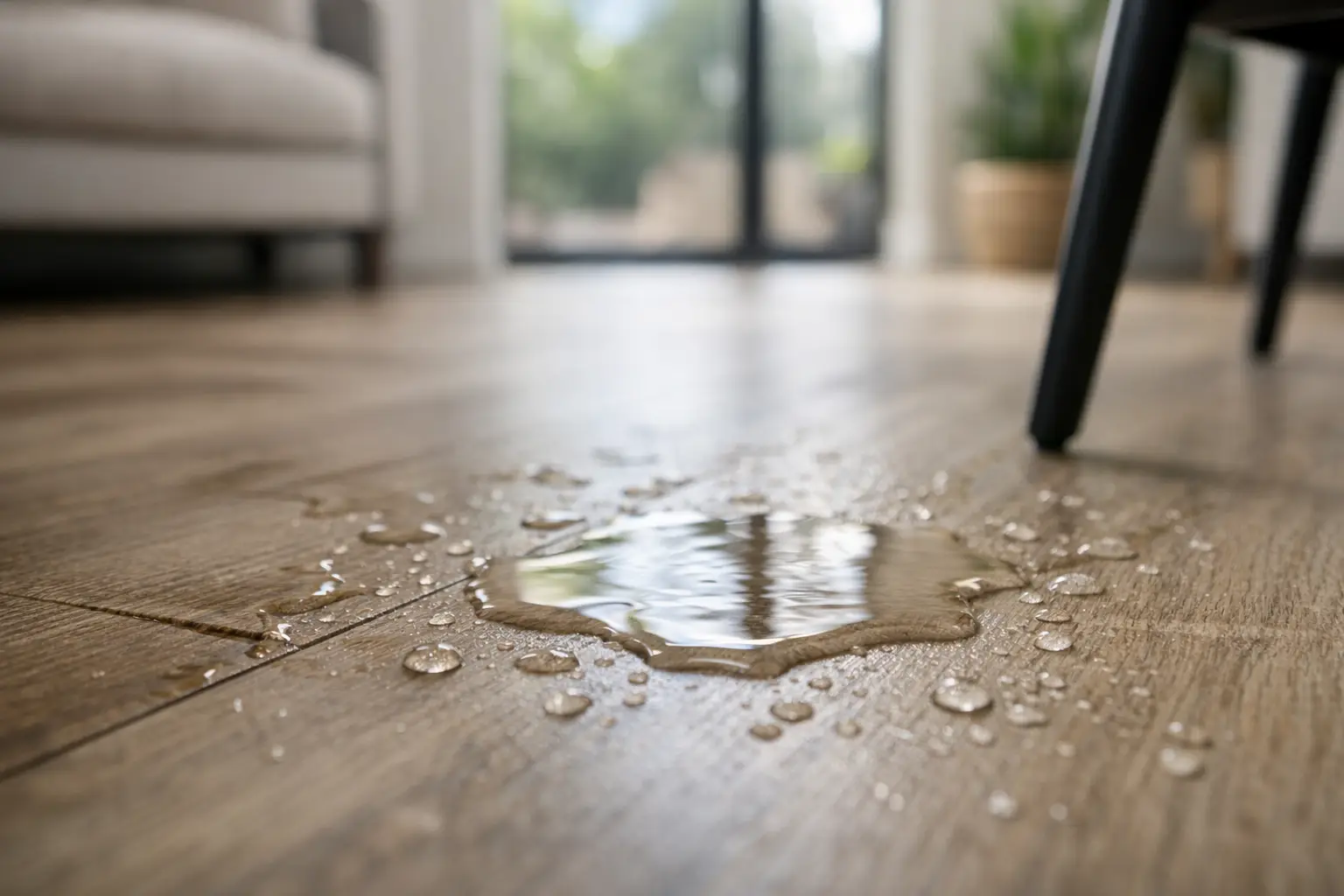
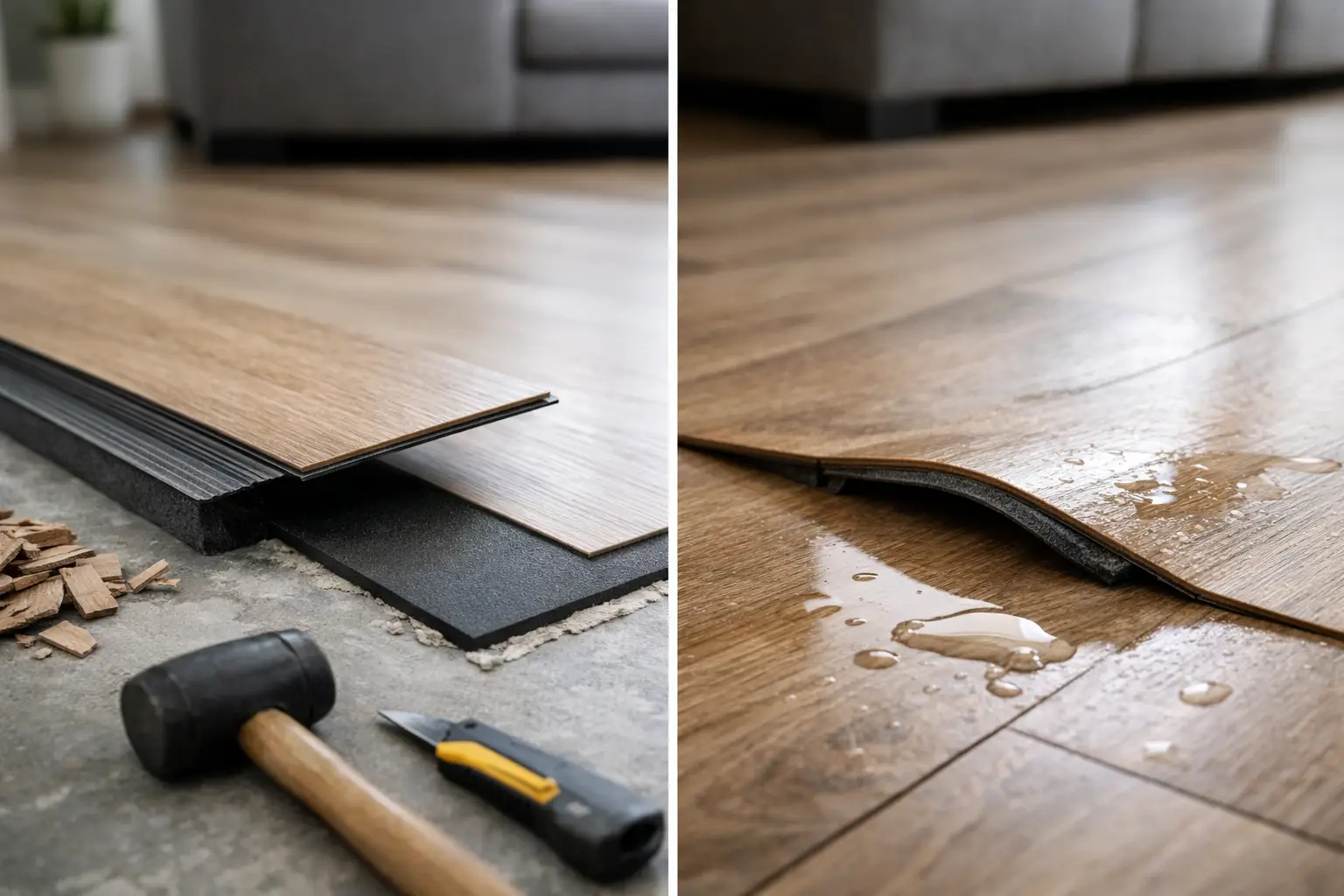
This is where hybrid flooring has a clear advantage. Hybrid is 100% waterproof down to the subfloor. Spills, accidents, and splashes do not penetrate the core.
Engineered timber is moisture-resistant, not waterproof. It can tolerate occasional spills if wiped up promptly, but sustained exposure to standing water will cause damage. This is why hybrid flooring Melbourne range at Melbourne Quality Timber Flooring is the most popular choice for kitchens, bathrooms, laundries, and homes with pets or young children.
If your renovation includes a wet area or a ground-floor space with potential moisture exposure, hybrid flooring is the practical choice.
Aesthetics and Feel: The Real-Timber Difference
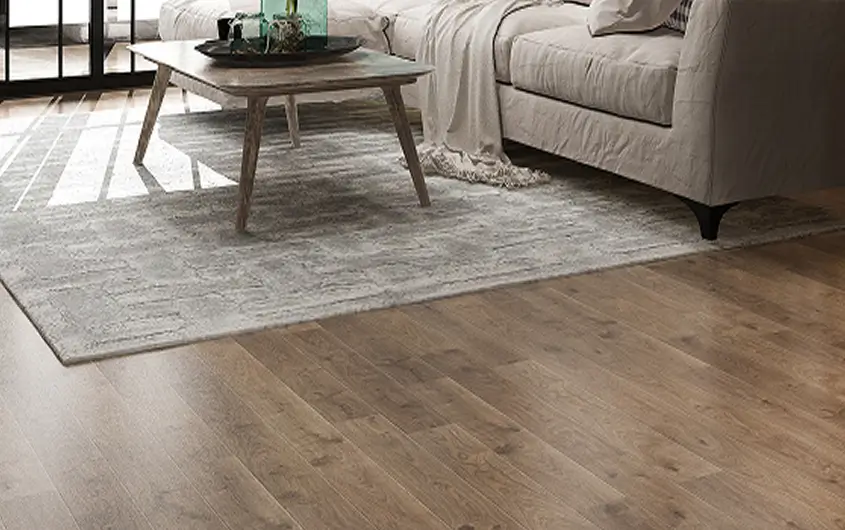
No hybrid product, however well made, replicates the warmth and character of a genuine timber veneer underfoot. Engineered timber as a building material offers natural variation in grain, knot structure, and tone that gives a floor genuine personality.
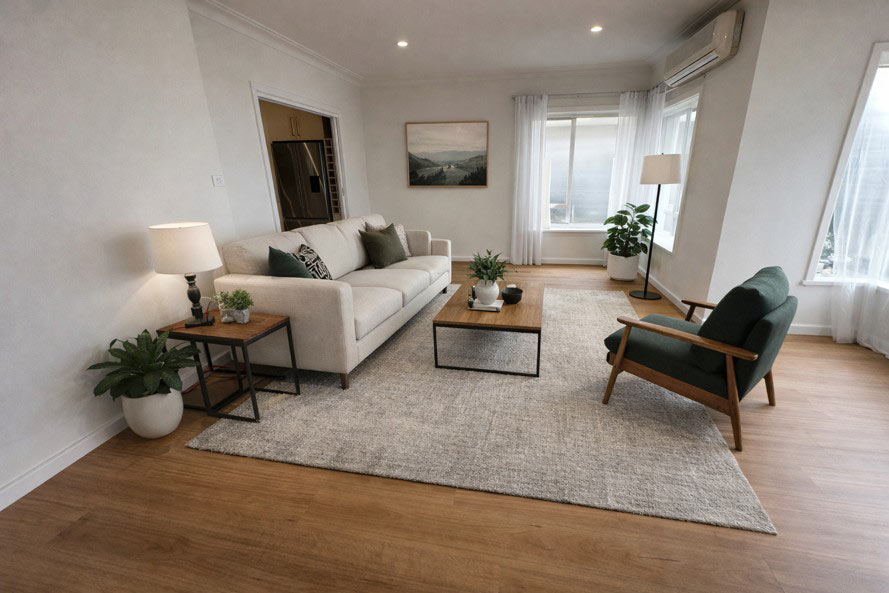
Hybrid flooring has improved significantly in recent years, with embossed surface textures and wide-format planks that look genuinely convincing. For budget-conscious homeowners or investment properties, hybrid delivers excellent visual results. But for living rooms, master bedrooms, and areas where the underfoot feel matters, engineered timber remains the preferred choice for most homeowners who see their flooring as a long-term investment.
Sustainability: Making a More Informed Choice
Engineered timber uses less hardwood than solid timber because only the top veneer is from the selected species. When sourced from certified forests, it is a responsible choice. The FSC label and sustainable forestry certification in Australia ensure that the timber veneer in your floor comes from responsibly managed forests.
Hybrid flooring is a synthetic product. Its SPC core is not biodegradable, and while the product is durable and long-lasting, it does not carry the same end-of-life recyclability as natural timber. Manufactured timber products and adhesives used in construction can emit volatile organic compounds, which is worth considering when selecting adhesives and finishes for your flooring installation.
Installation and Cost Comparison
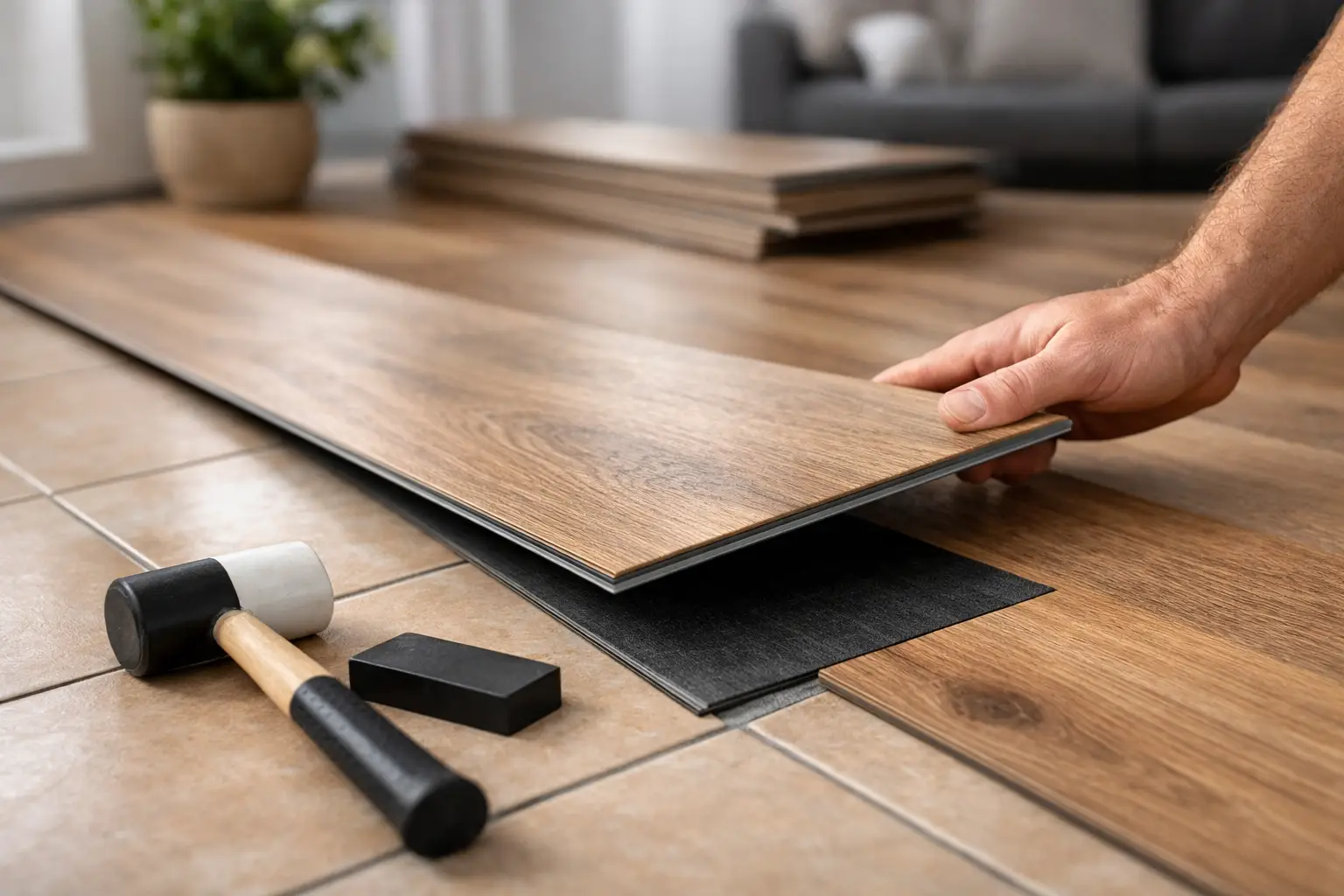
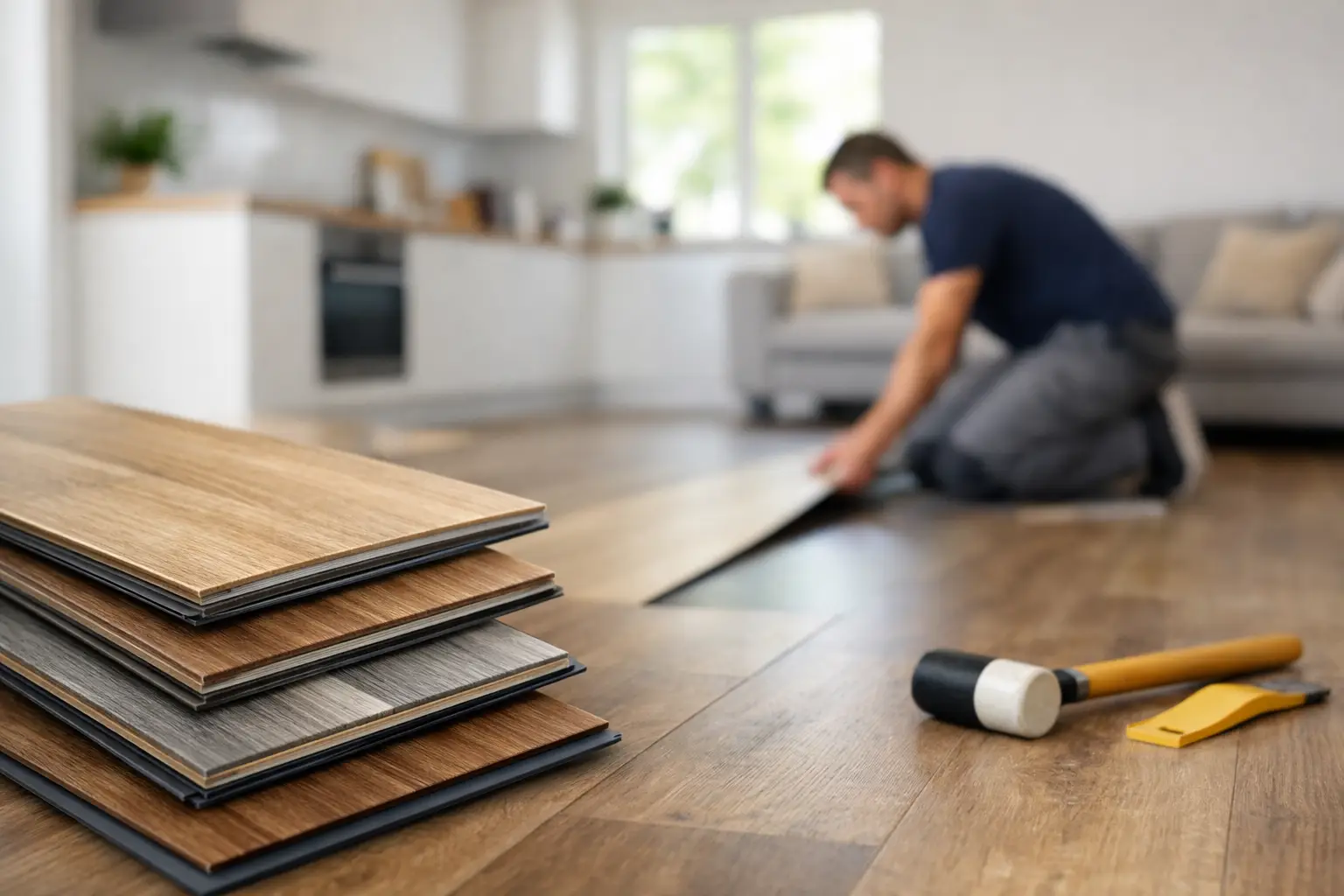
Hybrid flooring is generally more forgiving during installation. Its rigid core tolerates minor subfloor imperfections, and its click-lock system makes floating installation straightforward.
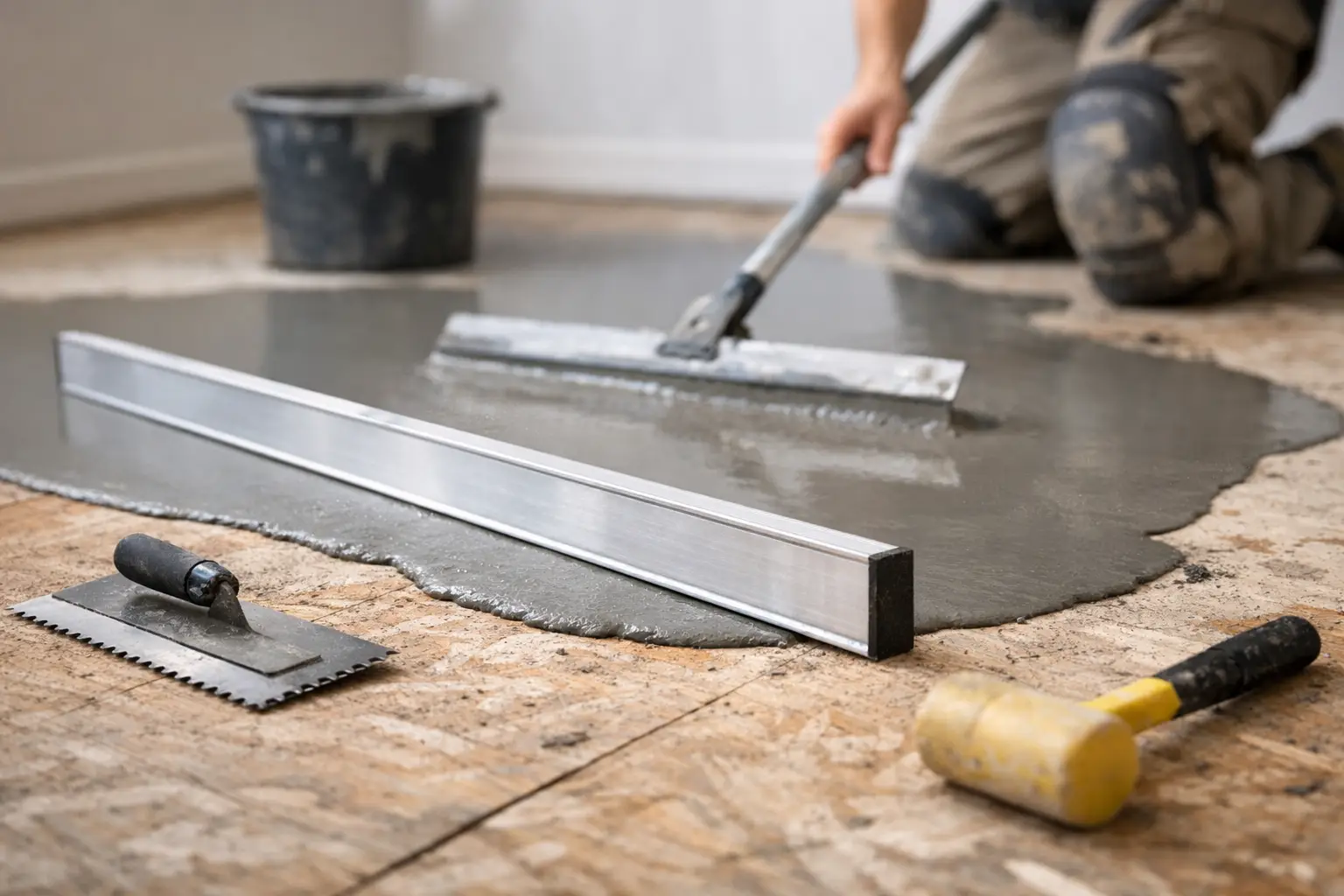
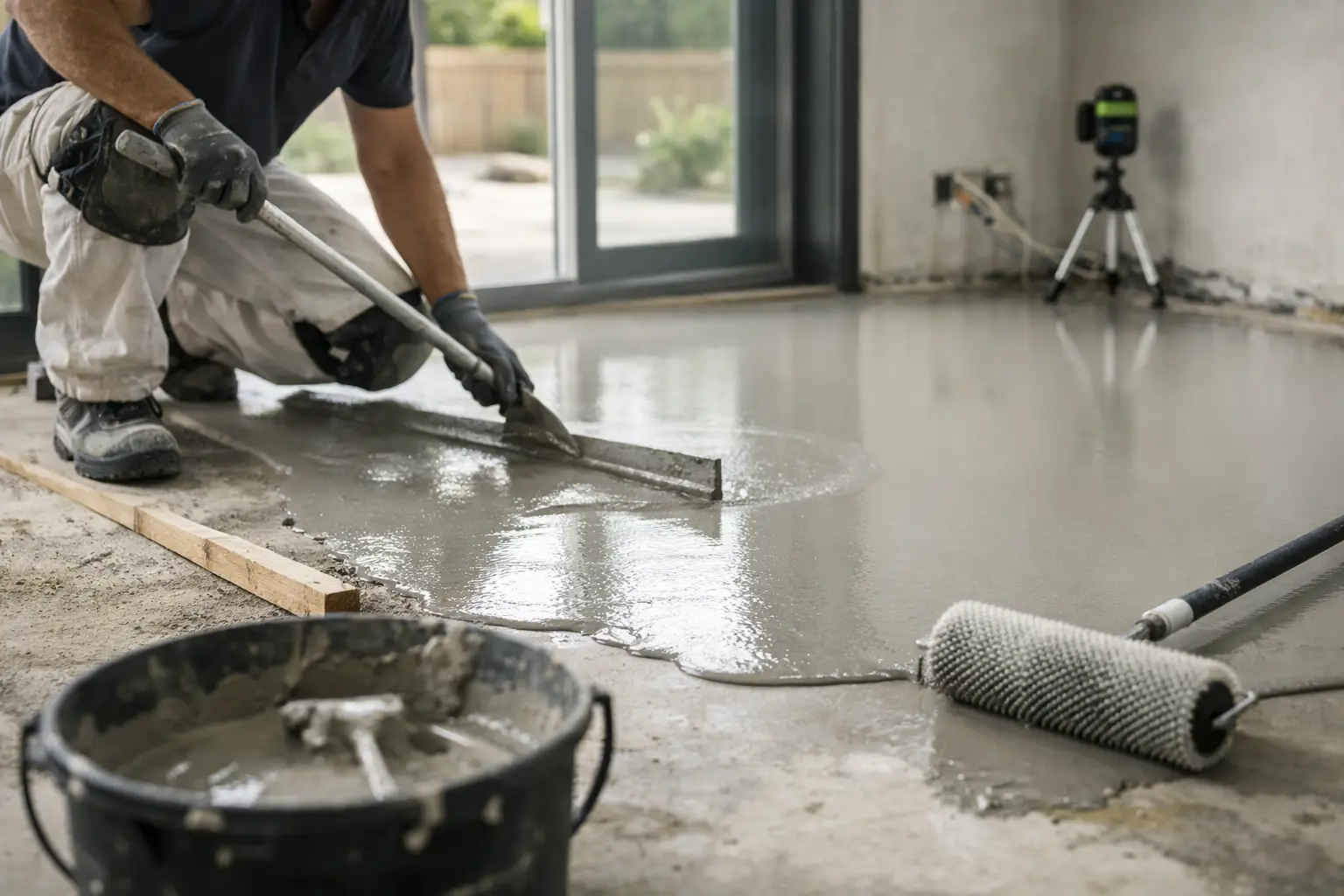
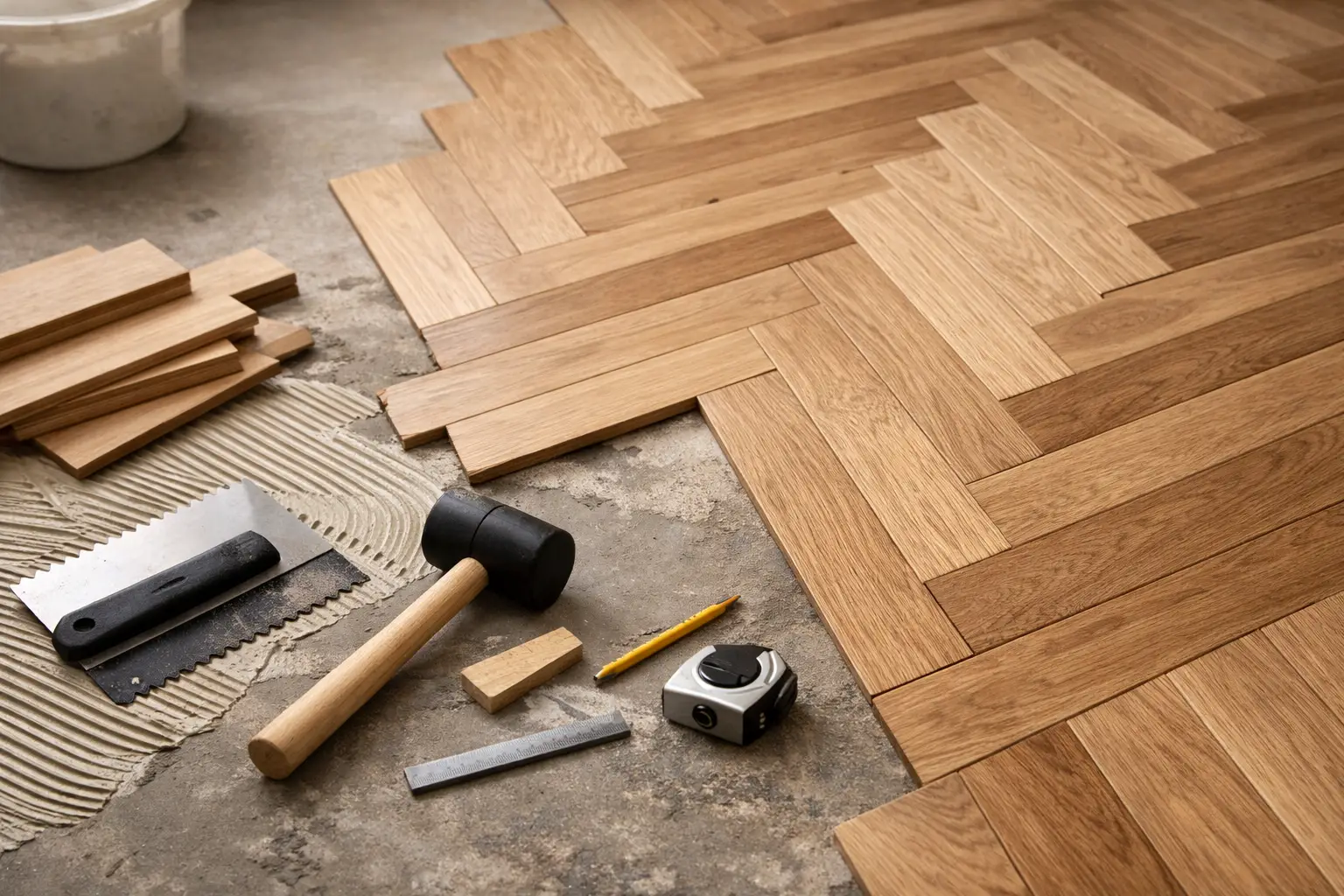
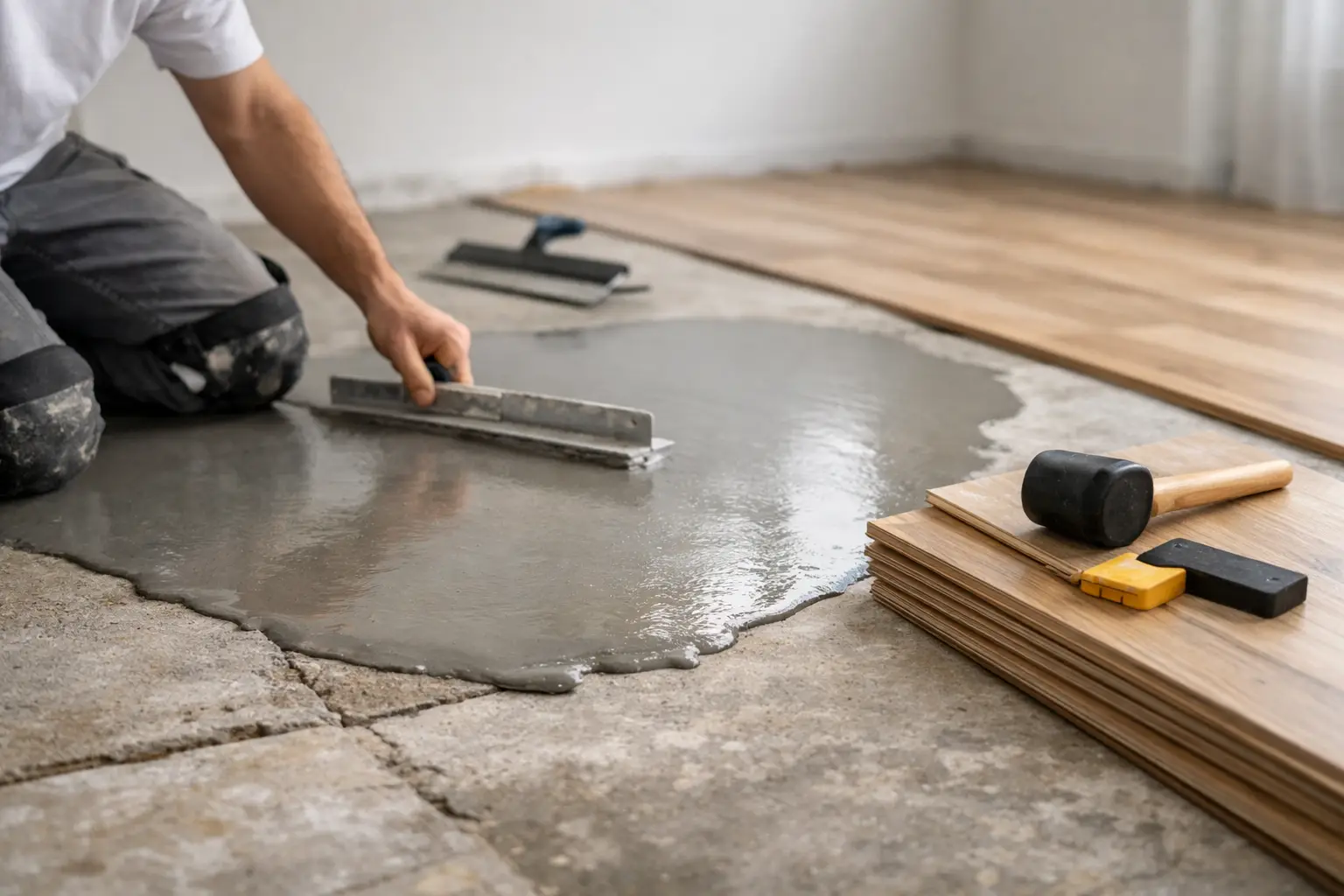
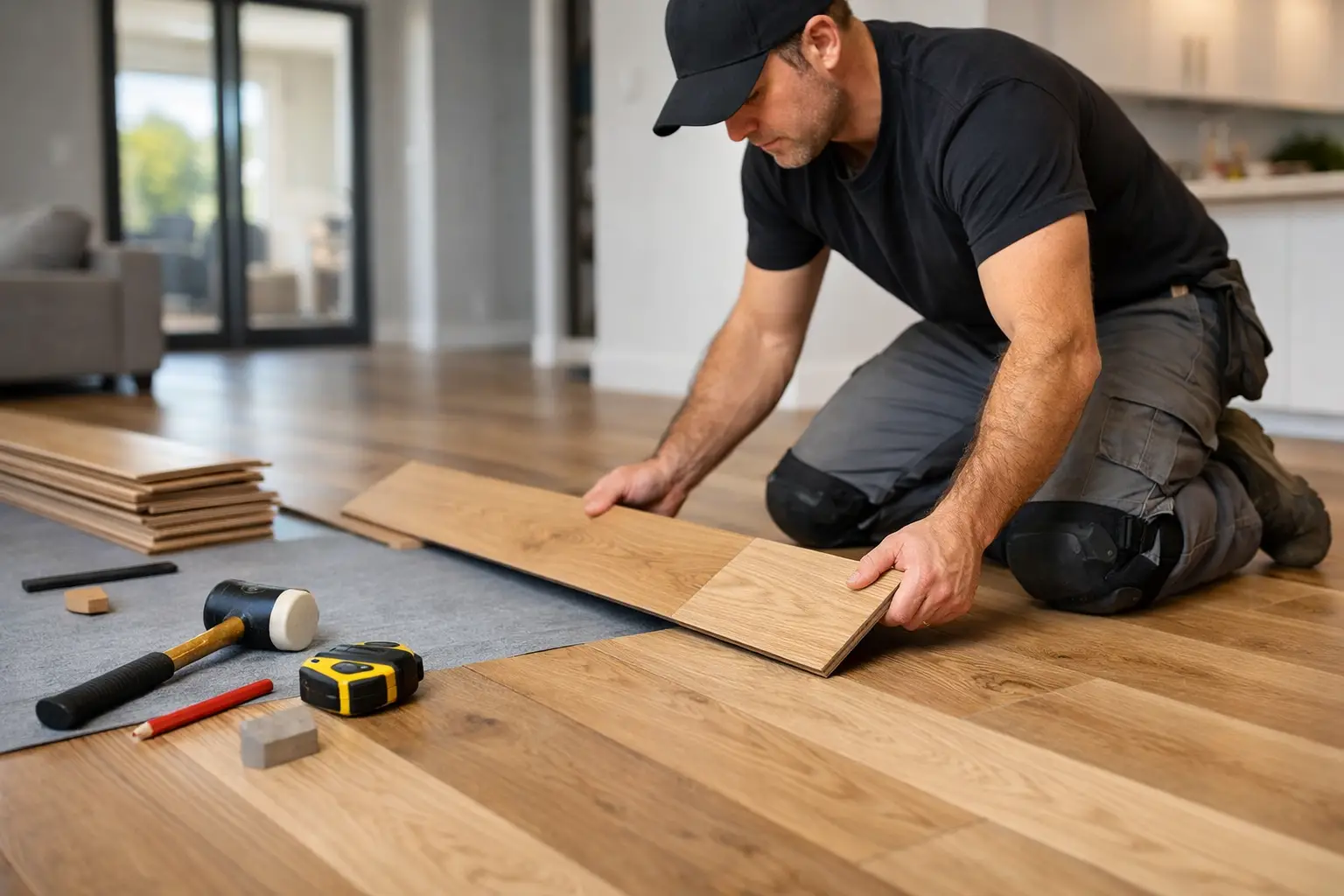
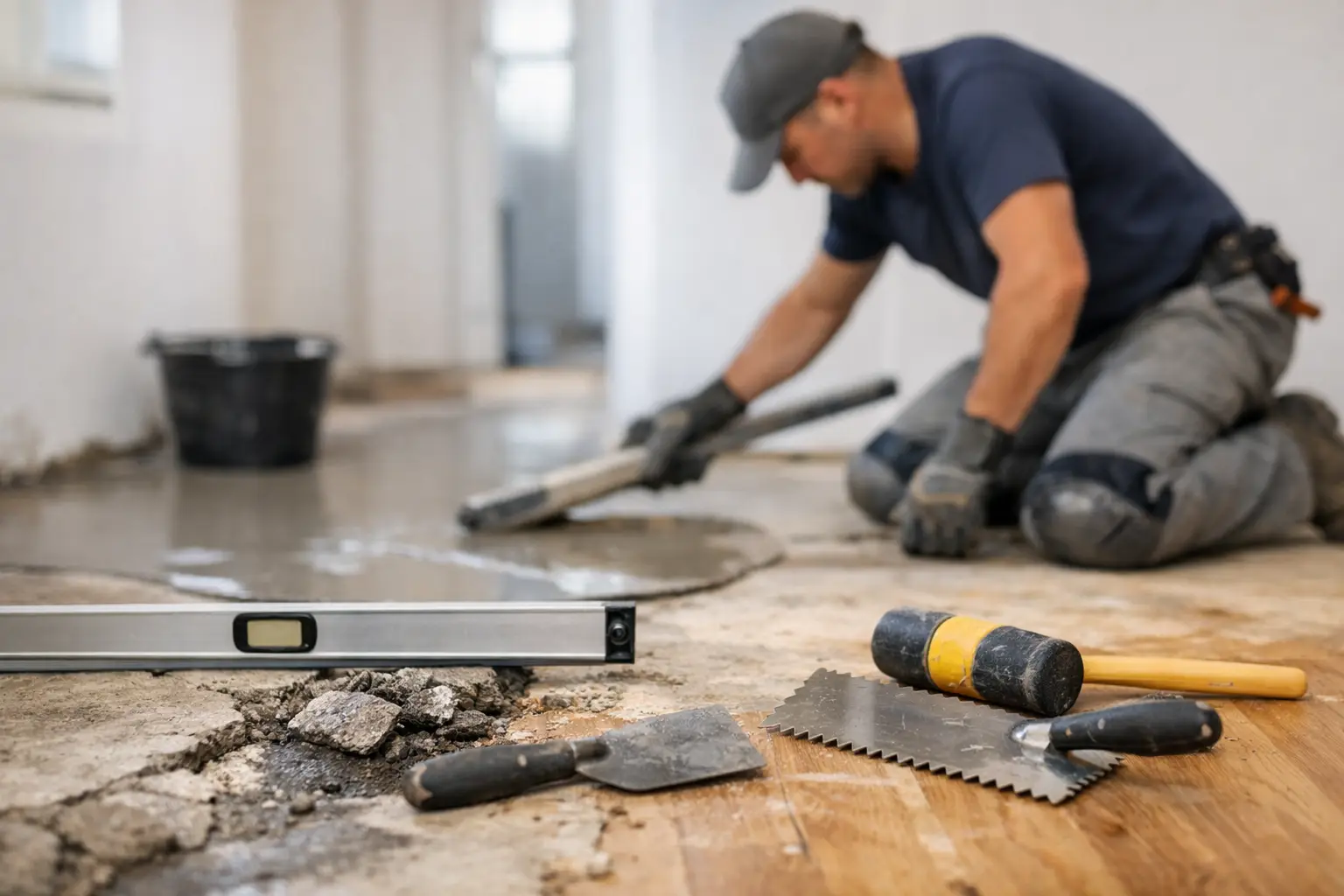
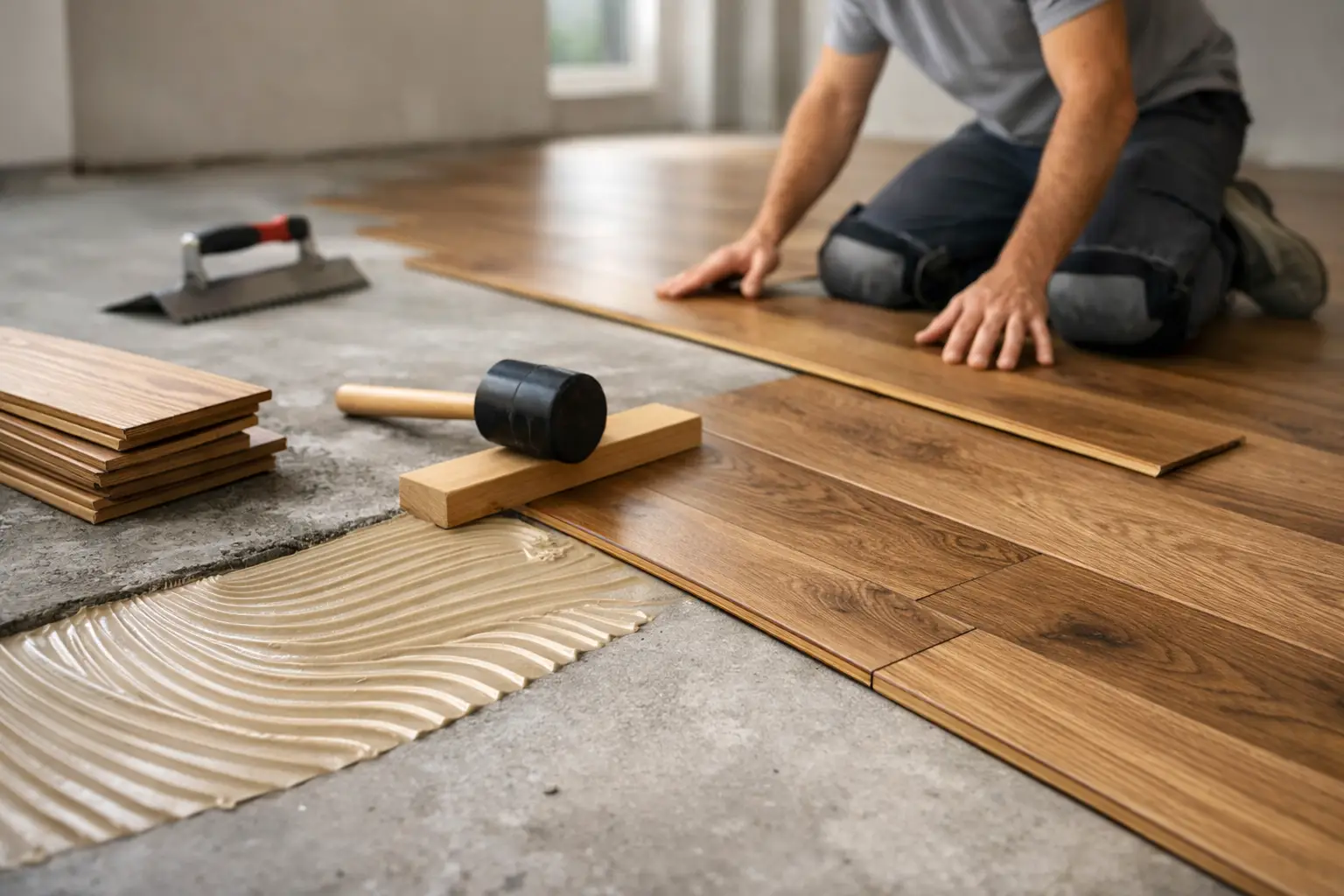
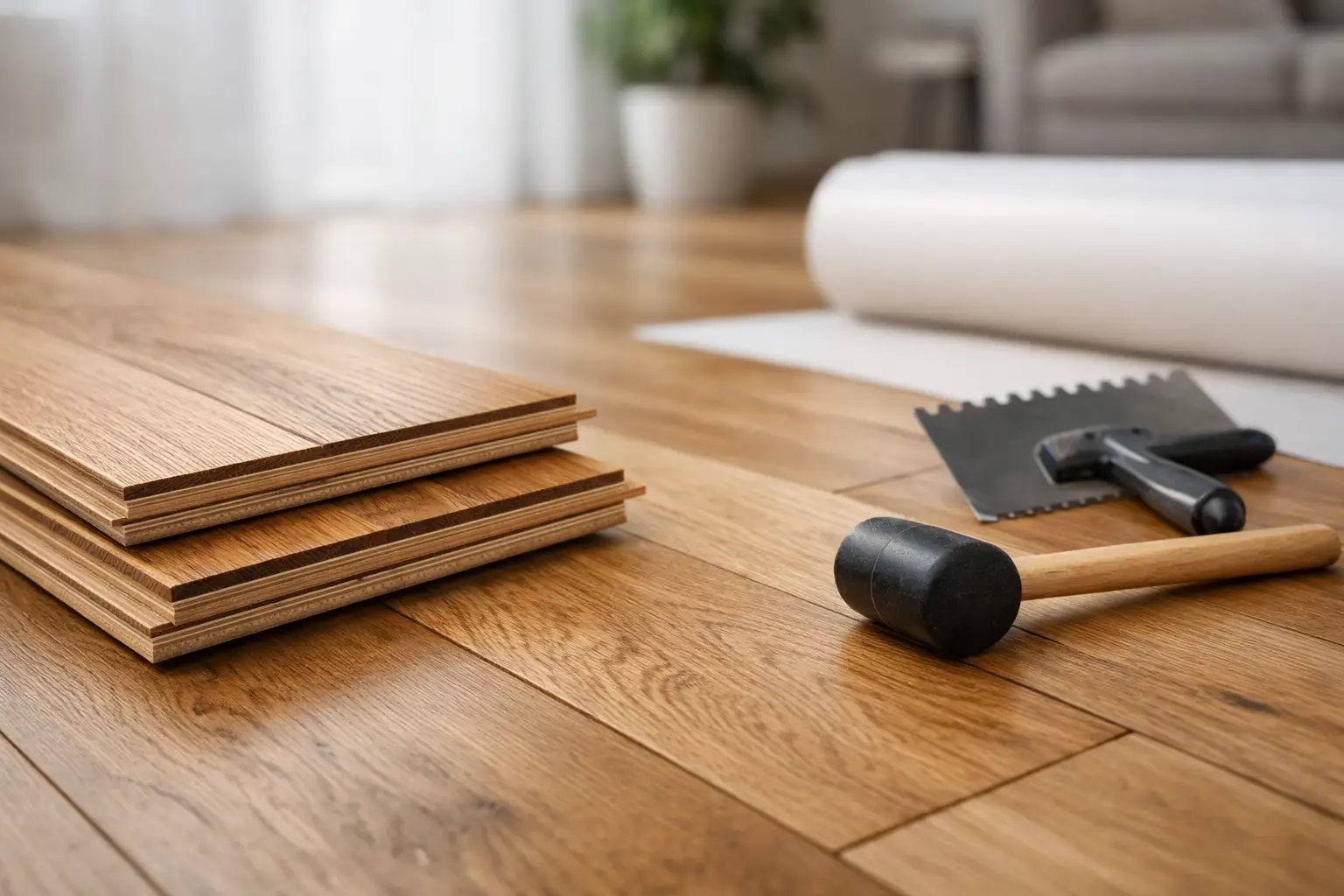
Engineered timber requires a well-prepared subfloor. At Melbourne Quality Timber Flooring, we use Cemimax self-levelling compound on any subfloor that is not within the required flatness tolerance. This preparation step is critical to preventing long-term movement, squeaking, and adhesion failure. Skipping it is the most common cause of flooring problems after installation.
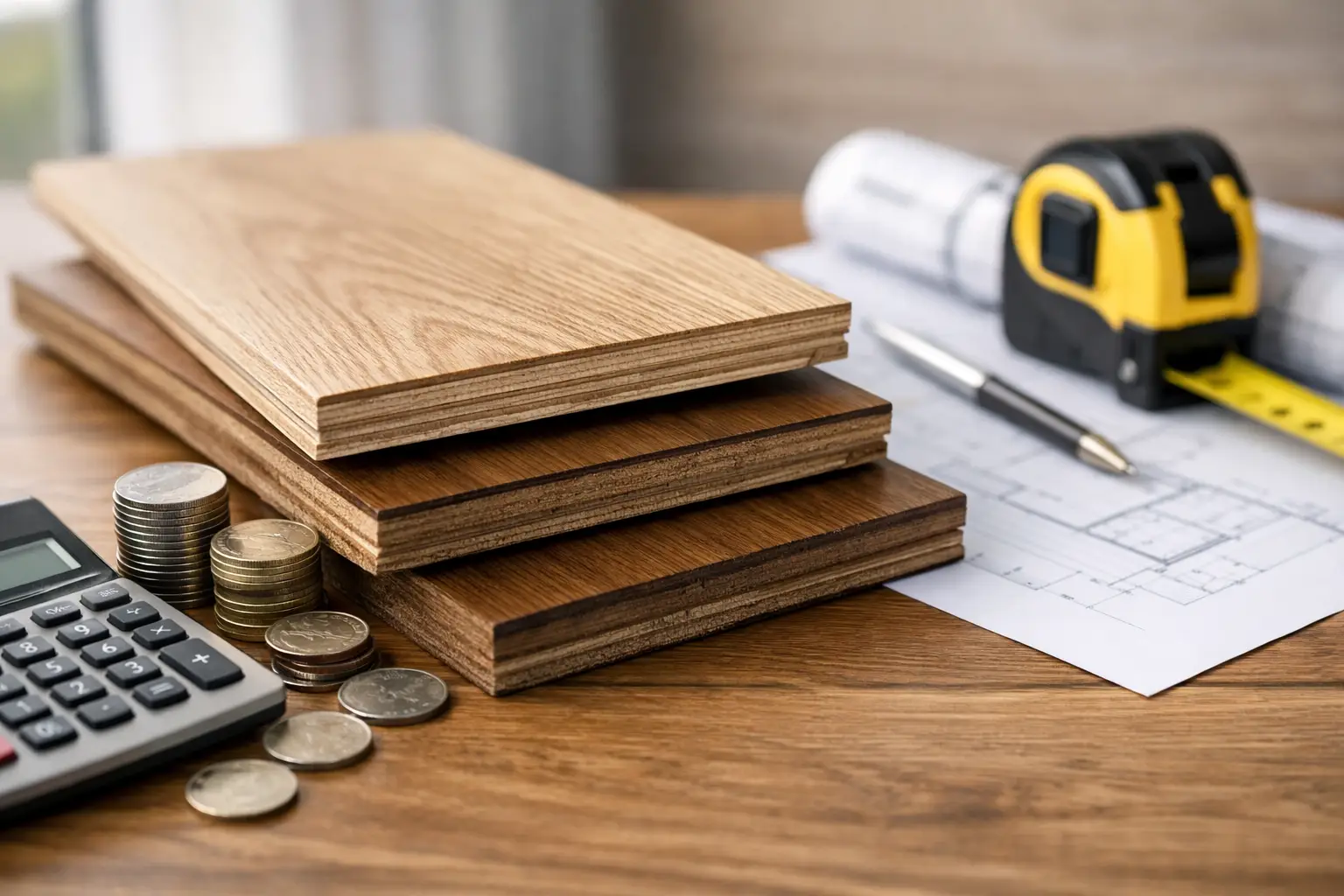
In terms of cost, hybrid flooring is typically more affordable on supply, and the installation process is faster. Engineered timber carries a higher supply and installation cost, but its ability to be refinished and its longer potential lifespan can make it more cost-effective over time.
Which One Is Right for Your Melbourne Home?
The honest answer is that it depends on where the floor is going, who lives in the home, and what matters most to you.
Choose engineered timber if:
- You want a genuine timber look and feel with natural grain and character.
- The floor is in a living room, bedroom, hallway, or dining area.
- You want the option to sand and refinish the floor in 15 to 20 years.
- Sustainability and natural material sourcing matter to your decision.
Choose hybrid flooring if:
- The floor is in a kitchen, bathroom, laundry, or any moisture-prone area.
- You have pets, young children, or high-traffic use.
- Budget is a priority, or you are fitting out an investment property.
- You want a fast, low-maintenance installation with minimal subfloor preparation.
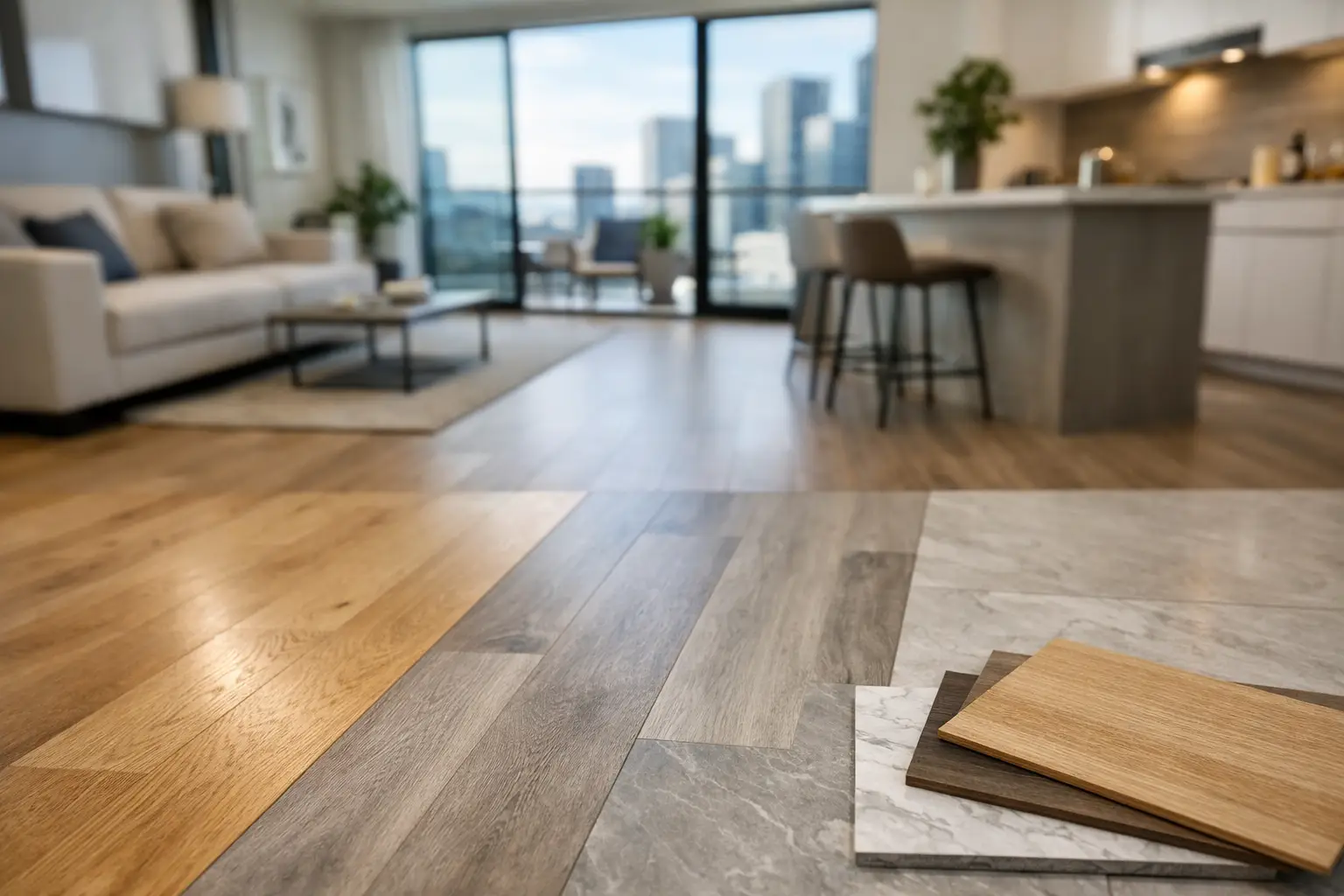
Many Melbourne homeowners choose both. Engineered timber in the living and dining areas, hybrid in the kitchen and bathrooms. This approach gives you the warmth of real timber where it matters most and the practical protection of hybrid where moisture is a real concern.
Conclusion
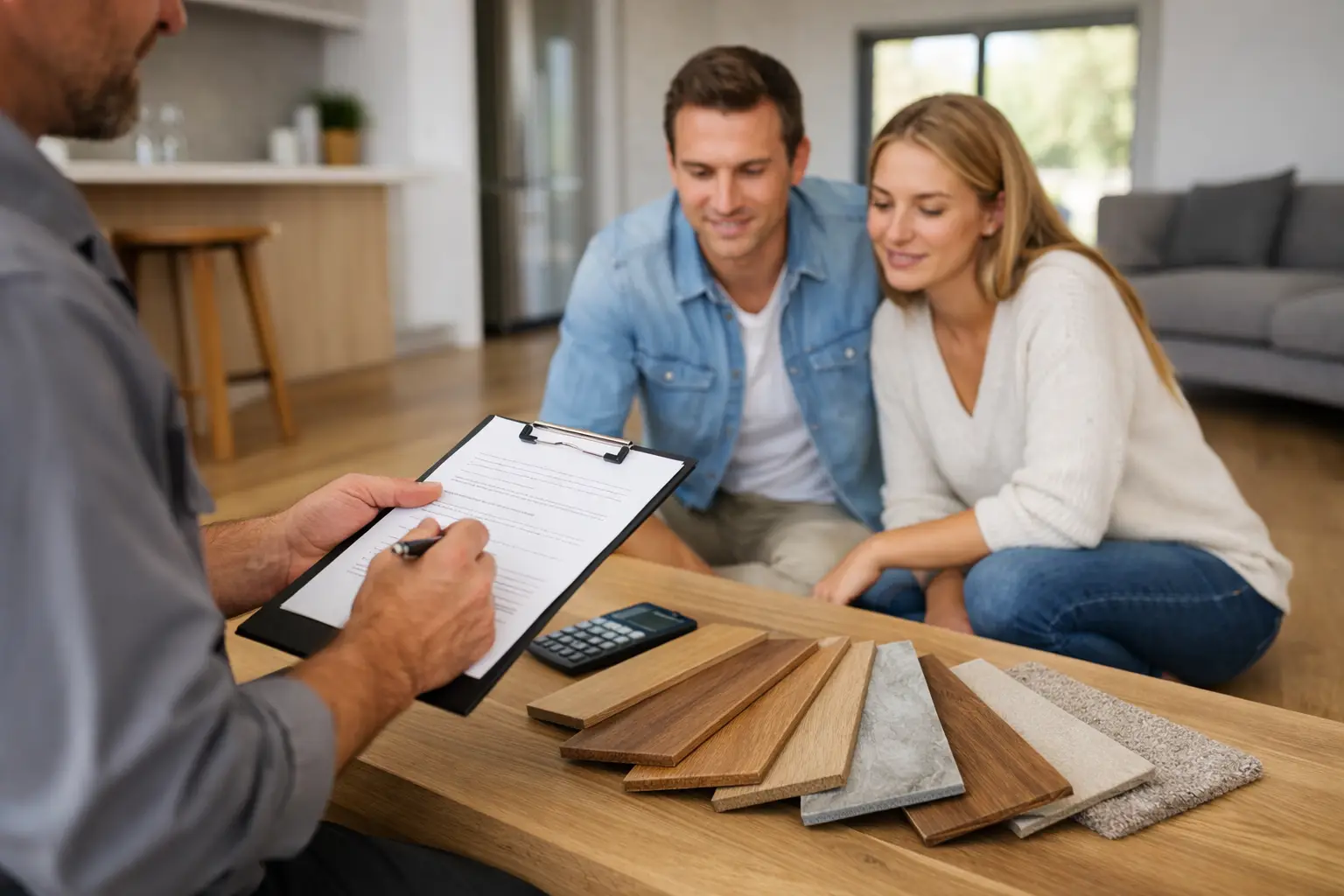
The best flooring decision is an informed one. Both engineered timber and hybrid are excellent products when matched to the right space. If you are not sure which direction suits your project, contact us today for a free measure and quote. Our team will visit your property, assess your subfloor, and give you honest advice on which product will serve you best.
FAQs:
Is engineered timber or hybrid flooring better for Melbourne’s climate?
Engineered timber handles Melbourne’s humidity well. Hybrid is fully waterproof, making it better for areas with moisture exposure.
Can hybrid flooring be installed in bathrooms?
Yes. Hybrid flooring is 100% waterproof and suitable for bathrooms, laundries, and other wet areas throughout the home.
How long does engineered timber flooring last in Melbourne homes?
A well-installed, quality engineered timber floor can last 25 to 40 years, especially if sanded and recoated once or twice.
Can engineered timber be refinished?
Yes. Engineered timber with a veneer of at least 3mm can be lightly sanded and recoated once or twice during its lifespan.
Which flooring is more affordable: engineered timber or hybrid?
Hybrid flooring generally costs less on supply and installation. Engineered timber carries a higher upfront cost but offers a longer potential lifespan.
Can both flooring types be installed over existing tiles or concrete?
Yes. Both can be installed over a flat, clean subfloor. Preparation is key, especially for glue-down engineered timber installations.