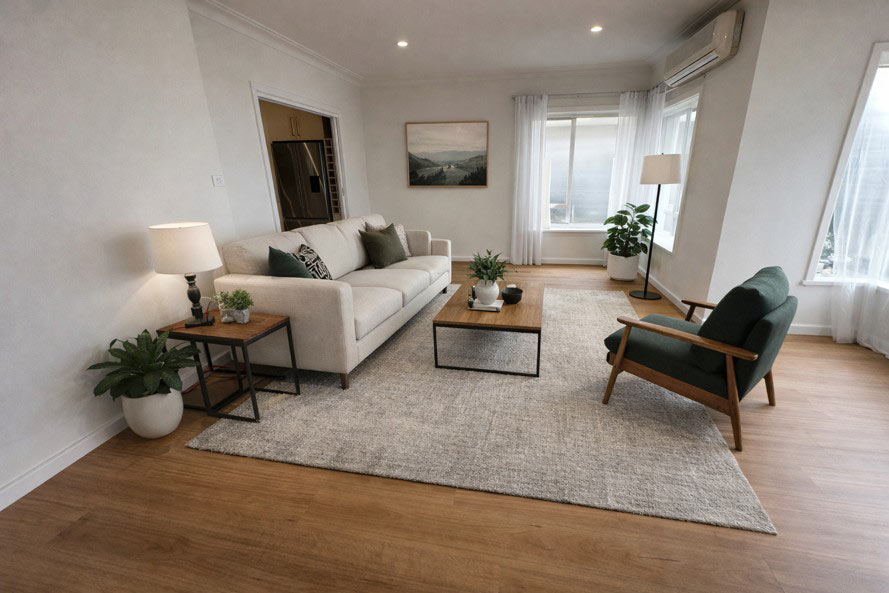
You can spot the wrong flooring choice months after install – boards sounding hollow underfoot, edges lifting near wet areas, or a finish that never quite suited the space. When clients ask about engineered timber flooring vs hybrid, they are usually not asking for a showroom pitch. They want to know which option will actually work in their home, apartment or commercial fit-out, and which one will still look right years later.
This is where the decision needs a practical lens. Both products can give you a timber look, and both can perform well, but they are built differently, installed differently and suited to different conditions. If you are weighing up the two, the best choice comes down to moisture exposure, subfloor condition, budget, acoustic needs and how authentic you want the floor to feel.
Table of Contents
Engineered timber flooring vs hybrid: the real difference
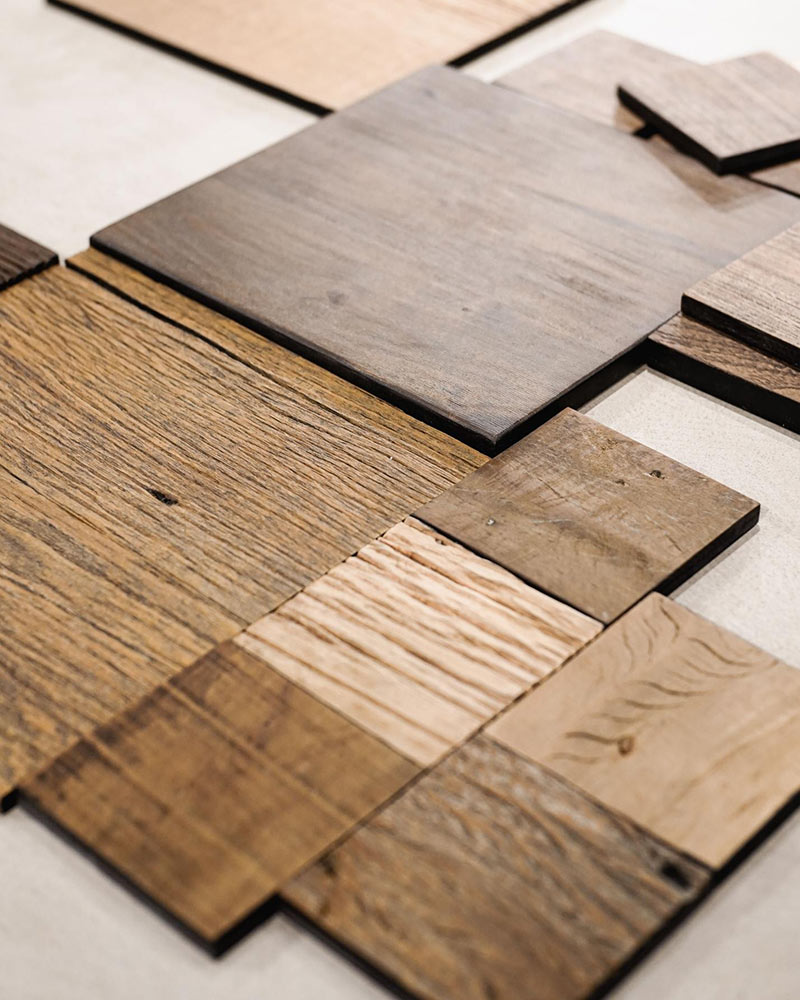
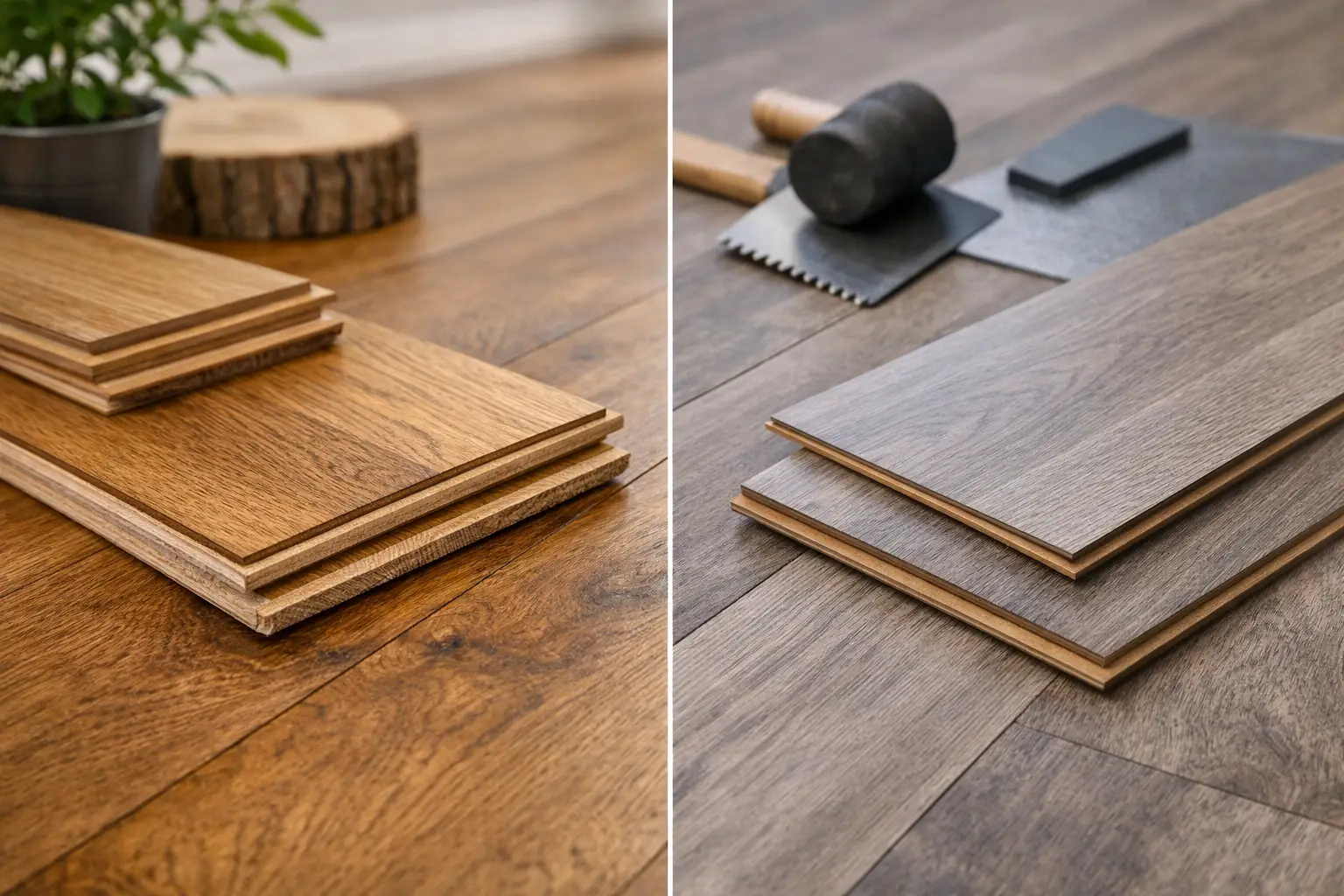
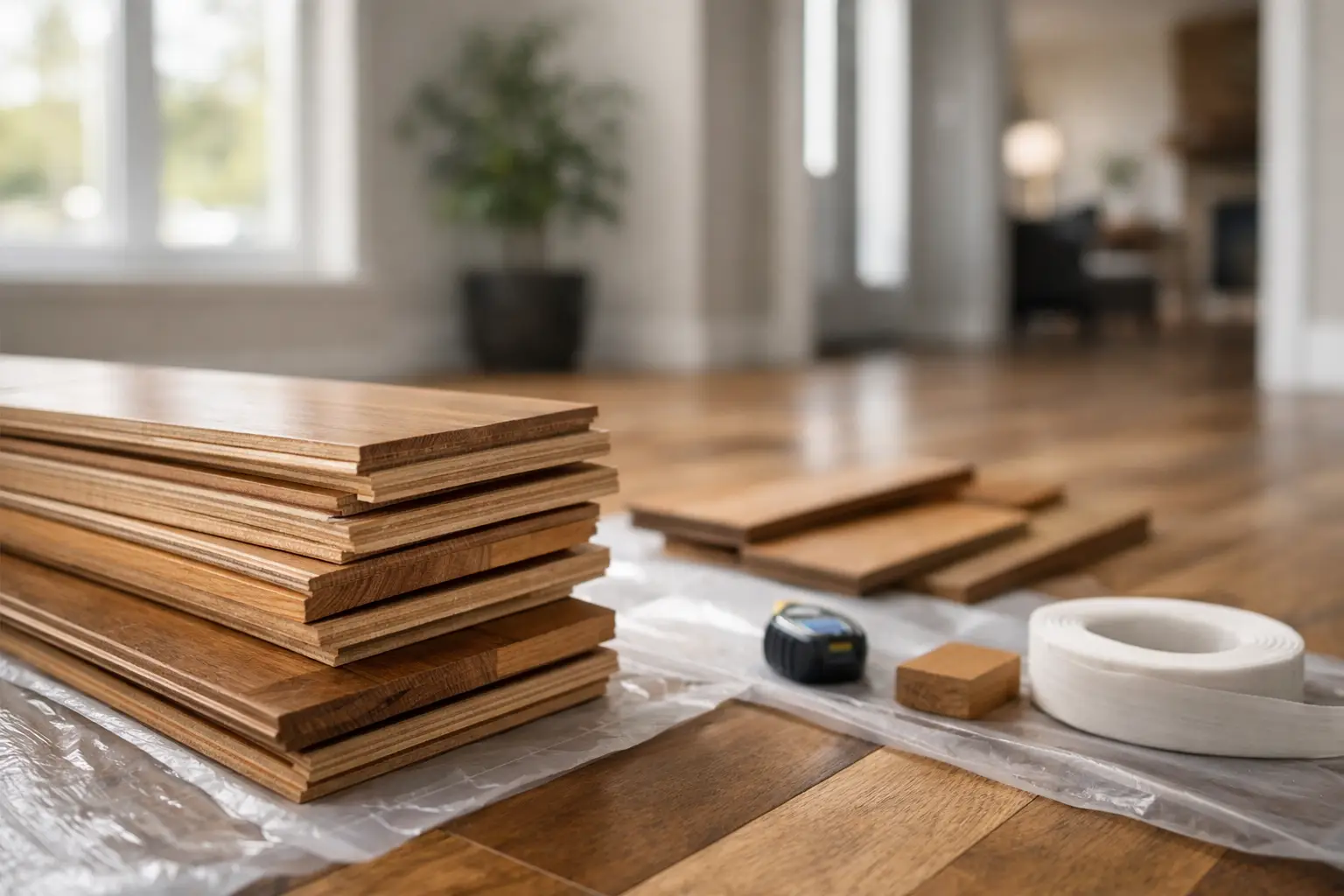
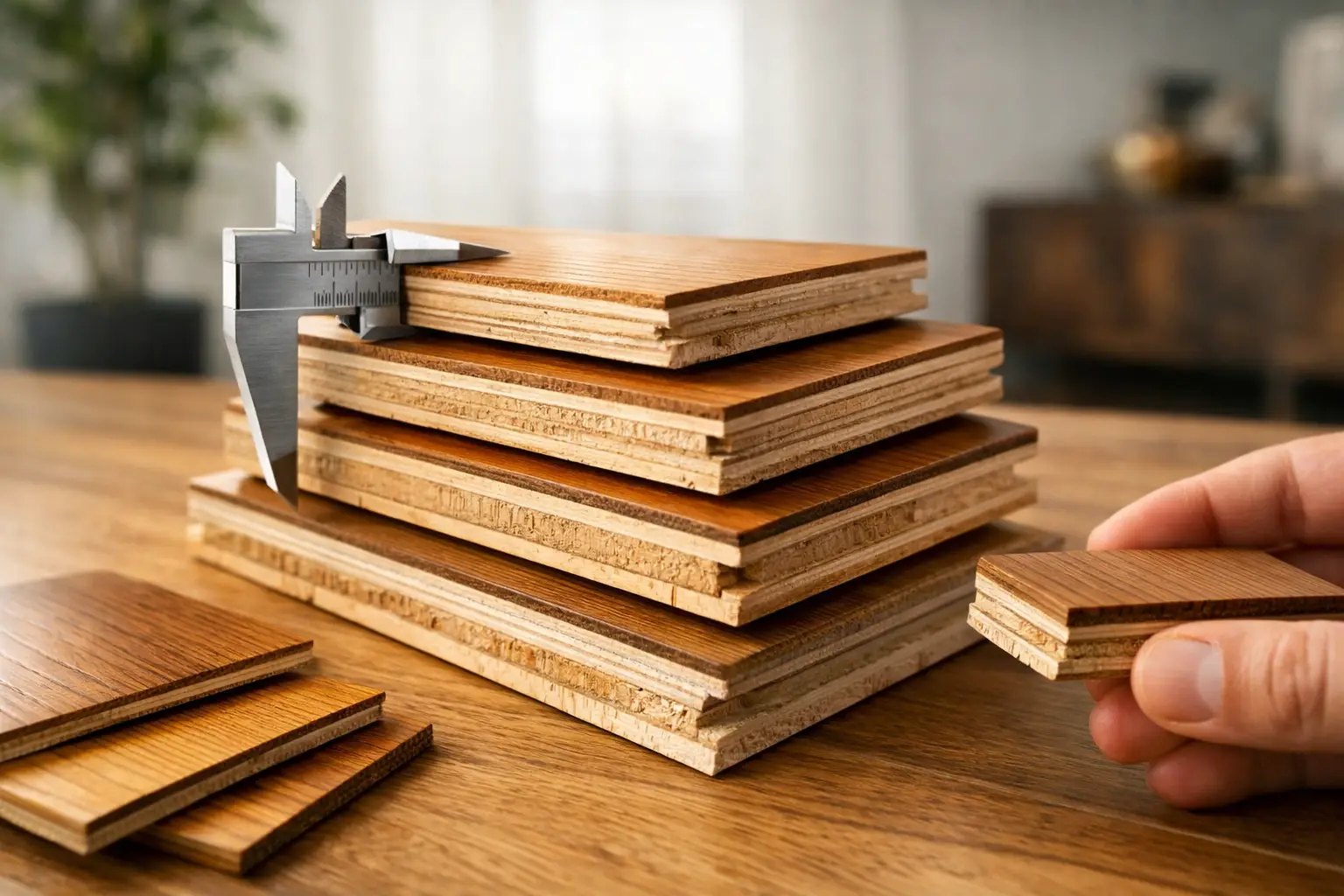
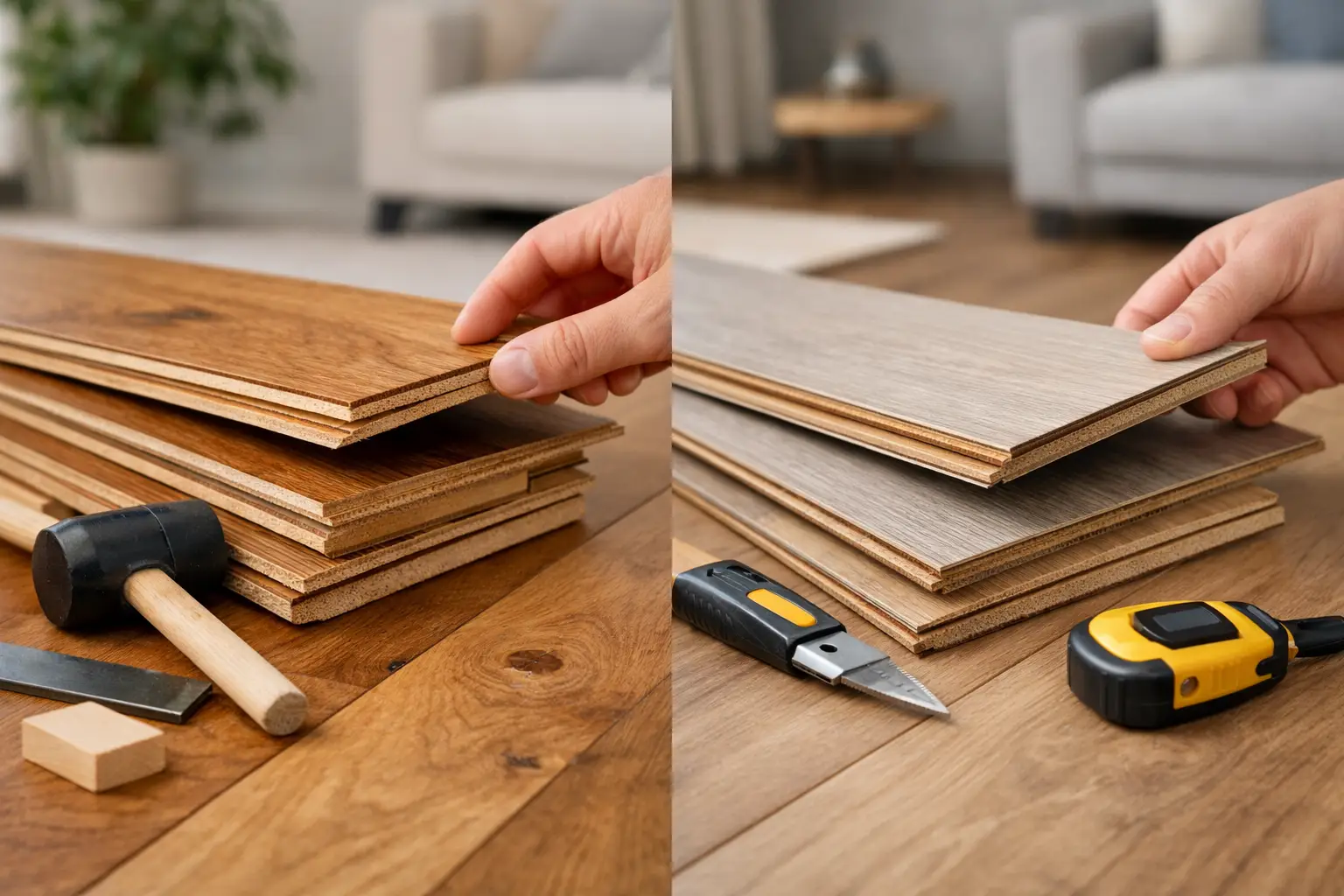
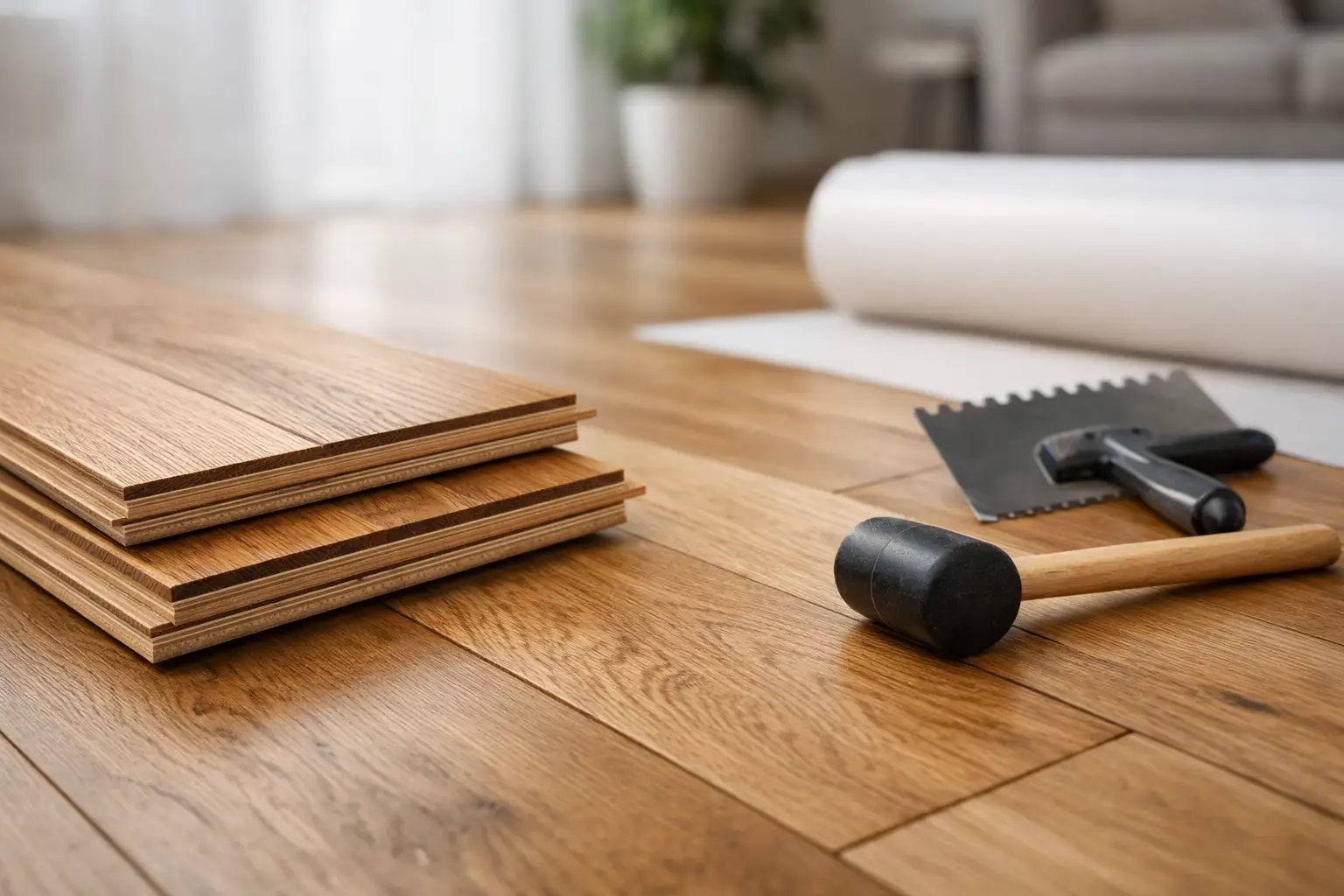
Engineered timber is a real timber product. It has a genuine hardwood veneer on top, usually over a stable core made from plywood or hardwood layers. That means what you see and feel on the surface is actual timber, with natural grain variation, texture and warmth that is hard to replicate exactly.
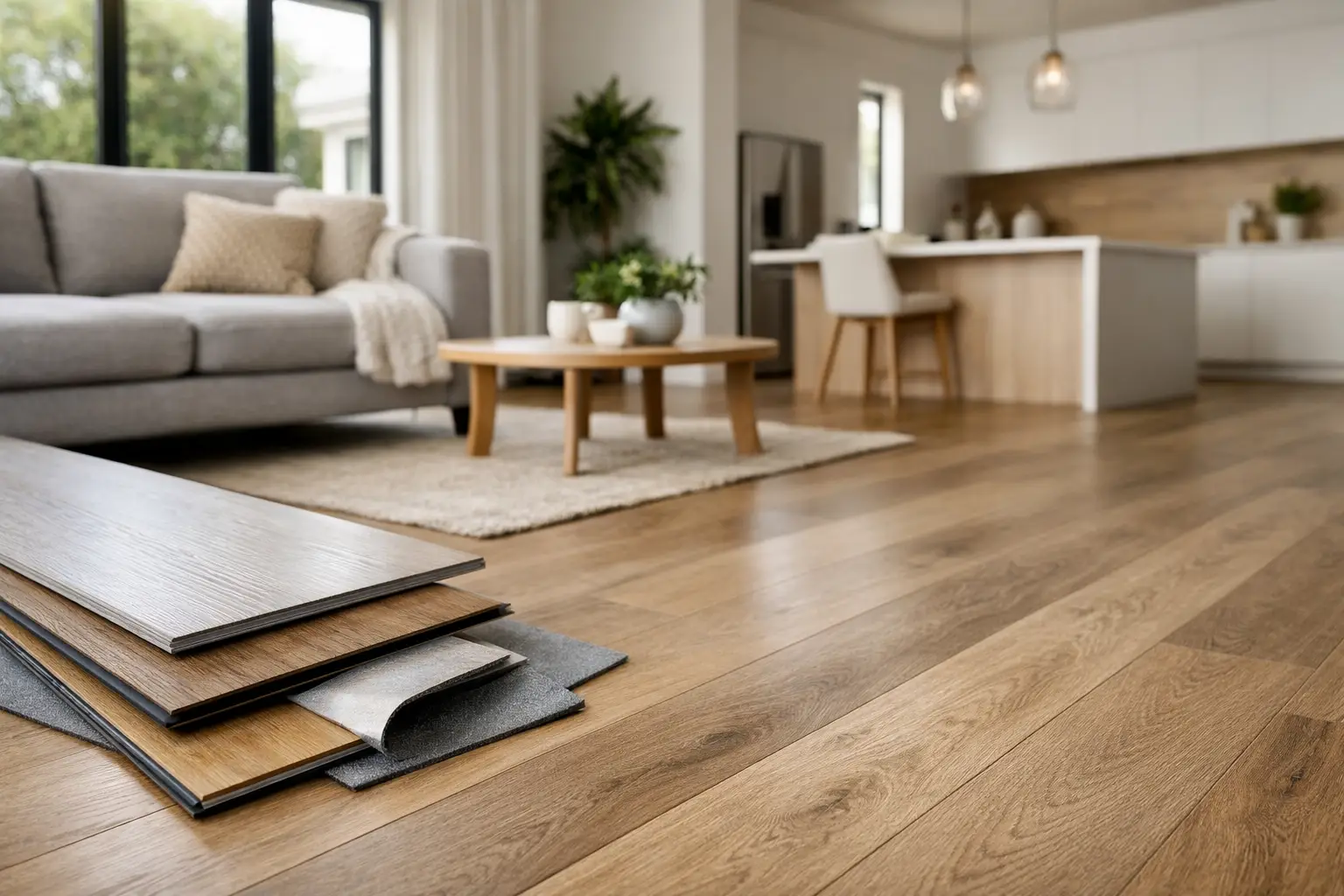
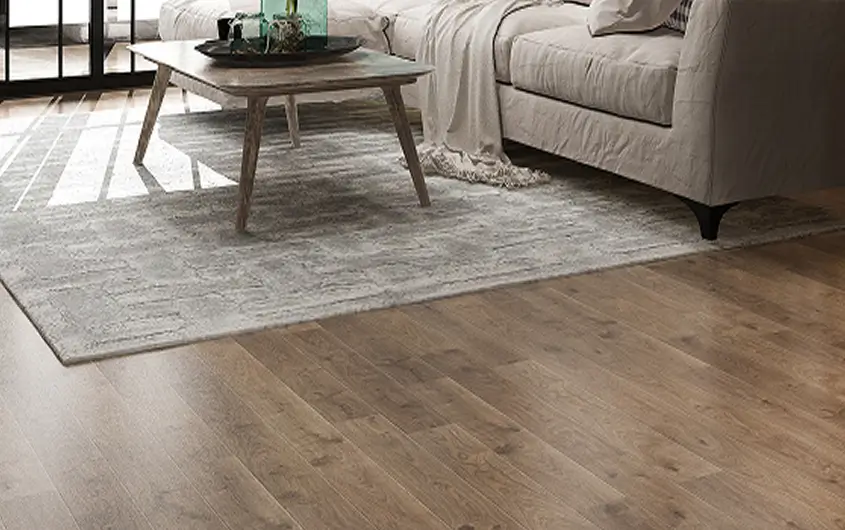
Hybrid flooring is a manufactured product designed for durability and water resistance. It typically uses a rigid core with a printed decorative layer that looks like timber, finished with a hard wear layer on top. A good hybrid floor can look impressive, especially in wider spaces or modern interiors, but it is still a timber-look product rather than real timber.
That core difference affects almost everything else – appearance, feel underfoot, moisture performance, installation method and long-term value.
How they look and feel in a finished space
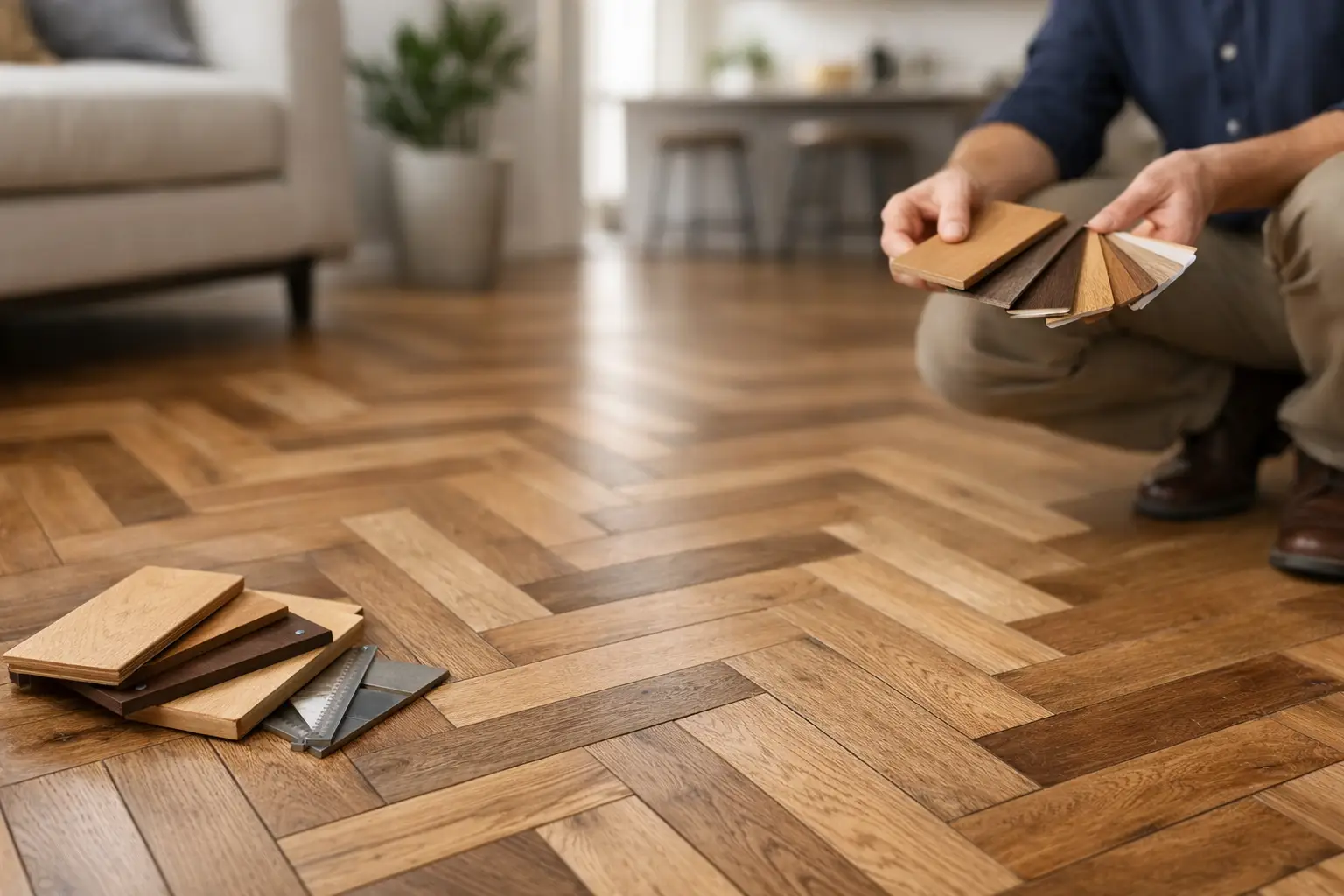
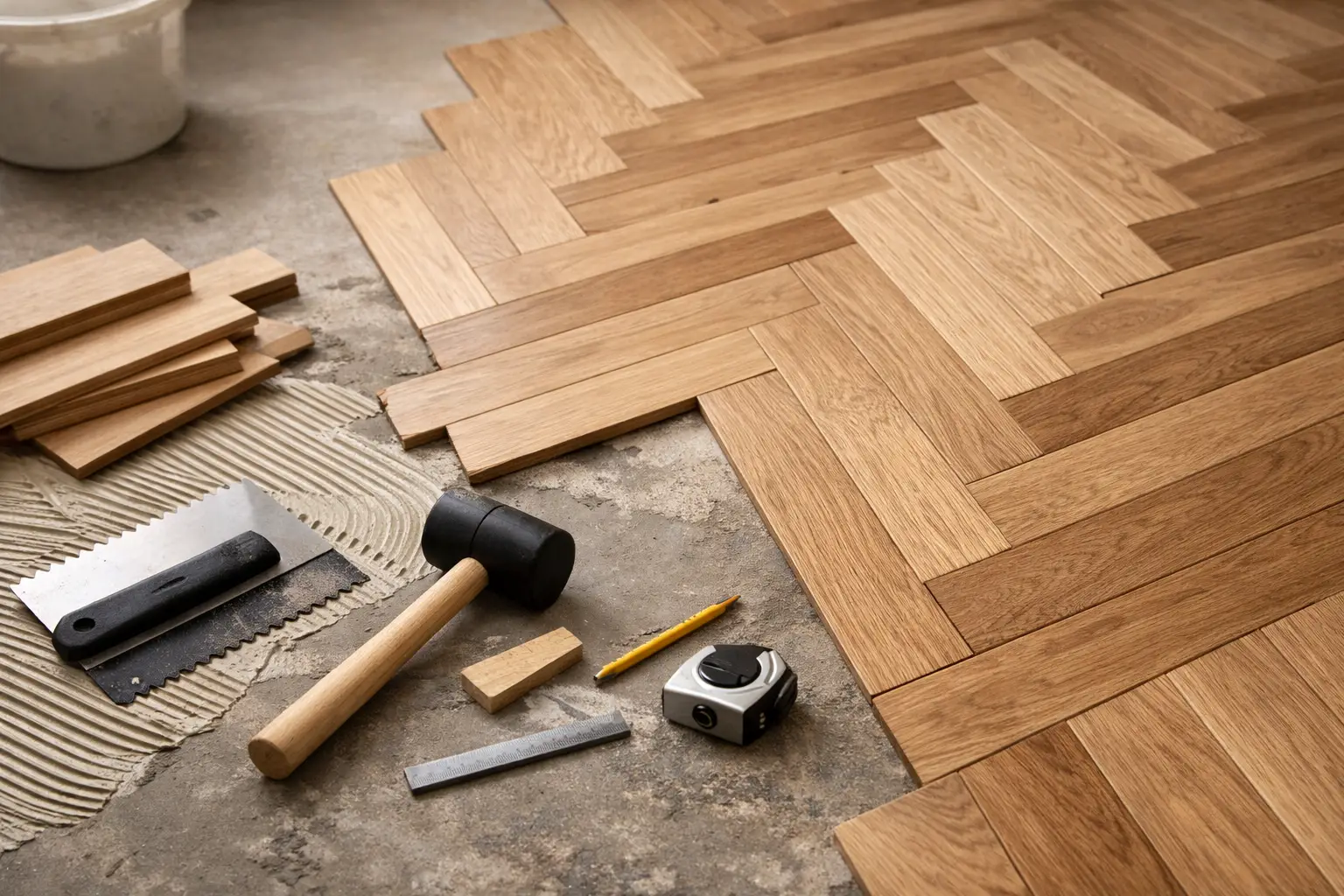
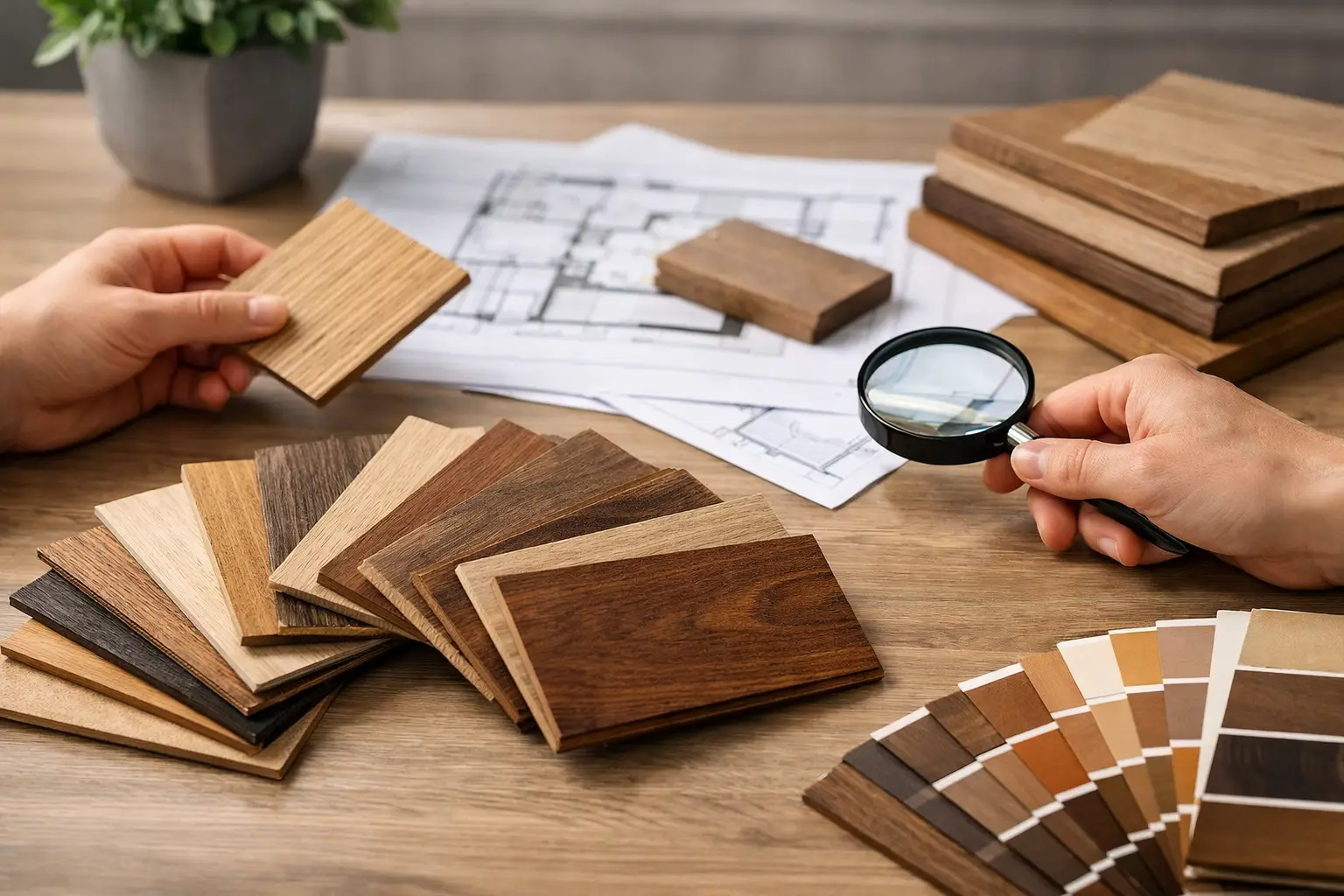
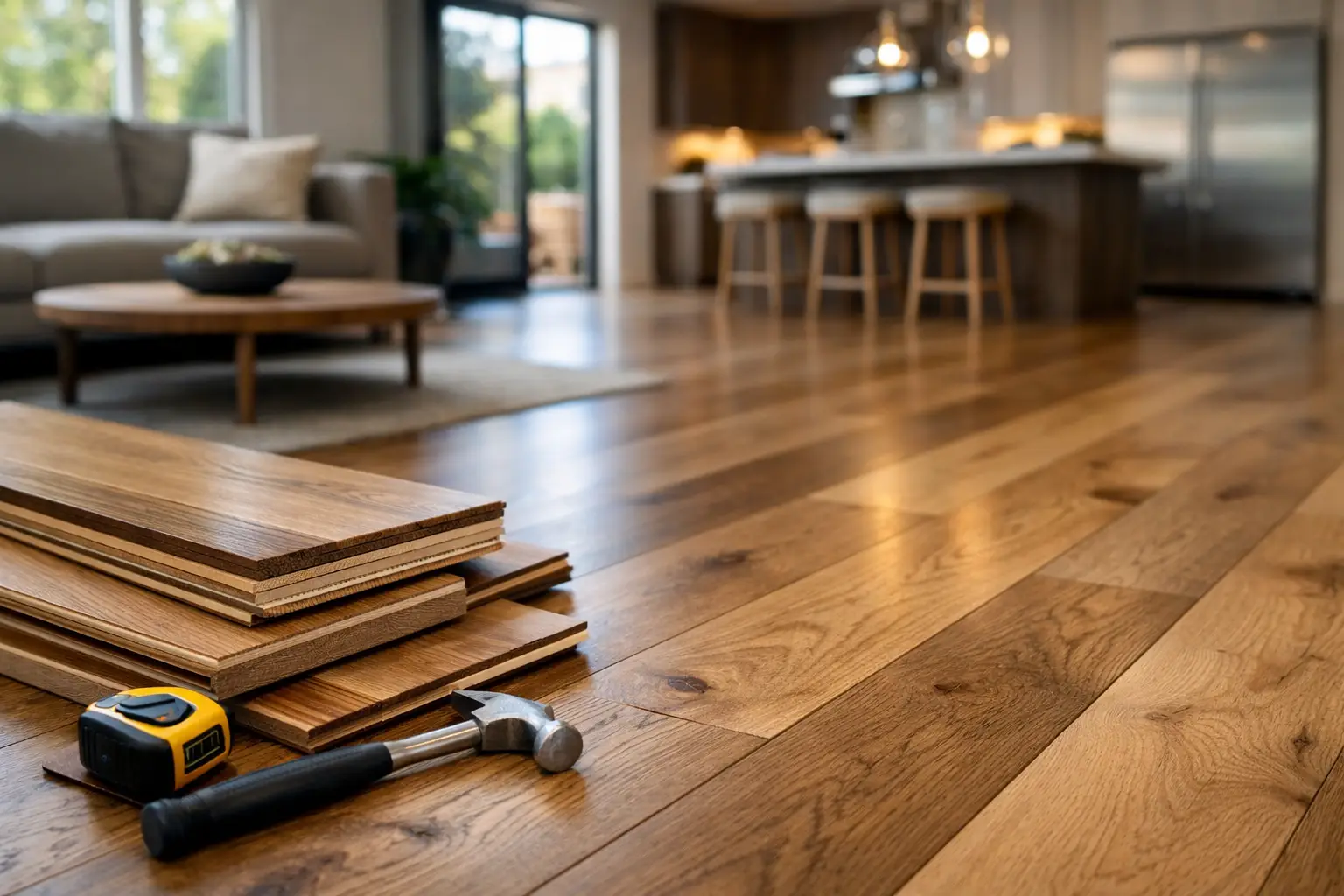
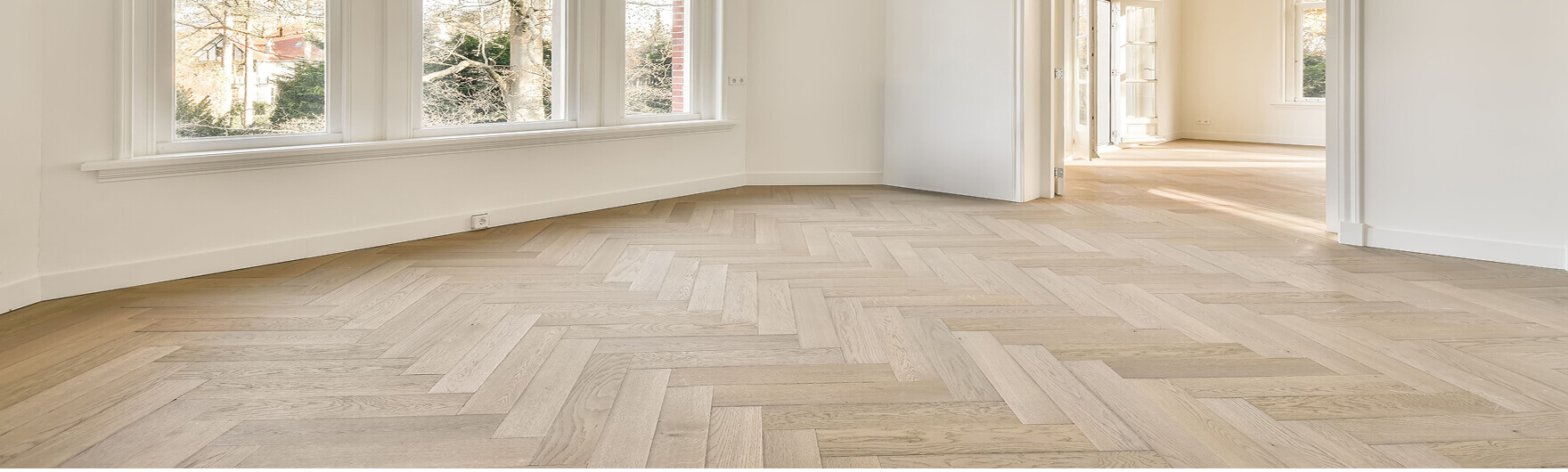
If visual authenticity matters most, engineered timber usually comes out in front. Real timber has depth in the grain, natural colour movement and a softness in the finish that printed surfaces cannot fully copy. In homes where design is a major priority, especially with European oak tones, wider boards or herringbone layouts, engineered timber generally delivers the more premium result.
It also feels different underfoot. Engineered boards tend to sound and feel more solid, particularly when properly installed over a well-prepared subfloor. That matters more than many people expect. Floor feel is one of the first things people notice in daily use, even if they cannot explain it technically.
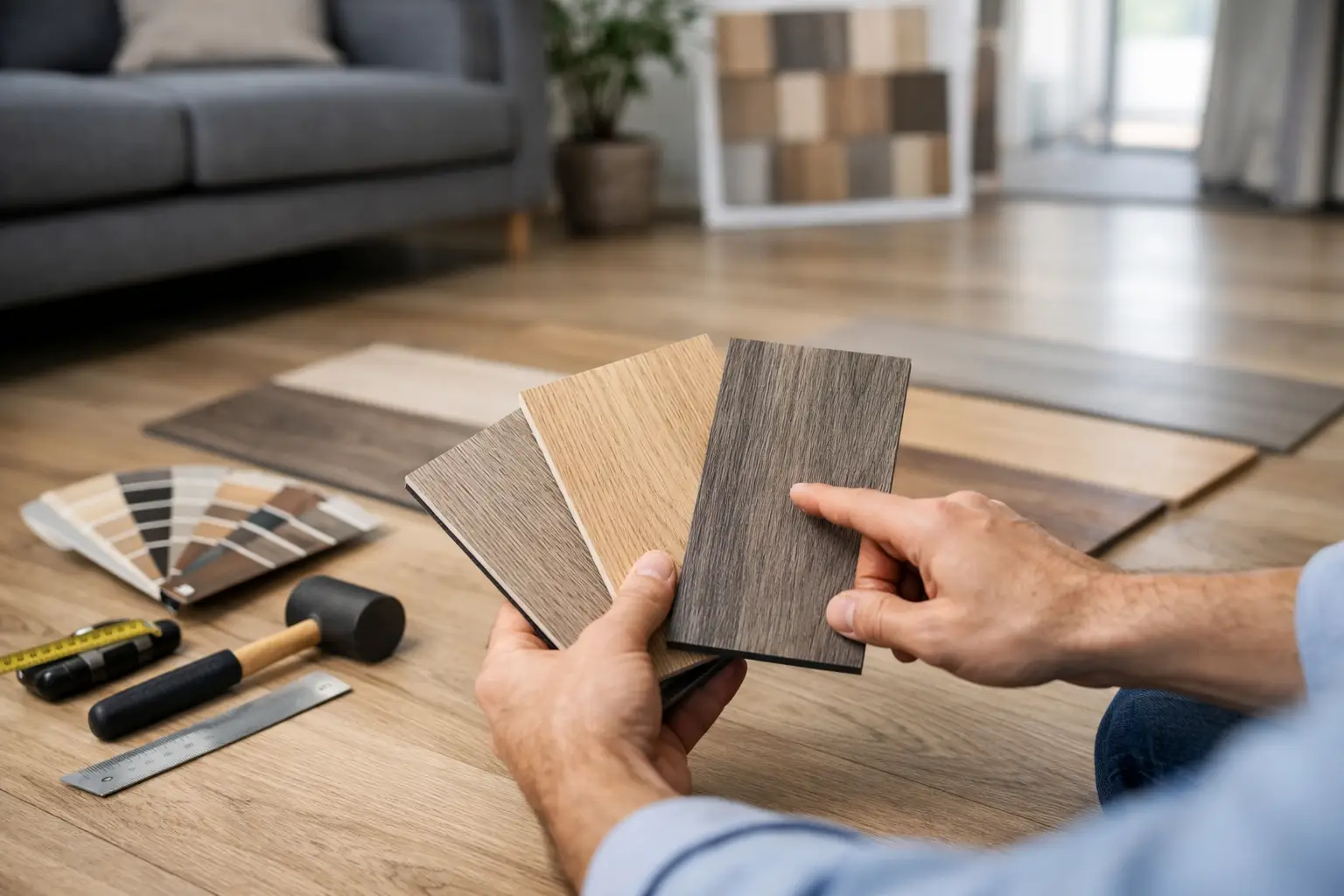
Hybrid flooring has its own strengths. It is consistent in appearance, available in a wide range of colours and easier to match to a contemporary, practical brief. For investment properties, family homes or commercial settings where style still matters but maintenance and resilience are the bigger priorities, hybrid can be a smart fit.
Water resistance and day-to-day durability
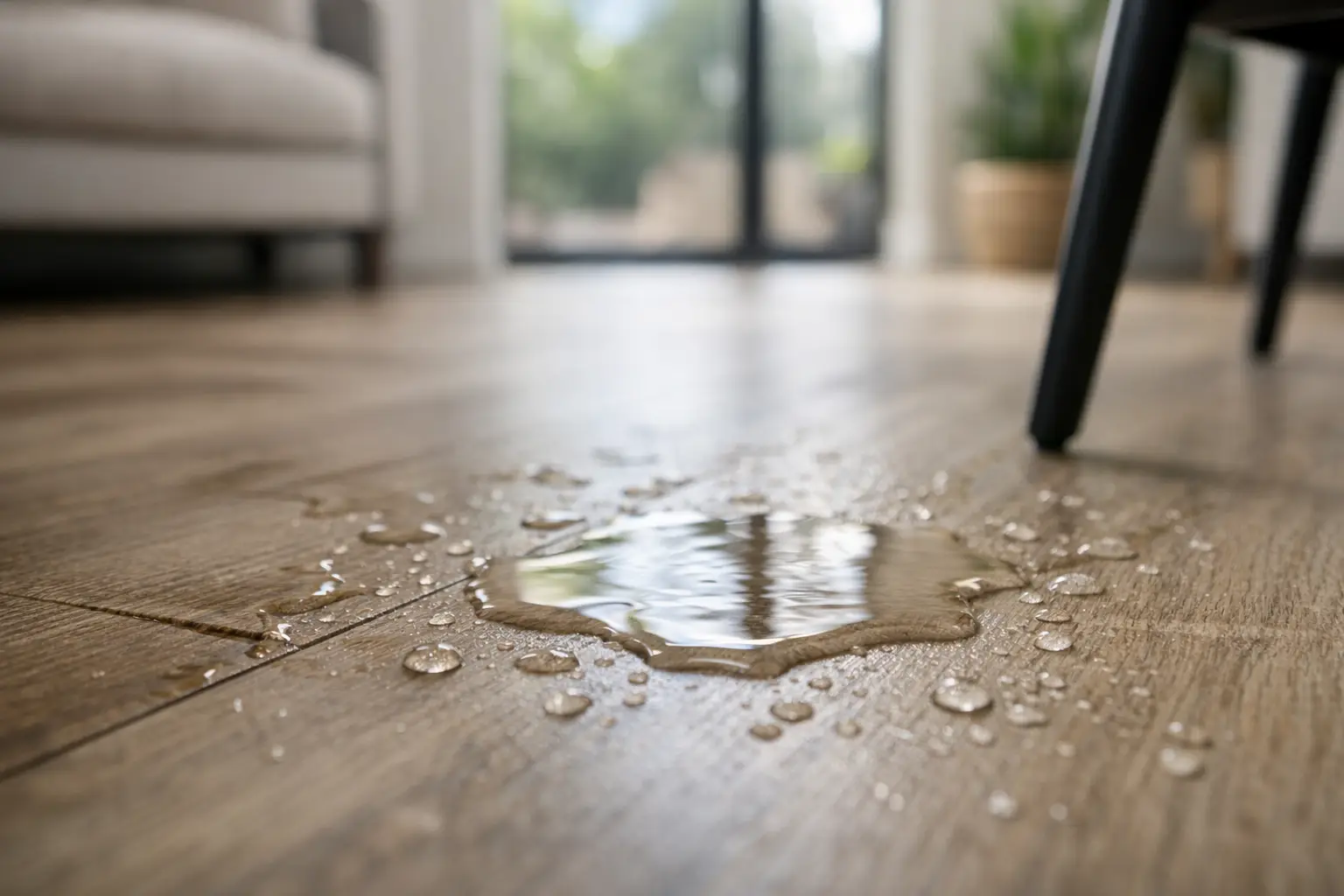
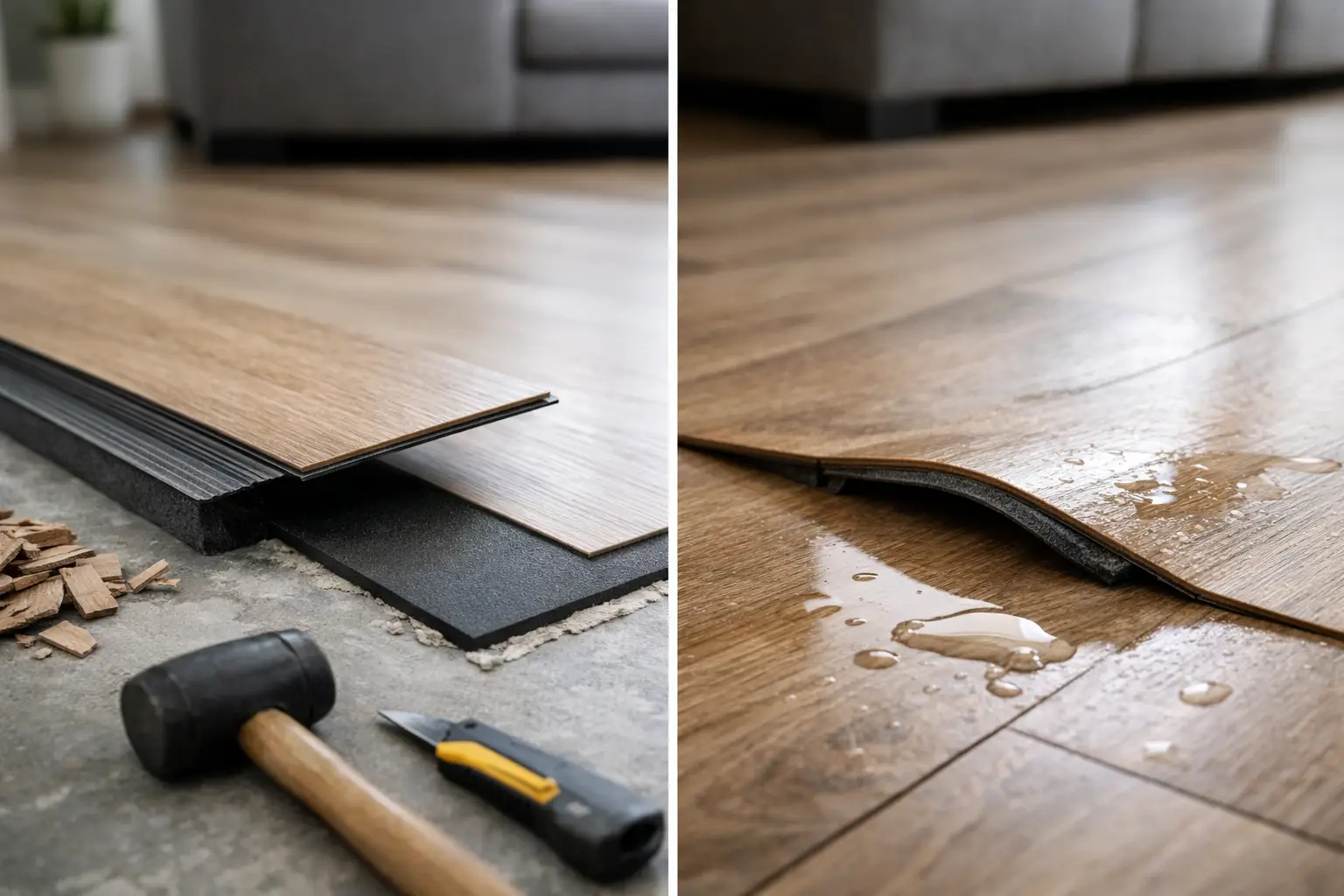
This is the area where hybrid often has the advantage. Most hybrid flooring products are designed to be highly water resistant, which makes them popular in kitchens, laundries and busy households where spills are common. That does not mean waterproof installation solves every issue – moisture can still create problems if the subfloor is not dry or level – but the product itself is generally more forgiving around surface water.
Engineered timber is more moisture sensitive because it contains real wood. It handles normal household living well when specified correctly, but it is not the first choice for rooms with frequent wet exposure. In open-plan living areas, bedrooms and well-managed interiors, it performs beautifully. In spaces with ongoing moisture risk, extra care is needed in both product selection and installation.
Durability is more nuanced than people think. Hybrid has a tough wear layer and stands up well to kids, pets and heavy traffic. It is often chosen for that reason. Engineered timber, however, can age better visually in the right setting. Minor wear on real timber can look more natural over time, whereas damage to a printed surface can be harder to disguise.
Installation matters more than the brochure
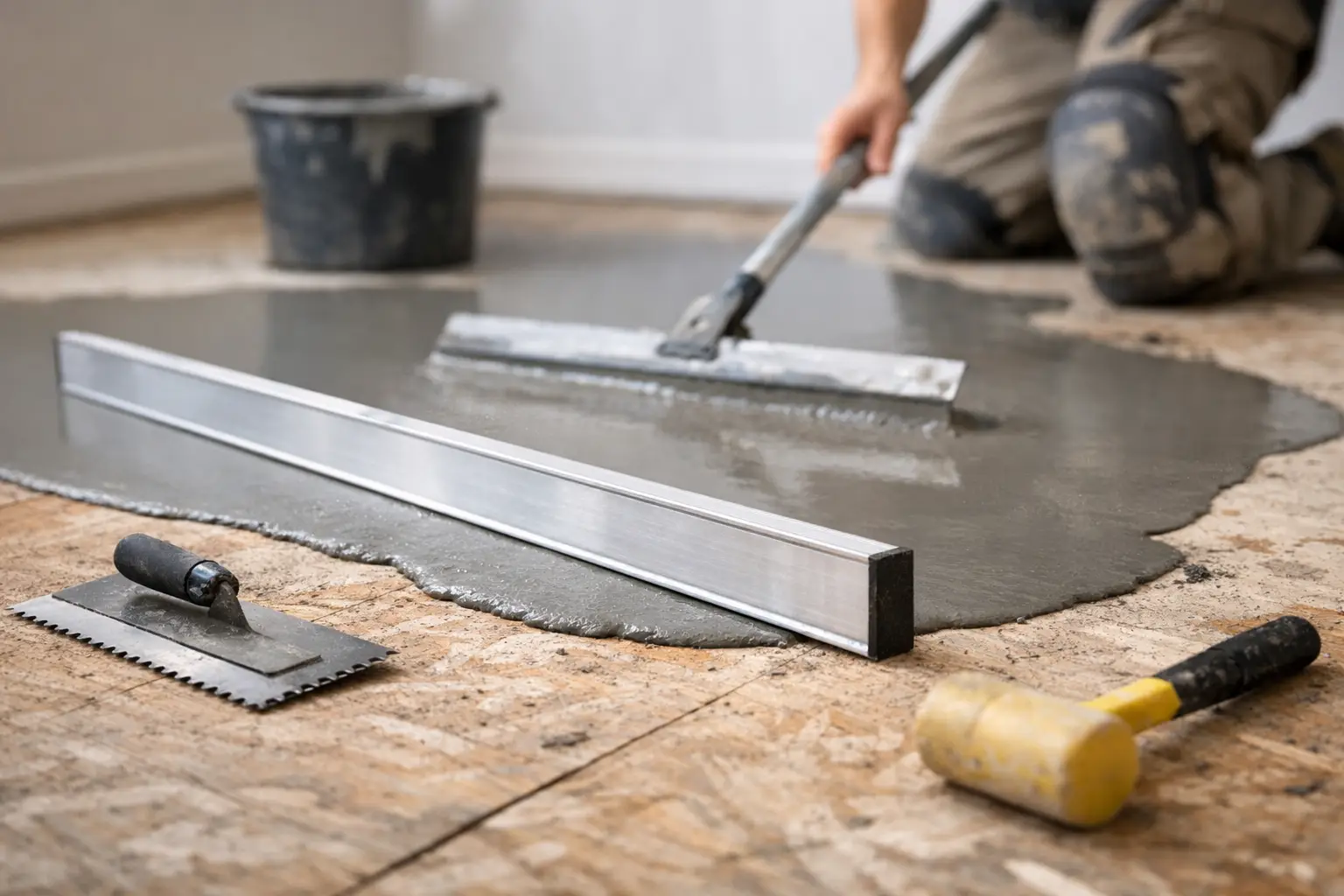
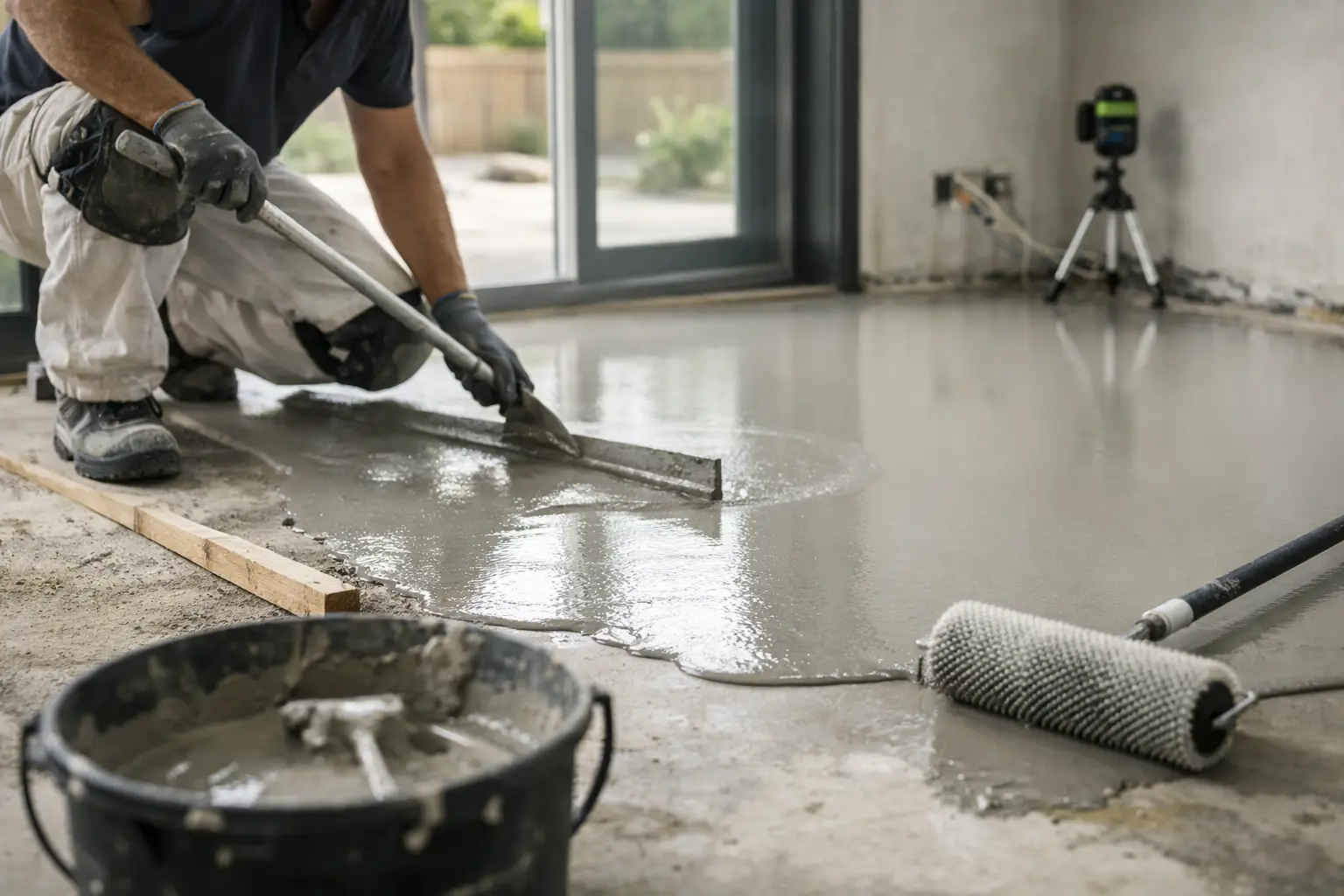
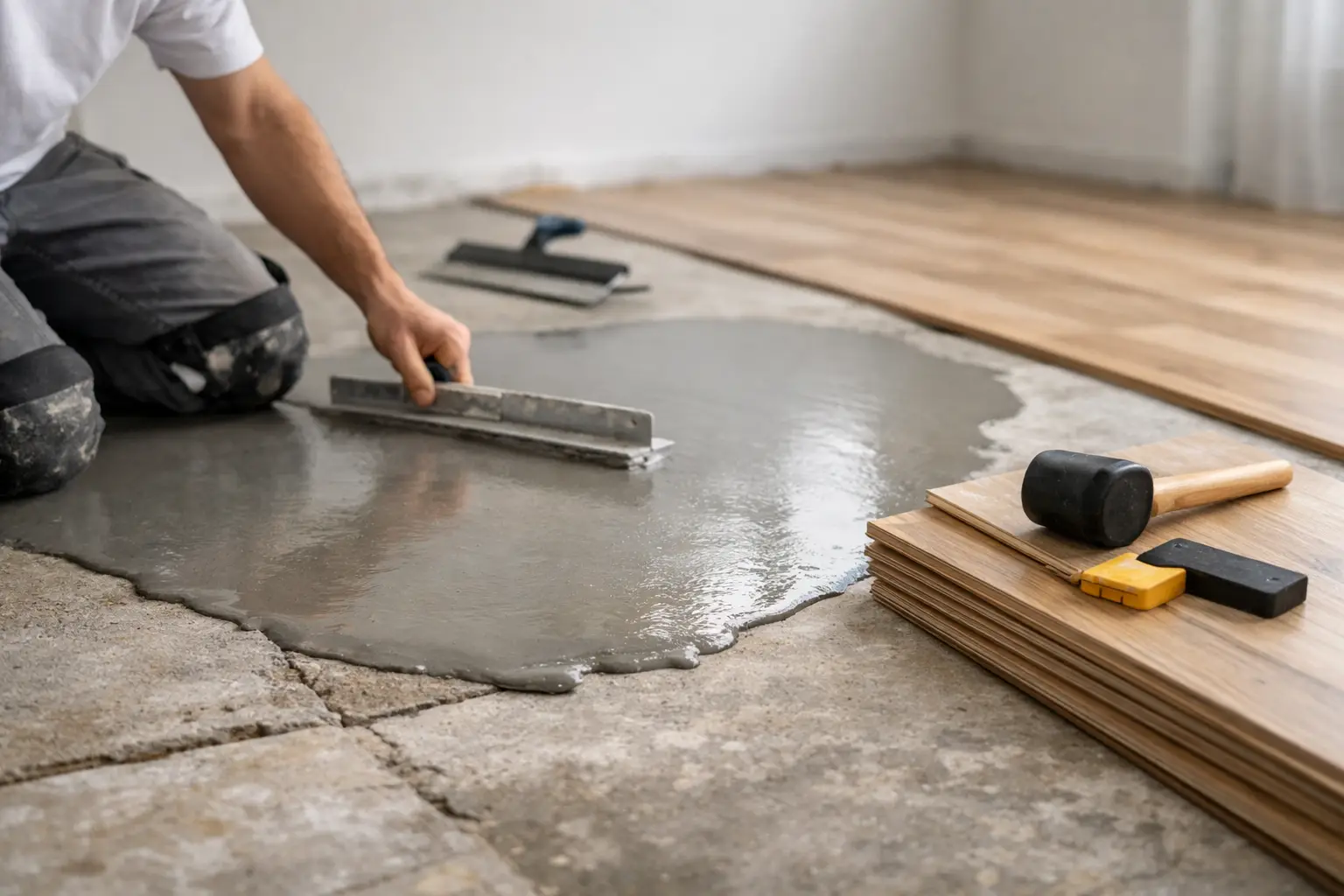
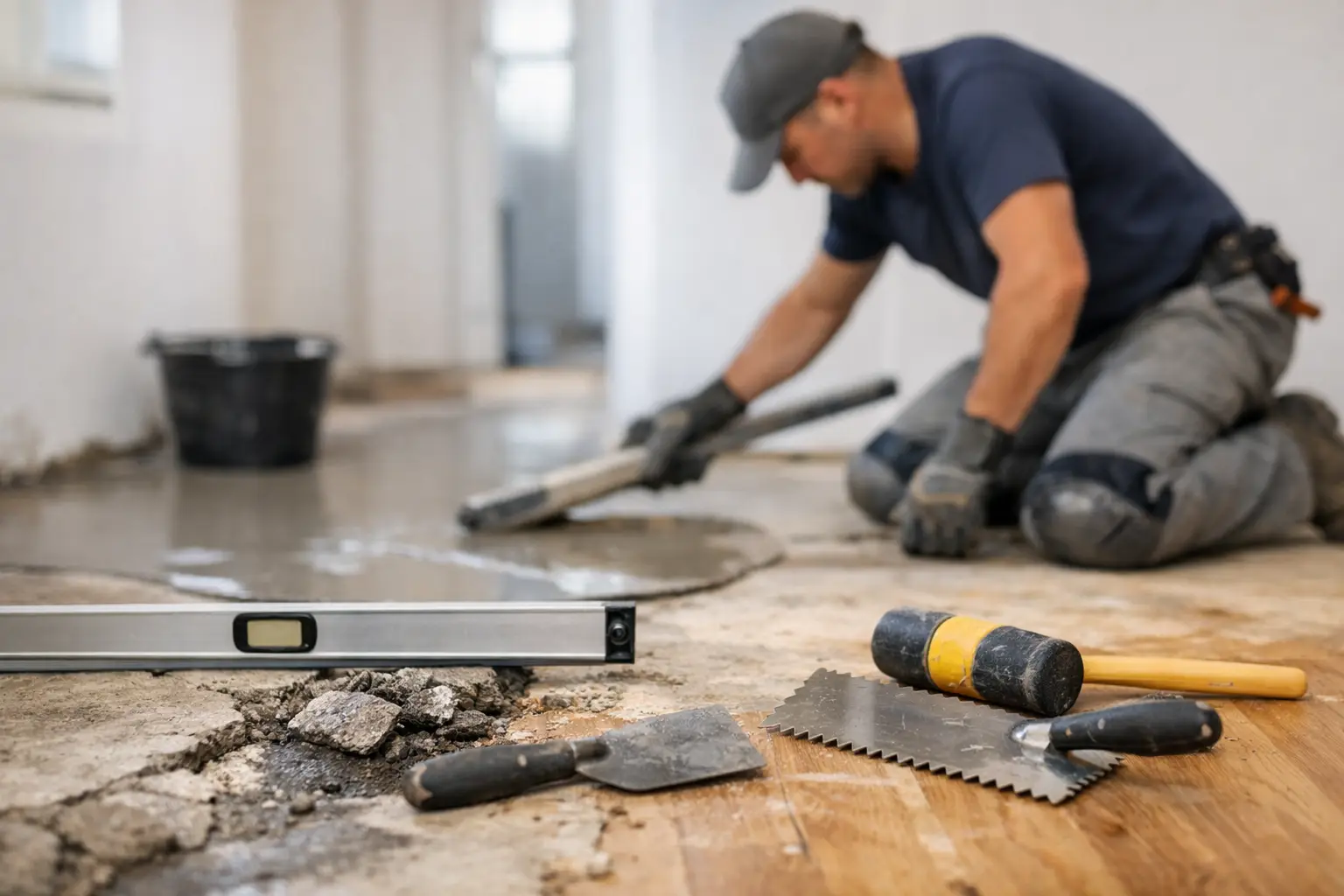
One of the biggest mistakes in flooring is comparing products without considering the subfloor. A premium board installed over a poor base will not perform like a premium floor. Whether you choose engineered timber or hybrid, proper preparation is not optional.
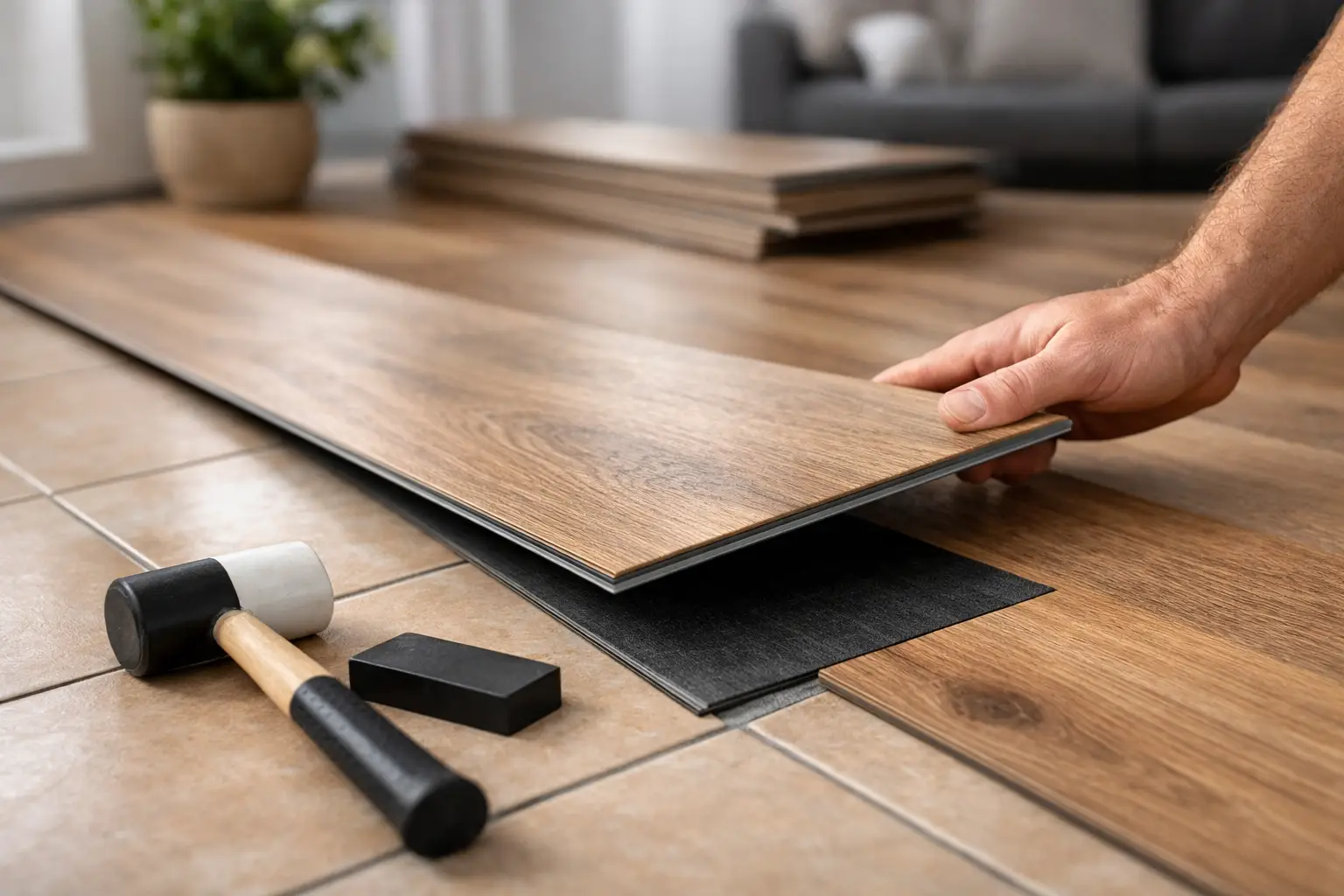
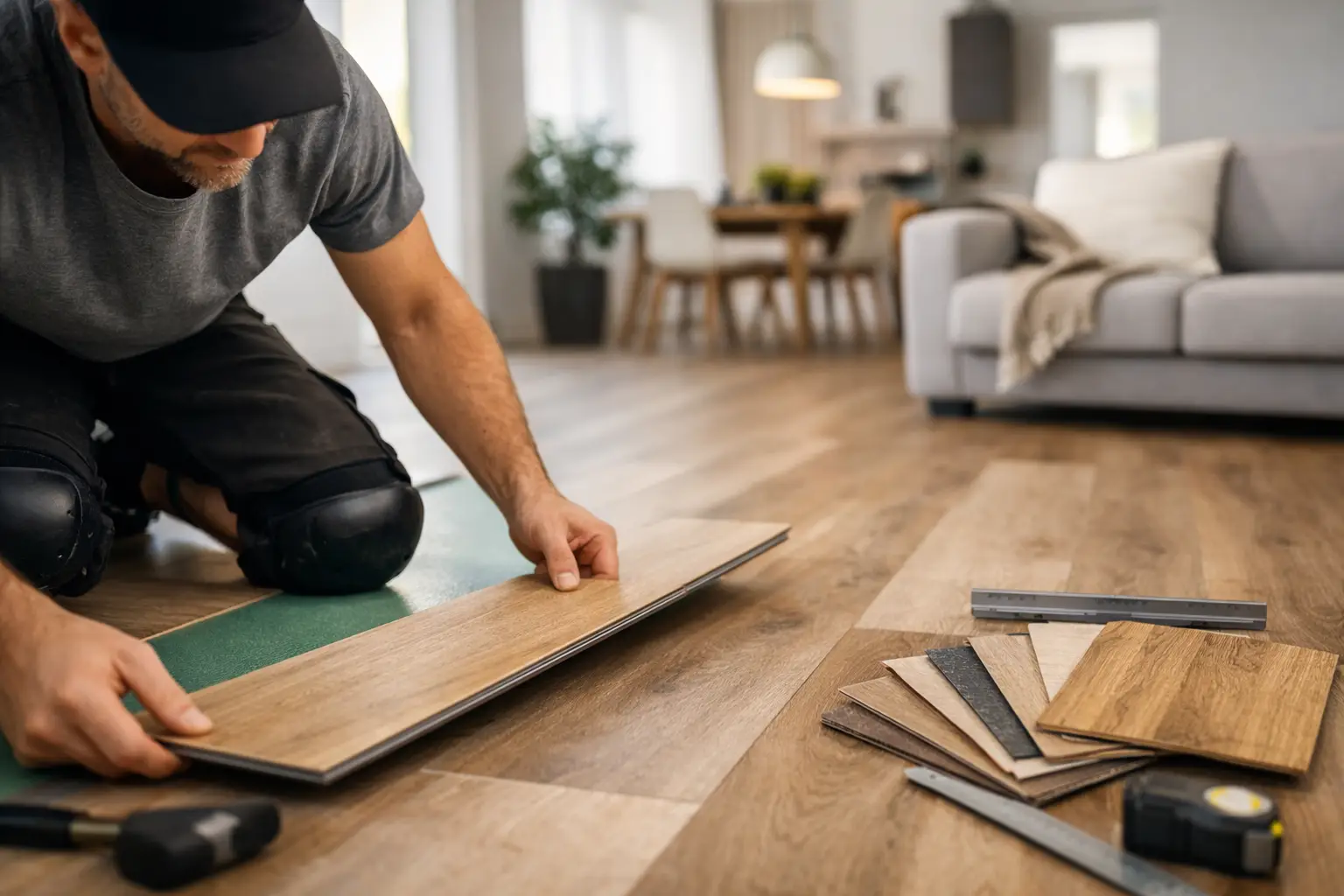
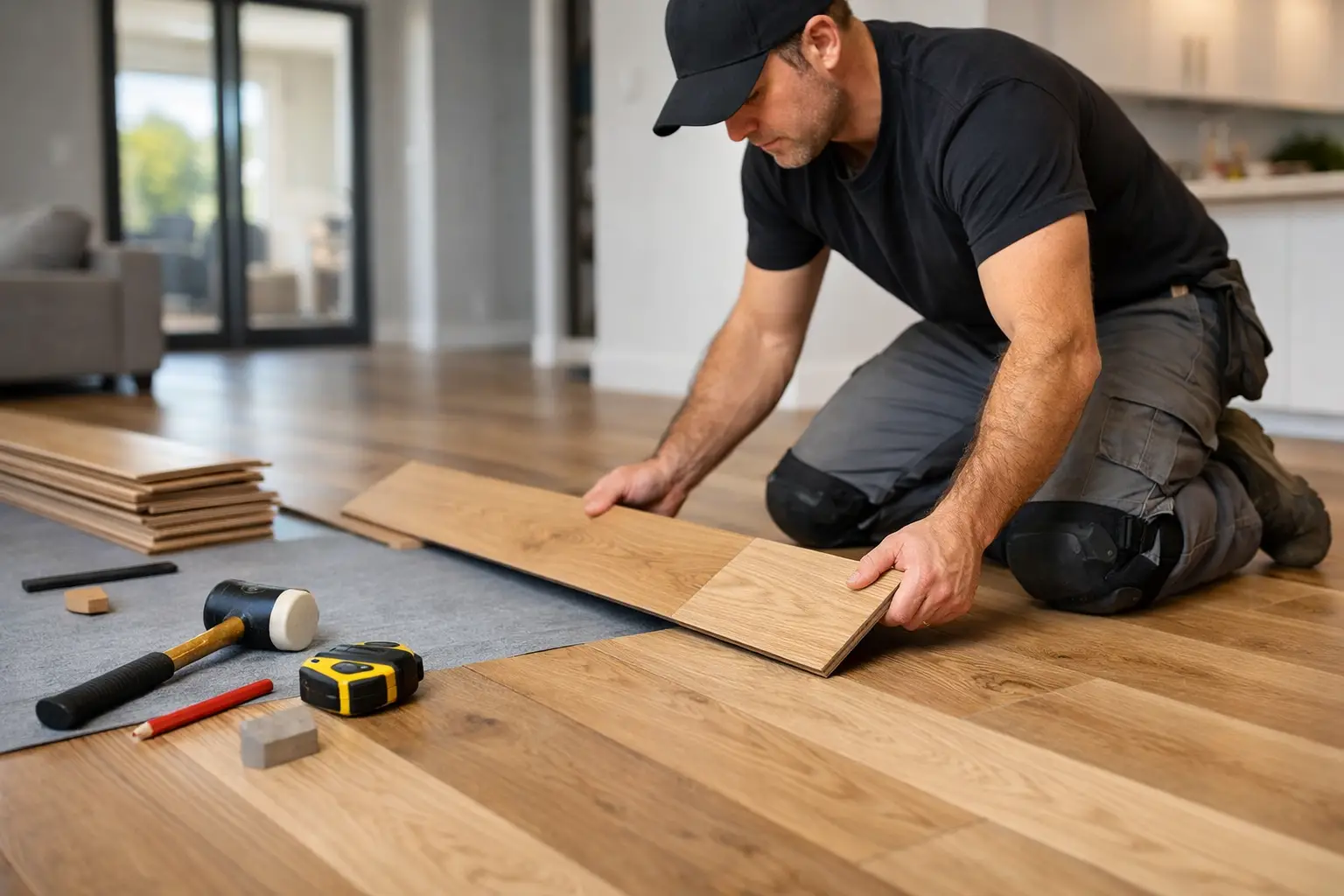
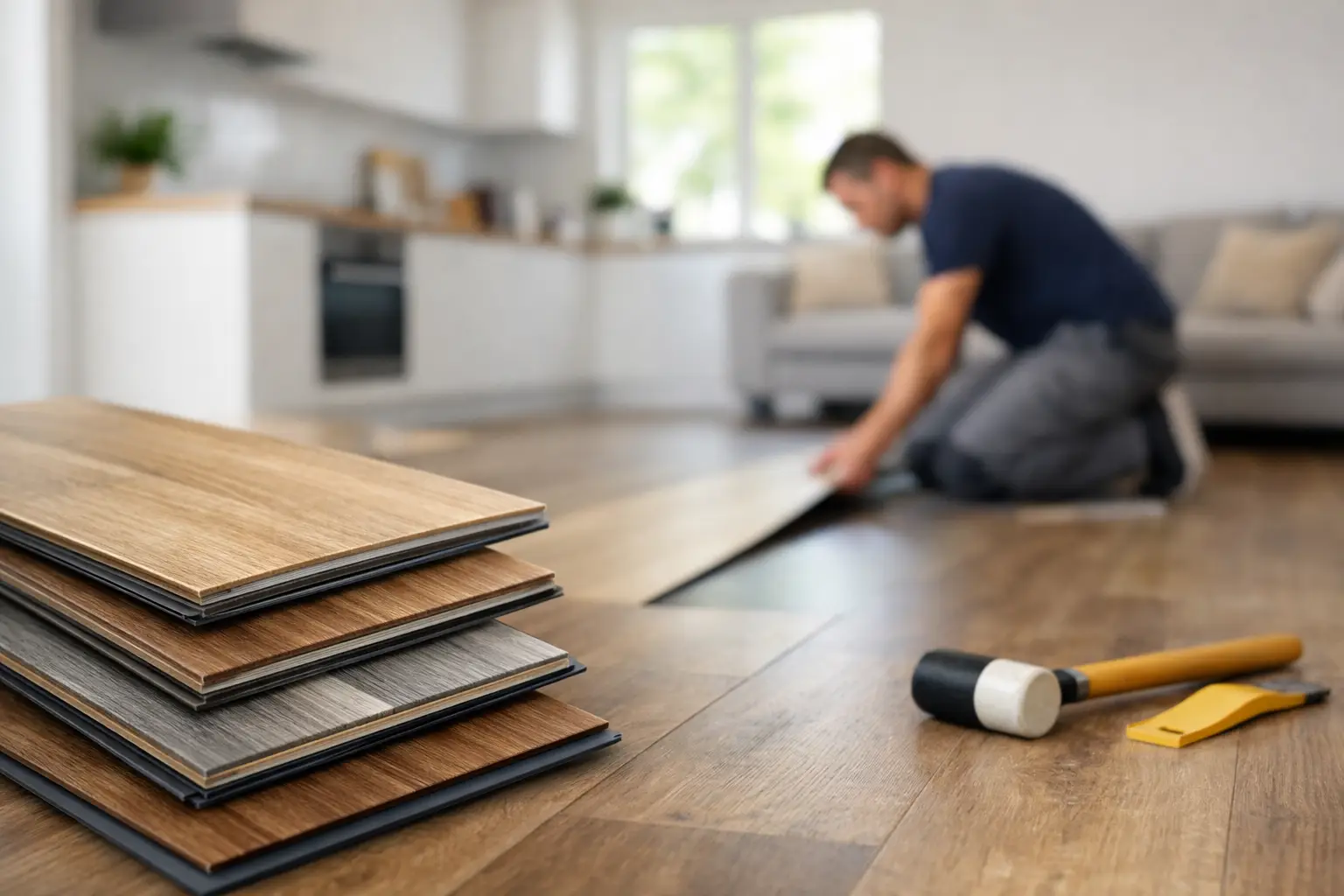
Hybrid is often installed as a floating floor using a click system. That can make it faster to install, and in some properties it is the practical option. But rigid core products still need a flat, stable subfloor. If the floor underneath is uneven, the boards may move, sound hollow or wear incorrectly at the joints.
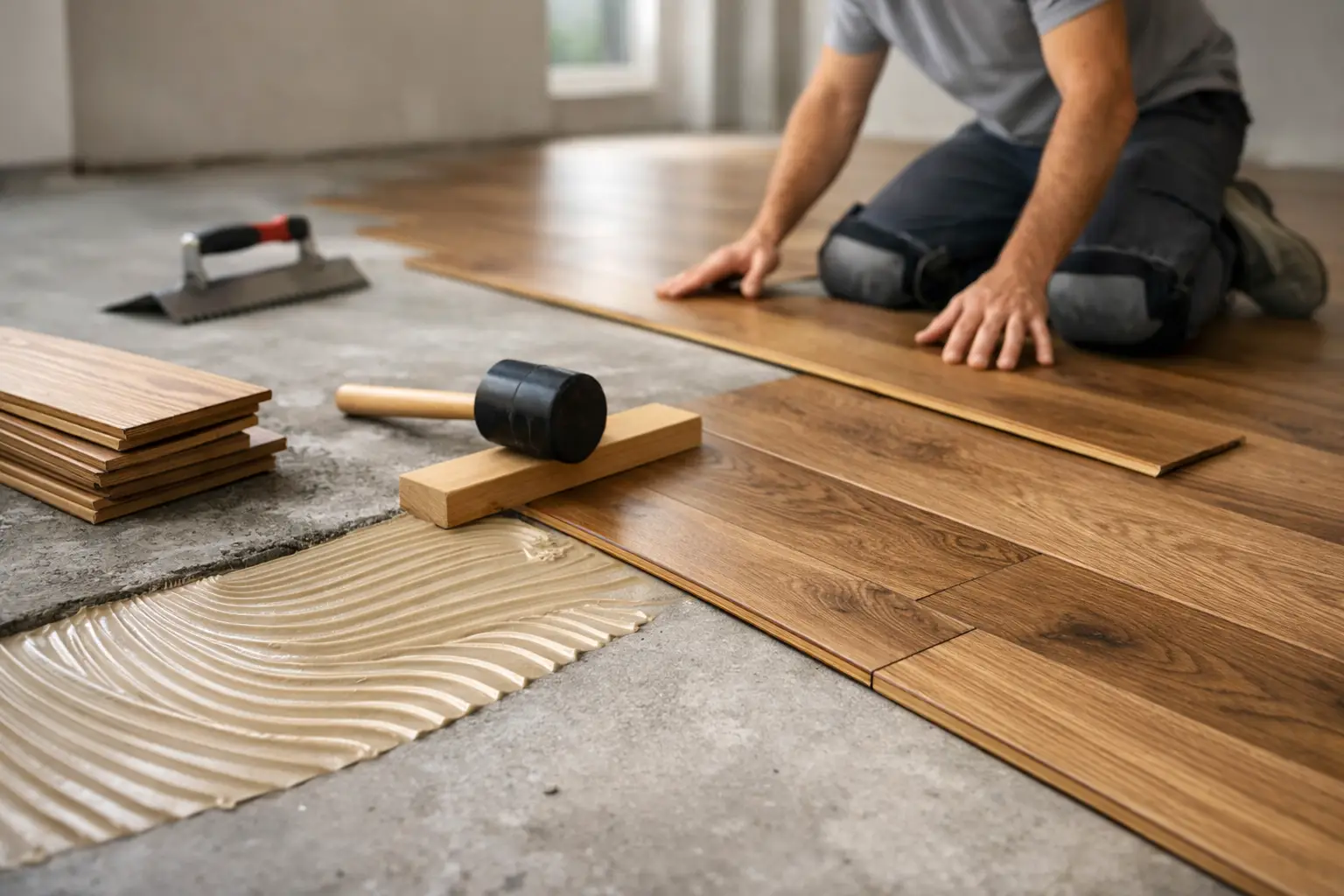
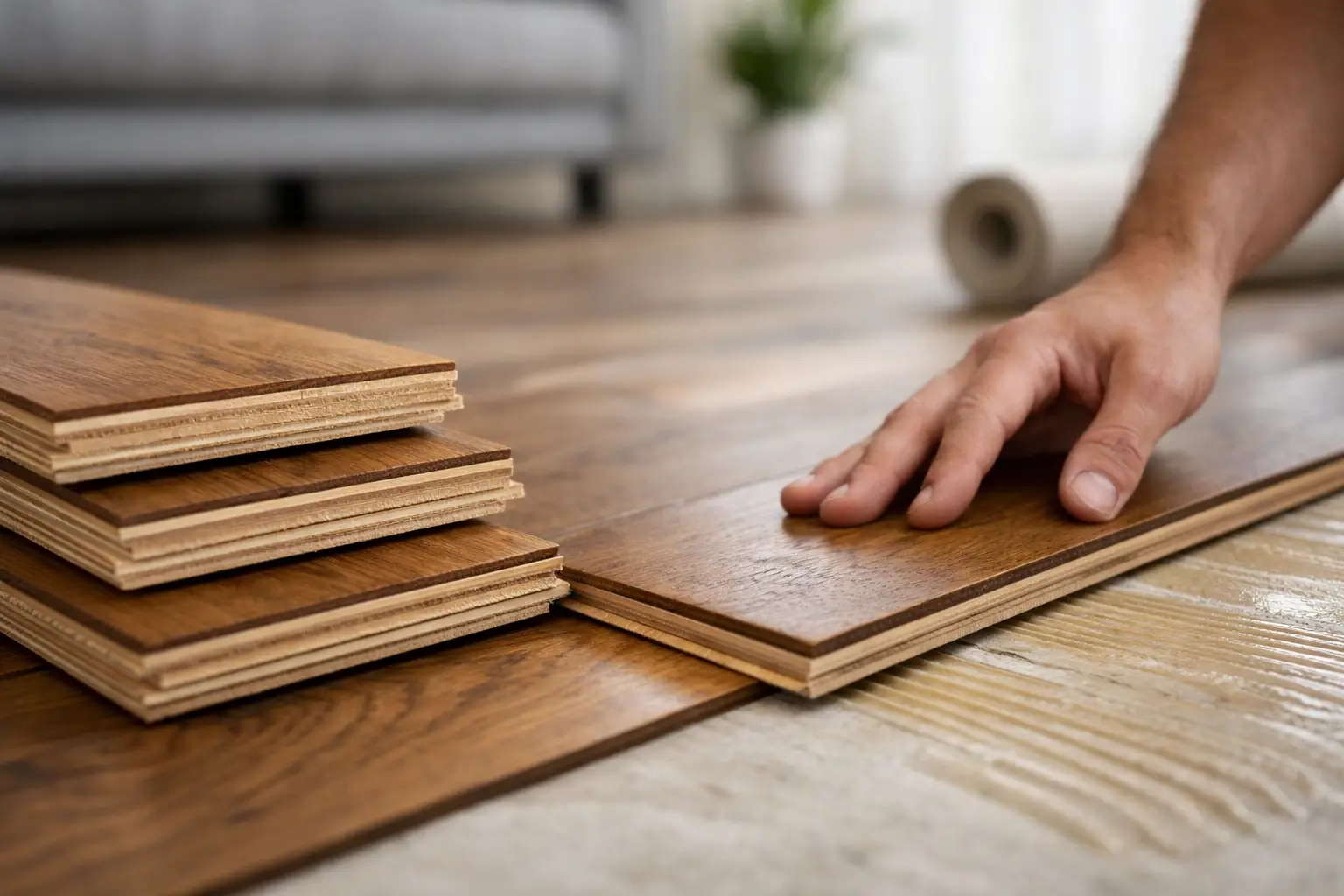
Engineered timber can be installed in different ways depending on the product and site conditions, including direct stick methods that create a more solid feel. This type of installation can deliver an excellent result, but it relies heavily on accurate moisture testing, levelling and substrate preparation. There is no shortcut here. Flawless preparation is often what separates a floor that looks good on day one from one that stays stable long term.
This is also why trade experience matters. A former installer will usually assess things a showroom salesperson might miss – slab condition, height transitions, moisture risk, acoustic requirements and whether the selected product suits the way the space will actually be used.
Cost differences and value over time
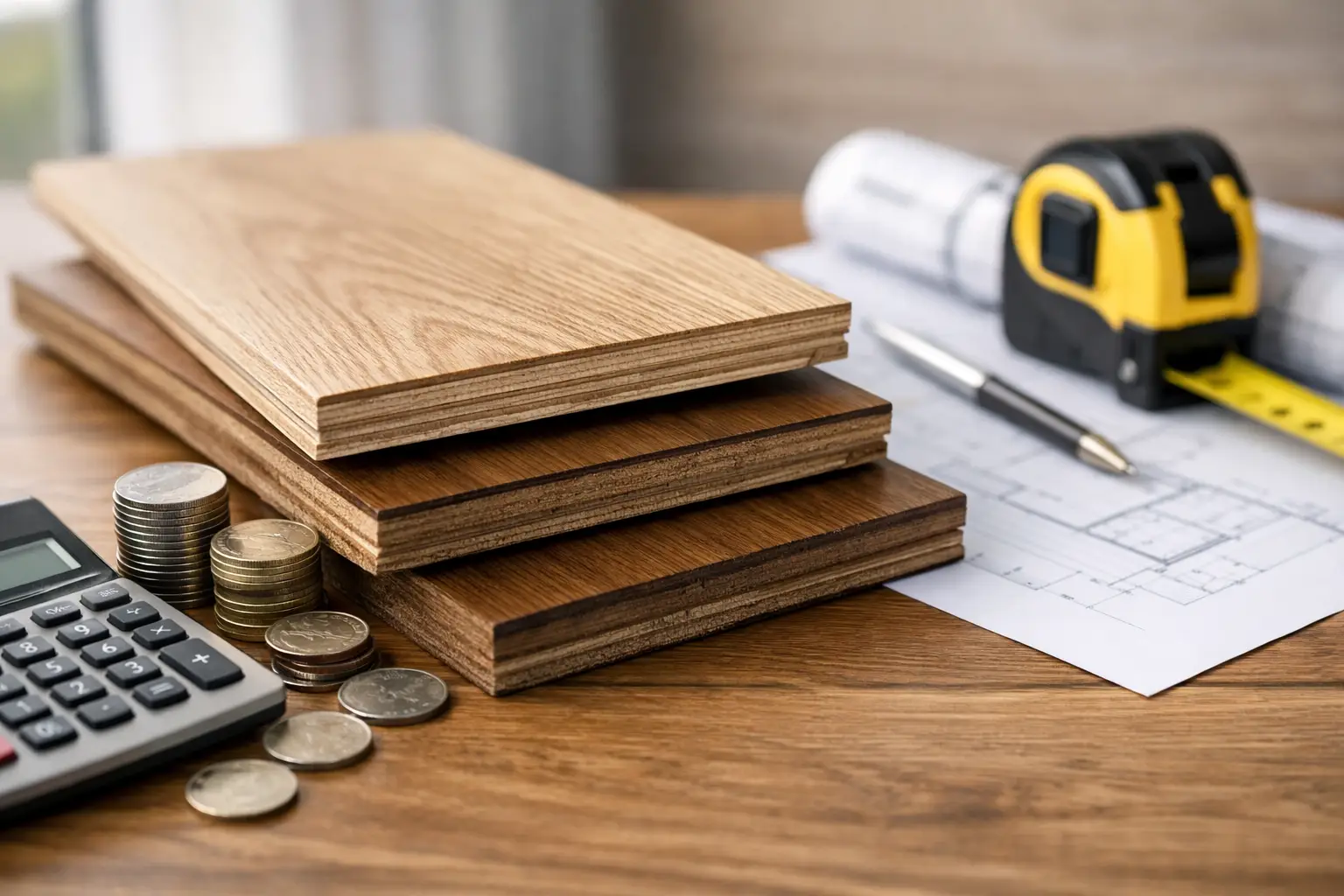
If you are comparing upfront pricing, hybrid often sits lower than engineered timber, although this depends on the brand, board size and installation requirements. For clients working to a fixed renovation budget, that can make hybrid attractive, especially when they want a timber-style finish without moving into the higher end of the market.
Engineered timber usually costs more because of the real timber veneer, the manufacturing quality and, in some cases, the installation method. But cost should be weighed against the type of result you want. If the floor is a major design feature and you want the warmth and status of real wood, engineered timber often justifies the extra spend.
Value also depends on the property. In a premium home, architecturally designed renovation or owner-occupied space where finish quality matters, engineered timber can elevate the whole interior. In a rental, apartment upgrade or commercial property where practicality and turnover are key, hybrid may offer better overall value.
Which one is better for Melbourne homes?
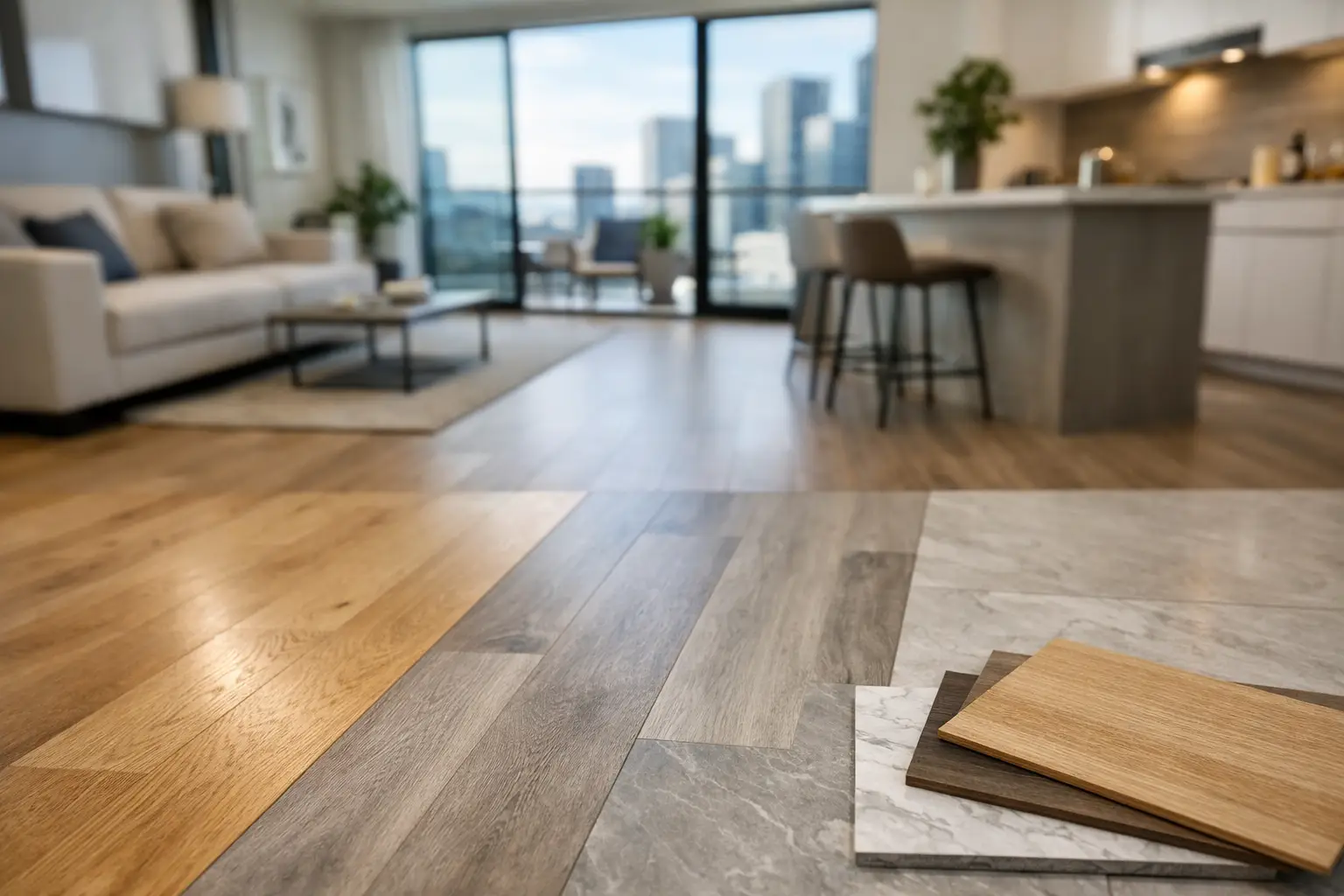
There is no single winner in the engineered timber flooring vs hybrid debate because Melbourne homes vary so much. A period home in the inner suburbs, a new townhouse, a high-rise apartment and a retail fit-out all have different demands.
Engineered timber suits clients who want a genuine timber floor, appreciate natural variation and are happy to invest in a more premium finish. It works particularly well in living zones, bedrooms and design-led spaces where the look and feel of authentic timber makes a noticeable difference.
Hybrid suits clients who need stronger water resistance, want a durable and lower-maintenance floor, or are balancing style with budget. It is often a sensible choice for busy family homes, investment properties and areas where spills and wear are part of daily life.
Apartment owners should also think about acoustic requirements, strata rules and floor height build-up. Commercial clients need to consider traffic load, cleaning routines and whether a realistic timber appearance is enough or whether the fit-out calls for real timber. These details affect the recommendation just as much as colour and finish.
The better question to ask
Rather than asking which product is better overall, ask which one is better for your site. Is the subfloor level? Is there any moisture risk? Do you want the visual depth of real timber or the practicality of a high-performance timber-look floor? Will the area cop heavy traffic, pets or frequent cleaning? Are you fitting out a forever home or preparing a property for sale or lease?
Those are the questions that lead to the right decision. At Melbourne Quality Timber Flooring, that is usually where the most useful conversations start – not with a sales script, but with how the floor needs to perform once people are actually living on it.
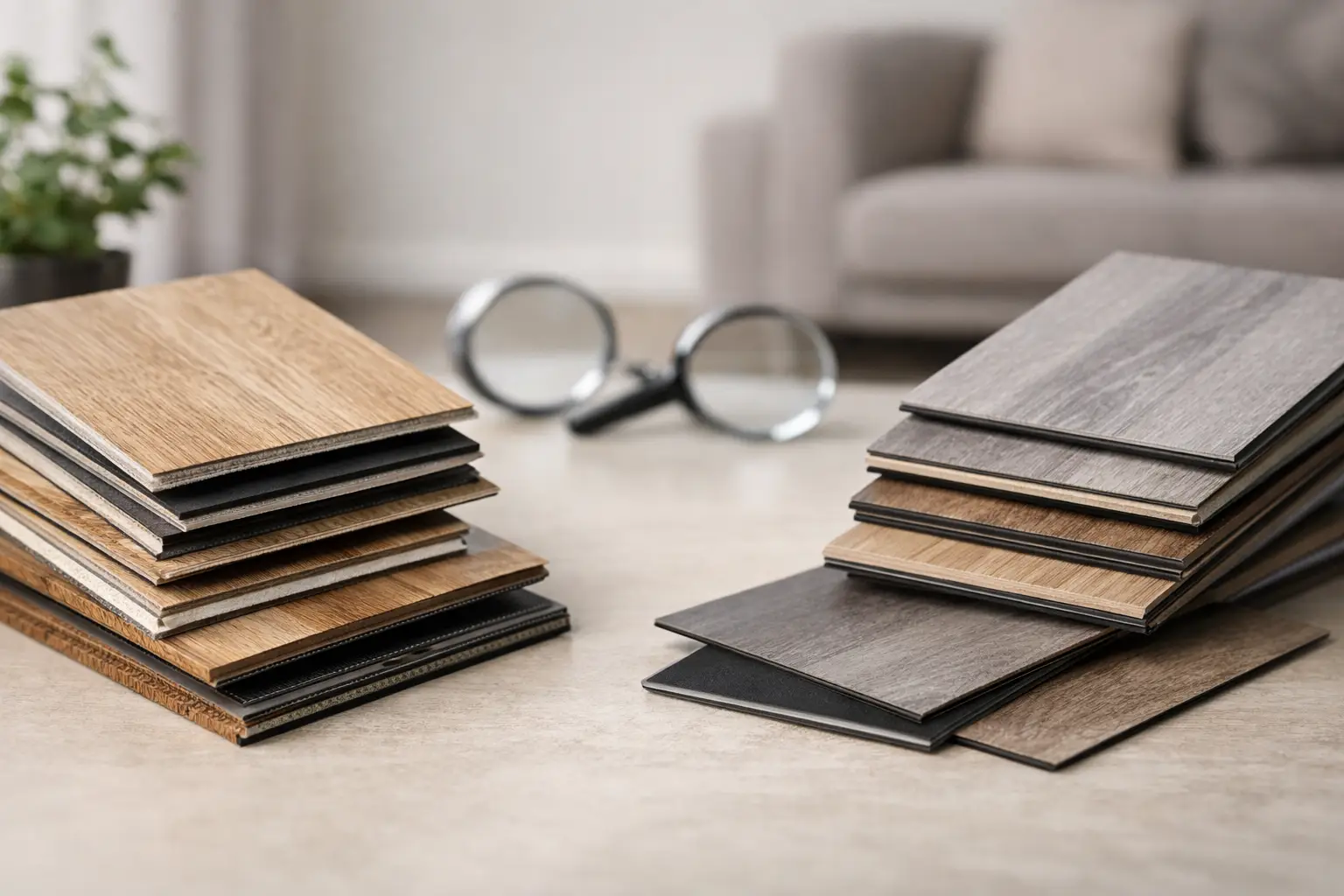
If you are still torn between the two, the smartest next step is to compare them in person and assess them against your subfloor, not just a sample board in isolation. The best flooring choice is the one that suits your space properly, is installed the right way and still feels like a good decision long after the furniture is back in place.